


After 15 years abroad, Kuching-born international director Tsai Ming-liang (蔡明亮) has set a film in his native Malaysia for the first time. Part of the New Crowned Hope festival initiated by the city of Vienna to celebrate the 250th anniversary of Mozart, I Don't Want to Sleep Alone (黑眼圈) may well be Tsai's most accessible and emotionally saturated feature to date as it blends the director's cinematic trademarks with a personal commentary on the social underclass in a time of social unrest.
In the film, set in multi-ethnic and multilingual Kuala Lumpur, Tsai's muse, Lee Kang-sheng (李康生), plays dual roles: a homeless Chinese drifter and a comatose man (the first character may well be in the dream of the second). Robbed and beaten up by street hustlers, the itinerant is taken in by a group of illegal foreign workers, part of the influx of laborers lured to the country by the economic boom in the mid-1990s but stuck in the foreign land after the Asian financial crisis. The immigrant worker Rawang (Norman Bin Atun) lets the stranger sleep by his side on an old mattress, lovingly nurses him back to health and is content to have someone to look after.
In another part of the city, the paralyzed son of a cafe owner (Pearlly Chua, 蔡寶珠) is dispassionately tended to by waitress (Chen Shiang-chyi, 陳湘琪), who is forced by her female boss to masturbate the comatose man.
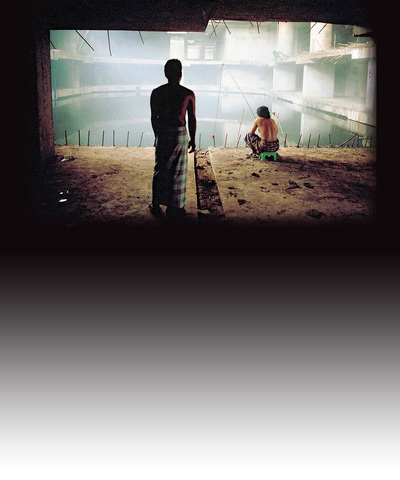
PHOTO COURTESY OF HOMEGREEN FILMS
Upon gaining the strength to explore his dilapidated surroundings, the drifter becomes enamored with the waitress and her boss. As a toxic fog descends upon the city, the dreams, desires and loneliness of the men and women emerge as glimmers of light in the distance.
While most of Tsai's motifs return in the film — the impossibility of uprooted individuals connecting with each other and their yearnings for companionship and reciprocation — the director turns has turned his sober gaze to the illegal foreign labors in Malaysia that were left homeless and jobless in the Asian economic crisis with a pronounced sense of warmth and tenderness. A hint of social realism pervades the film and takes Tsai's signature minimalist approach use of symbolism to its subject, exploring alienation among people stripped of their identity and cut off from social and cultural interaction and their struggle for survival.
The film's primary setting, a rundown building abandoned during construction serves as a poetic and ideal backdrop for the narrative as it is a remnant from the Malaysian government's economic development plans in 1990s. The symbolic use of a stained mattress reminds a visual reference to the mattress presented as evidence in the trial of former finance minister Anwar Ibrahim in 1998 on charges of sodomy.
The auteur's signature elements are all presented here: water, muteness, sex, sentimental songs, small gestures of life devoid of narrative causation, long, fixed-camera shots in which actions take place at a slow pace. Items and spaces are poetically used to reflect characters' silent emotions and loneliness. From the pool of dark water that lies in the center of the abandoned building to the smog-enveloped streets, all the movie's elements serve as resonating revelations of the characters' inner worlds, subtly lingering from scene to scene.
With lavish colors and the astounding use of light and shade, the film also shows Tsai is an adept visual artist who pays meticulously attention to mood and texture. Saturated yellows, reds, blues and greens play a convoluted game with the vertical and horizontal lines of the characters' surroundings. Simple acts such as the waitress cleaning the comatose man's face or Rawang holding up an injured man in the painting-like scenes are prolonged and become almost hypnotic. The film illuminates a world of displacement with stunning beauty and its uncanny poetry is likely to haunt audiences long after they leave the theater.
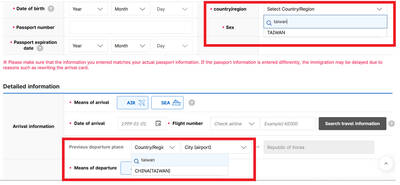
Jason Han says that the e-arrival card spat between South Korea and Taiwan shows that Seoul is signaling adherence to its “one-China” policy, while Taiwan’s response reflects a reciprocal approach. “Attempts to alter the diplomatic status quo often lead to tit-for-tat responses,” the analyst on international affairs tells the Taipei Times, adding that Taiwan may become more cautious in its dealings with South Korea going forward. Taipei has called on Seoul to correct its electronic entry system, which currently lists Taiwan as “China (Taiwan),” warning that reciprocal measures may follow if the wording is not changed before March 31. As of yesterday,

The Portuguese never established a presence on Taiwan, but they must have traded with the indigenous people because later traders reported that the locals referred to parts of deer using Portuguese words. What goods might the Portuguese have offered their indigenous trade partners? Among them must have been slaves, for the Portuguese dealt slaves across Asia. Though we often speak of “Portuguese” ships, imagining them as picturesque vessels manned by pointy-bearded Iberians, in Asia Portuguese shipping between local destinations was crewed by Asian seamen, with a handful of white or Eurasian officers. “Even the great carracks of 1,000-2,000 tons which plied
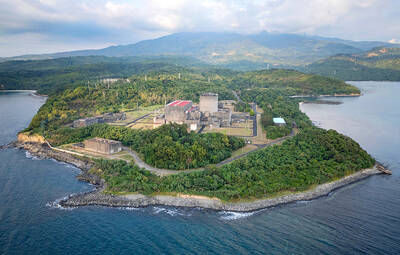
Nuclear power is getting a second look in Southeast Asia as countries prepare to meet surging energy demand as they vie for artificial intelligence-focused data centers. Several Southeast Asian nations are reviving mothballed nuclear plans and setting ambitious targets and nearly half of the region could, if they pursue those goals, have nuclear energy in the 2030s. Even countries without current plans have signaled their interest. Southeast Asia has never produced a single watt of nuclear energy, despite long-held atomic ambitions. But that may soon change as pressure mounts to reduce emissions that contribute to climate change, while meeting growing power needs. The

On Monday morning, in quick succession, the Chinese Communist Party (CCP) and the Chinese Nationalist Party (KMT) released statements announcing “that the Central Committee of the Communist Party of China and General Secretary Xi Jinping (習近平) have invited KMT Chairwoman Cheng Li-wun (鄭麗文) to lead a delegation on a visit to the mainland” as the KMT’s press release worded it. The KMT’s press release added “Chairwoman Cheng expressed her gratitude for the invitation and has gladly accepted it.” Beijing’s official Xinhua news release described Song Tao (宋濤), head of the Taiwan Work Office of the CCP Central Committee, as


 RSS
RSS