


For a variety of reasons — the lure of the exotic, a defense of imperialism, an assertion of the superiority of Western civilization — there have been endless novels, plays, films and travel books over the past two centuries depicting the African continent as a dangerous, alluring, mysterious place populated by simple but often kindly and devoted natives (devoted to Europeans, that is) led by wild, cruel, unpredictable chieftains.
This tradition reached a peak of some kind in Evelyn Waugh's Black Mischief in 1932, a dubious comic masterpiece about the megalomaniac Emperor of Azania and his white hangers-on. Giles Foden's novel The Last King of Scotland, adeptly adapted for the cinema by Peter Morgan and Jeremy Brock, is, like various novels by William Boyd, an extension of this stream of writing about Africa and a criticism of the patronizing values that lie beneath.
At the center of The Last King of Scotland is the relationship between a character invented by Foden — a young Scottish doctor, Nicholas Garrigan, very much a product of the permissive 1960s, played persuasively by James McAvoy — and the posturing Ugandan dictator, General Idi Amin (a towering performance by Forest Whitaker), a very real, larger-than-life monster, who might well have been invented by Waugh.

PHOTO COURTESY OF FOX
Indeed, back in 1974, French moviemaker Barbet Schroeder conned the conceited Amin into appearing in a full-length documentary, subtitled "a self-portrait," that presented him as a brutal, vainglorious idiot and was acclaimed as the funniest thing to come out of Africa since Black Mischief.
Since then, a variety of actors have impersonated Amin. There have been three versions of the celebrated Entebbe incident of 1976, in which Israeli commandos rescued the passengers of a hijacked airliner taken to Uganda by terrorists and welcomed by Amin. During the production of Marvin Chomsky's Victory at Entebbe, Godfrey Cambridge, the actor playing Amin, died on set; according to the general, this resulted from a curse placed on him. There was also Amin: The Rise and Fall, directed by Kenyan filmmaker Sharad Patel, a crude, blood-thirsty affair, in which Amin was shown as a cross between Hermann Goering and a less benevolent King Kong.
This movie is in a quite different class and sees director Kevin Macdonald move happily from documentaries into fiction without losing any sense of urgency. His presentation of intimate dialogues is as confident as his handling of parties, rallies and press conferences. Like most large-scale Western pictures about Africa (Cry Freedom, for instance, or The Constant Gardener), the events are seen from the point of view of a European.
The narrative follows a familiar strategy of someone observing a person he initially admires become corrupted by ambition and power. In Citizen Kane, Jed Leland is disillusioned by the conduct of his closest friend. In All the King's Men, liberal journalist Jack Burden sees Willie Stark/Huey Long betray his declared principles. In Downfall, Hitler's last days are viewed through the eyes of his devoted secretary, Traudl Junge, though it was not until well after his death that disillusion set in.
This film is set very firmly between the coup against the corrupt government of Milton Obote that brought Amin to power in 1971 and the 1976 raid on Entebbe that finally made him an international pariah. Right from the beginning, the characters of the doctor and Amin are sharply etched. Nicholas is shown plunging drunk into a loch with fellow medical graduates, rejecting the prospect of joining his staid father's general practice and closing his eyes and stabbing a spinning globe to discover a place of escape. He exchanges the good, real father, a solid man of probity, for the bad surrogate father, a charismatic, rabble-rousing demagogue.
We first see Amin from behind as he addresses a cheering crowd, promising them a new national identity and a new prosperity. His shoulders and neck suggest physical power. Then Macdonald cuts to an extreme close-up of Amin in full flood, his eyes blazing, his nostrils flaring, his forceful rhetoric igniting the crowd, the impressionable Nicholas among them. He does not, however, impress Sarah (Gillian Anderson), the wife of the mission doctor Nicholas has come to work for, but then she has lived through the Obote regime and is in touch with reality.
After being called to attend Amin after a minor injury in a road accident, and impressing him with his coolness, Nicholas deserts the supposedly humane purpose that has brought him to Africa and becomes the general's personal physician and adviser. He is seduced by smart clothes, limos, a Mercedes convertible of his own, a house, access to women and booze and an authority that would take him half a lifetime to achieve in Scotland.
There is, too, an odd bond between him and Amin. The general, while fighting the Mau-Mau in Kenya as a corporal in the King's African Rifles, served with a Scottish regiment and adores Scotland. The naive Nicholas, as part of his half-baked 1970s rebelliousness, has embraced Scottish nationalism and developed a hatred for the duplicitous English. This comes to focus on the local British diplomats who have helped elevate Amin and now attempt to enlist Nicholas to spy on him.
The events of five or six years are compressed as we see Amin become increasingly brutal, paranoid and arbitrary, his mood changes ever more menacing. Meanwhile, Nicholas continues to turn a blind eye to the obscenity of what goes on around him, looking for explanations, excuses and justifications, until finally you cannot see the general's feet of clay for the blood covering them. This borders on, but never quite crosses over into, the implausible. People, nations indeed, can behave like this — think of former British prime minister Margaret Thatcher and former Chilean president Pinochet; George Galloway and Saddam Hussein; the French and Bokassa; Russia and nearly everyone.
The movie alludes to the larger historical and tribal contexts that helped create Amin, without going into much detail. But the troubled friendship of Nicholas and the general illuminates the complex relation ship between the old imperial powers and their former colonies. It features a truly great performance from Whitaker. He captures that sense of the vicious, devious Iago inhabiting the body of the bluff, charismatic Othello that has made Amin the object of such peculiar, horrified fascination.

If one asks Taiwanese why house prices are so high or why the nation is so built up or why certain policies cannot be carried out, one common answer is that “Taiwan is too small.” This is actually true, though not in the way people think. The National Property Administration (NPA), responsible for tracking and managing the government’s real estate assets, maintains statistics on how much land the government owns. As of the end of last year, land for official use constituted 293,655 hectares, for public use 1,732,513 hectares, for non-public use 216,972 hectares and for state enterprises 34 hectares, yielding

The small platform at Duoliang Train Station in Taitung County’s Taimali Township (太麻里) served villagers from 1992 to 2006, but was eventually shut down due to lack of use. Just 10 years later, the abandoned train station had become widely known as the most beautiful station in Taiwan, and visitors were so frequent that the village had to start restricting traffic. Nowadays, Duoliang Village (多良) is known as a bit of a tourist trap, with a mandatory, albeit modest, admission fee of NT$10 giving access to a crowded lane of vendors with a mediocre view of the ocean and the trains

For many people, Bilingual Nation 2030 begins and ends in the classroom. Since the policy was launched in 2018, the debate has centered on students, teachers and the pressure placed on schools. Yet the policy was never solely about English education. The government’s official plan also calls for bilingualization in Taiwan’s government services, laws and regulations, and living environment. The goal is to make Taiwan more inclusive and accessible to international enterprises and talent and better prepared for global economic and trade conditions. After eight years, that grand vision is due for a pulse check. RULES THAT CAN BE READ For Harper Chen (陳虹宇), an adviser
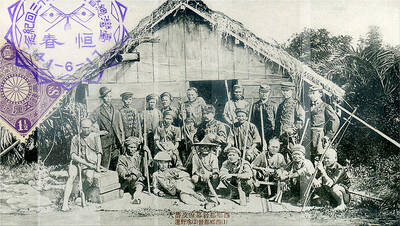
Traditionally, indigenous people in Taiwan’s mountains practice swidden cultivation, or “slash and burn” agriculture, a practice common in human history. According to a 2016 research article in the International Journal of Environmental Sustainability, among the Atayal people, this began with a search for suitable forested slopeland. The trees are burnt for fertilizer and the land cleared of stones. The stones and wood are then piled up to make fences, while both dead and standing trees are retained on the plot. The fences are used to grow climbing crops like squash and beans. The plot itself supports farming for three years.


 RSS
RSS