


Weed users beware: it may be a wise time to drop your unlawful hobby because the hunt is on for secret tokers. The long arm of the law has already caught up with a group of pop star suspects, which could spell the end of their careers.
The saga began with a successful police raid on a luxury apartment in Taipei last month that uncovered a marijuana growing operation. Police trawled the phone records of the people involved and turned up the names of alleged buyers including TV show hosts Tuo Tsung-kang (庹宗康), Chu Chung-heng (屈中恆) and the paparazzi's favorite prey Suzanne Hsiao (蕭淑慎).
After first denying the charge, Tuo and Chu held press conferences on Sunday, admitting they had smoked joints out of curiosity once but hadn't scored off the apartment's owner. Cracking under the pressure of intense media scrutiny, the pair blubbered on screen and issued apologies, the move, however, failed to prevent them from being booted off most of the TV shows they hosted and losing lucrative product endorsements.
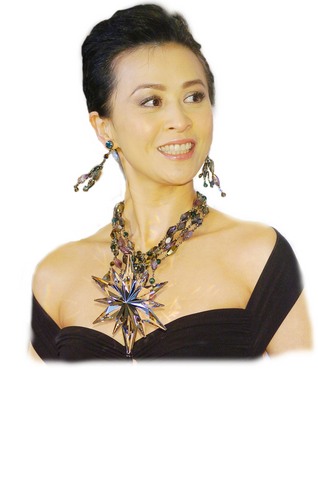
PHOTO: TAIPEI TIMES
Police said urine tests indicate that three suspects had consumed cannabis within the last two months but declined to make public their names. More accurate results, taken from hair samples, will come out next week.
In the meantime, the entertainment clique closed ranks with several celebrities voicing support for the accused. "Is smoking pot really such a serious crime?" asked ABT pop star Stanley Huang (黃立行), who later watered down his comments by advising dope smokers to respect the law here and only smoke in places where their pastime is legal.
Another ABT stud Wang Lee-hom (王力宏), on the other hand, always knows how to play it safe with his squeaky clean image, which has earned him endorsement and contract fees this year totaling some NT$288 million. Wang reigns supreme at the top of the Chinese-language media's list of top pop singer earners. Jolin Tsai (蔡依林) came in second with NT$285 million, while her ex-lover Chairman Chou (周董) flagged behind with NT$240 million.
Though it's been three years since Elva Hsiao (蕭亞軒) released her last record, the former Mando-pop queen is attempting to reclaim her title with a new album, 1087, set for release on Dec. 22.
As a warm-up before the big day, Hsiao gave a sweaty performance at the Channel V-organized concert at Zhongshan Soccer Stadium (中山足球場) last Saturday. To make sure she could hog all the limelight, Hsiao arranged to perform with her past rumored lovers Edison Chen (陳冠希) and Stanley Huang. And guess what, the tactic worked as the man magnet's previous flings dominated gossip rags the next day.
Thanks to advances in aesthetic medicine, age-resistant Carina Lau (劉嘉玲) looked fresh and dazzling when celebrating her 42-year-old birthday last week, first with her entrepreneur friend Jack Sun (孫道存) and later with her "good friend" [a code name for rumored lover] Chinese actor Hu Jun (胡軍), while her decade-long sweetheart Tony Leung (梁朝偉) has lost nearly 10kg shooting Ang Lee's (李安) Lust, Caution (色戒) and is too busy to buy her a proper gift.
Perhaps Leung, who was once romantically linked to Maggie Cheung (張曼玉) during his relationship with Lau, is the best present himself as the poised star is reportedly never troubled by Lau's rumored flings with her numerous pursuers.
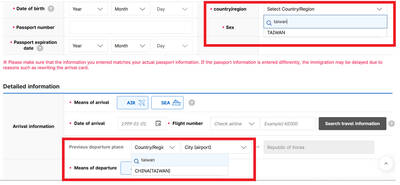
Jason Han says that the e-arrival card spat between South Korea and Taiwan shows that Seoul is signaling adherence to its “one-China” policy, while Taiwan’s response reflects a reciprocal approach. “Attempts to alter the diplomatic status quo often lead to tit-for-tat responses,” the analyst on international affairs tells the Taipei Times, adding that Taiwan may become more cautious in its dealings with South Korea going forward. Taipei has called on Seoul to correct its electronic entry system, which currently lists Taiwan as “China (Taiwan),” warning that reciprocal measures may follow if the wording is not changed before March 31. As of yesterday,
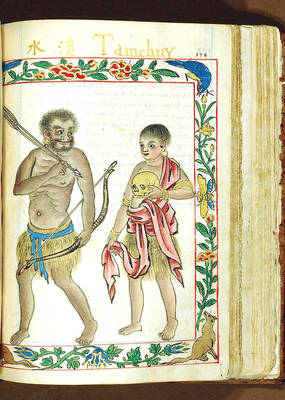
The Portuguese never established a presence on Taiwan, but they must have traded with the indigenous people because later traders reported that the locals referred to parts of deer using Portuguese words. What goods might the Portuguese have offered their indigenous trade partners? Among them must have been slaves, for the Portuguese dealt slaves across Asia. Though we often speak of “Portuguese” ships, imagining them as picturesque vessels manned by pointy-bearded Iberians, in Asia Portuguese shipping between local destinations was crewed by Asian seamen, with a handful of white or Eurasian officers. “Even the great carracks of 1,000-2,000 tons which plied
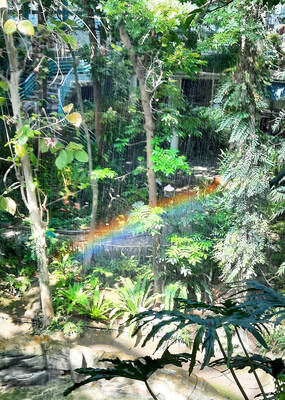
It’s only half the size of its more famous counterpart in Taipei, but the Botanical Garden of the National Museum of Nature Science (NMNS, 國立自然科學博物館植物園) is surely one of urban Taiwan’s most inviting green spaces. Covering 4.5 hectares immediately northeast of the government-run museum in Taichung’s North District (北區), the garden features more than 700 plant species, many of which are labeled in Chinese but not in English. Since its establishment in 1999, the site’s managers have done their best to replicate a number of native ecosystems, dividing the site into eight areas. The name of the Coral Atoll Zone might
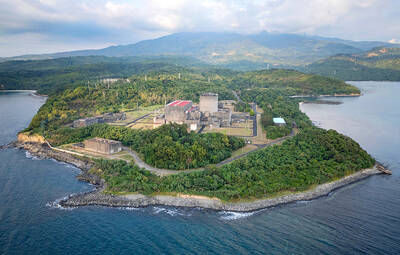
Nuclear power is getting a second look in Southeast Asia as countries prepare to meet surging energy demand as they vie for artificial intelligence-focused data centers. Several Southeast Asian nations are reviving mothballed nuclear plans and setting ambitious targets and nearly half of the region could, if they pursue those goals, have nuclear energy in the 2030s. Even countries without current plans have signaled their interest. Southeast Asia has never produced a single watt of nuclear energy, despite long-held atomic ambitions. But that may soon change as pressure mounts to reduce emissions that contribute to climate change, while meeting growing power needs. The


 RSS
RSS