


The nominations list for the 43rd Golden Horse Awards (金馬獎華語影片競賽) was released last Monday and caused a tsunami of griping and whining, not least by director Tsai Ming-liang (蔡明亮). With only two nominations in minor categories, namely Best Supporting Actress and Best Sound Effects, Tsai's I Don't Want to Sleep Alone (黑眼圈) was rejected by jury members for being "too individualistic and indulging in personal style, so that it fails to move the general public."
An indignant Tsai declared he would never again participate in the annual flick fest since the event has turned into what he dubbed the "Golden Horse Genre Film Awards," as these are the only type of films the juries can understand.
Echoing the director's wrath, producer Wang Tsung (王琮) also threatened to withdraw the film from the Taipei Golden Horse Film Festival (台北金馬影展) if the jury didn't make a public apology or issue an explanation.
The on-going brawl has caused alarm within the government. The Department of Motion Picture Affairs (電影處) under the Government Information Office (GIO) has already instructed the event's president Wang Tung (王童) to solve the issue as soon as possible otherwise the GIO will step in if necessary.
In this power play, Tsai seems to hold the trump card. It would certainly look very bad for the event if its opening film, the tickets for which have already sold out, gets pulled at the last minute.
International hot shot Zhang Ziyi (章子怡) is another star that has fallen out of favor with the Golden Horse organizers. Having failed to win a Best Actress nomination for her role in The Banquet (夜宴), the megastar snubbed the event by agreeing to attend the Asia-Pacific Film Festival, which has its awards ceremony one day before the Golden Horse hands out its gongs. Organizers are waiting for confirmation from Zhang's agent as to whether she will grace Taiwan's premier film event.
Local TV stars are dusting down their tuxedos and ball gowns in preparation for the annual Golden Bell Awards (金鐘獎). The nomination list for this event was released last week.
Having rocketed to stardom based on her good looks, but lacking acting credibility, Lin Chih-ling (林志玲) has finally won recognition for her on-screen efforts; she has gained a place on the best female TV host award nomination list.
As for her male counterparts, pretty much all the big-name TV entertainers are on the list except for Hu Gua (胡瓜), who has been out of favor since he was accused of cheating at an illegal gambling venue last year. To rub salt into the wound, Hu's friend Peng Chia-chia (澎恰恰) is back on track after a nasty DVD sex scandal.
Over the years, local celebrities have come up with all sorts of innovative excuses for explaining why they were visiting a love hotel when cornered by members of the paparazzi. Using the bathroom, sharing a meal and discussing business are the most commonly used pretexts. In a new take on an old theme, entertainer and drag queen Topper (大炳) said he visited a love motel to use it's high-tech facilities: to play computer games that is.
The peppy gay entertainer was spotted last week visiting two motels on the same night. After spending two hours with a gentle-looking man at the first stop, Topper enjoyed an interlude of debauchery at a gay bar then headed to the WeGo Motel with the same guy and a female companion.
Is the funnyman a sex machine who needs it all night long, and even indulges in threesome action to finish off the evening? Topper's side of the story is he just likes playing innocent games and visiting love hotels once a week to go cruising.
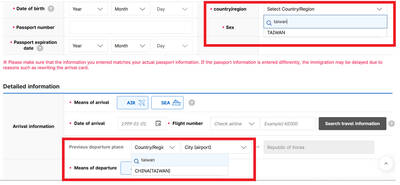
Jason Han says that the e-arrival card spat between South Korea and Taiwan shows that Seoul is signaling adherence to its “one-China” policy, while Taiwan’s response reflects a reciprocal approach. “Attempts to alter the diplomatic status quo often lead to tit-for-tat responses,” the analyst on international affairs tells the Taipei Times, adding that Taiwan may become more cautious in its dealings with South Korea going forward. Taipei has called on Seoul to correct its electronic entry system, which currently lists Taiwan as “China (Taiwan),” warning that reciprocal measures may follow if the wording is not changed before March 31. As of yesterday,
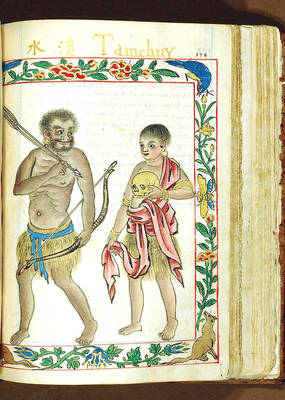
The Portuguese never established a presence on Taiwan, but they must have traded with the indigenous people because later traders reported that the locals referred to parts of deer using Portuguese words. What goods might the Portuguese have offered their indigenous trade partners? Among them must have been slaves, for the Portuguese dealt slaves across Asia. Though we often speak of “Portuguese” ships, imagining them as picturesque vessels manned by pointy-bearded Iberians, in Asia Portuguese shipping between local destinations was crewed by Asian seamen, with a handful of white or Eurasian officers. “Even the great carracks of 1,000-2,000 tons which plied
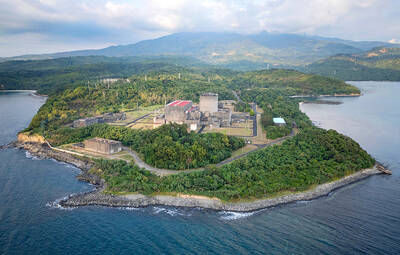
Nuclear power is getting a second look in Southeast Asia as countries prepare to meet surging energy demand as they vie for artificial intelligence-focused data centers. Several Southeast Asian nations are reviving mothballed nuclear plans and setting ambitious targets and nearly half of the region could, if they pursue those goals, have nuclear energy in the 2030s. Even countries without current plans have signaled their interest. Southeast Asia has never produced a single watt of nuclear energy, despite long-held atomic ambitions. But that may soon change as pressure mounts to reduce emissions that contribute to climate change, while meeting growing power needs. The
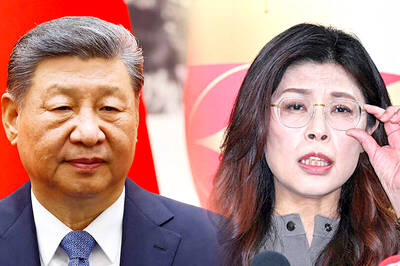
On Monday morning, in quick succession, the Chinese Communist Party (CCP) and the Chinese Nationalist Party (KMT) released statements announcing “that the Central Committee of the Communist Party of China and General Secretary Xi Jinping (習近平) have invited KMT Chairwoman Cheng Li-wun (鄭麗文) to lead a delegation on a visit to the mainland” as the KMT’s press release worded it. The KMT’s press release added “Chairwoman Cheng expressed her gratitude for the invitation and has gladly accepted it.” Beijing’s official Xinhua news release described Song Tao (宋濤), head of the Taiwan Work Office of the CCP Central Committee, as


 RSS
RSS