


For Denise Albert, choosing a cell phone has nothing to do with ring tones, instant messages or megapixels.
“To me, it's what it looks like,” said Albert, a 53-year-old campaign fundraiser from suburban Powell. “I want a good design. Period.”
Albert represents a fashion trend marketers are tapping into as they offer mobile phones with sleeker designs and in more colors, such as blue and pink, and accessories ranging from charms and stickers to crystals and tiny designer purses. While some accessories are for necessity — such as in-car chargers — others are for personalization.
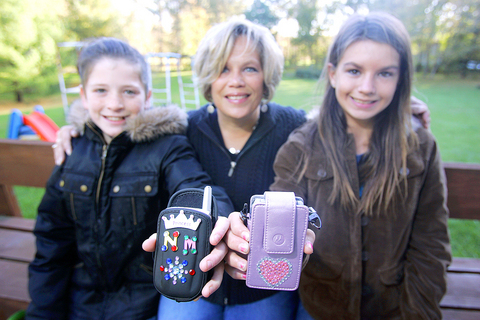
PHOTO: AP
“Where we had A or B, now we have A through Z,” said Neil Strother, research director for mobile devices at The NPD Group market research firm.
Cell phone accessories — from decorations, to holsters to handsfree devices — bring in US$1billion a year at the retail level in the US and the market is growing 10 percent to 15 percent annually, said Roger Entner, a Boston-based analyst with the market research firm Ovum.
“These things have a 70- to 80-percent profit margin. They're a real moneymaker,” he said. “And it's growing rapidly because Americans see cell phones more and more as items for self expression.” Sprint has teamed up with Dooney & Burke to offer purses that take the place of cell phone cases — an Italian crocodile leather wristlet was listed at US$124.99on the Sprint Web site.
A few bucks can buy a charm featuring Hello Kitty, SpongeBob, the SuperGirl logo or other designs at a Claire's accessory shop or one of many Internet sites.
“We see girls decorating their phones and, a week later, they take everything off and decorate it differently,” said Chuck Strottman, director of marketing for Tween Brands Inc, based in the Columbus suburb of New Albany.
The kid-sized, oval Firefly Mobile phone sold well last holiday season at Tween Brands' Limited Too stores, which market to girls ages 7 to 14, he said. Girls can change the phone's look with patterned, translucent and glow-in-the dark shells.
Accessory sales — especially charms, stickers, faceplates — account for about 10 percent of business at Adam Anolik's Wireless Zone store in Philadelphia. He said popular logos are of the Philadelphia Eagles and other sports teams and fashion brands such as Baby Phat.
Another big seller is the US$125 Bling Ring kit that features high-priced Swarovski brand crystals. For an additional US$100 to US$300, the store will do the designing — attaching hundreds of the small, round crystals to the phone, often in a pattern: initials, numbers or stripes.
Some women buy the kits for bridesmaid gifts, and men — who are more drawn to black crystals — also are buying into the trend, Anolik said.
Marcia Murphy, of Delaware in central Ohio, decorated her leather cell phone case with pink and silver removable adhesive sequins to match her pink Motorola MOTORAZR phone. Murphy's daughters, ages 10 and 11, also used the sequins to decorate the case for the cell phone they share.
“Anything for bling, as far as they're concerned,” said Murphy, 44. “I guess I'm a little bit for bling as well.” Thom Richmond, director of handset product development for Disney Mobile, based in North Hollywood, California, credits Nokia as leading the way with mobile phone fashion accessories by introducing faceplates in the mid-1990s.
At the close of 2005, there were about 208 million wireless subscribers in the US, representing about 69 percent of the population, according to data collected by CTIA — the Wireless Association trade group. Worldwide, wireless subscriptions hit 2 billion by the end of 2005, according to Informa Telecoms & Media research group.
Handset vendors are now pushing fashion as a way to differentiate themselves in a crowded market, said Avi Greengart of the research firm Current Analysis Inc. But carriers were slow to see beyond technology until the Motorola MOTORAZR saw success in pulling in subscribers, showing that customers were seeking more attractive handsets and were willing to pay a lot more for them.
Consumers in the US are well behind Europeans and Asians in picking up on the fashion accessories trend, Greengart said.
“People don't take their phones and decorate them, they buy stylish phones to begin with,” he said. “That's not the fashionable thing to do here, at least not yet.” Strother said accessories in the US tend to be technology driven — such as the battery that lasts longer without a recharge — or legislation driven, such as the handsfree devices required for drivers in some states.
But analysts say fashion is starting to carry the same weight as function when it comes to choosing the phone.
“Right now, I would say fashion trumps technology, two years ago technology trumped fashion,” Entner said. “Basically one catches up with the other. Probably two years from now technology will trump fashion.” Disney targeted mothers and girls ages 7 to 14 with its new line of phones and accessories, attempting a more sophisticated approach to popular characters, said Vince Peterson, senior art director at Disney Mobile. On one case the profile of Mickey Mouse is embossed in black leather. There's also a leather and suede case with an embossed initial D.
“We're trying to be trendy and have the accessories be fashion forward,” Peterson said. “Cell phones really are a fashion accessory.” Virgirl Jenkins, 33, who works for a car insurance company, said he chose his Nextel i870 “equally for the way it looks and what it does.” He likes the extras, including a global positioning system, MP3 player and a Bluetooth wireless handsfree device. But he also likes the way it looks: “It's a man's phone too,” he said, “not real thin like a woman's phone.” Albert, 53, said women her age are especially focused on the fashion aspect of phones.
“We have a lot more leisure time and our kids are older, our houses are already decorated, our gardens are already done, and now we're taking care of ourselves and focusing on health and exercise and fashion,” she said.
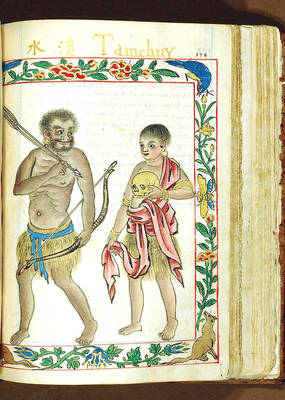
The Portuguese never established a presence on Taiwan, but they must have traded with the indigenous people because later traders reported that the locals referred to parts of deer using Portuguese words. What goods might the Portuguese have offered their indigenous trade partners? Among them must have been slaves, for the Portuguese dealt slaves across Asia. Though we often speak of “Portuguese” ships, imagining them as picturesque vessels manned by pointy-bearded Iberians, in Asia Portuguese shipping between local destinations was crewed by Asian seamen, with a handful of white or Eurasian officers. “Even the great carracks of 1,000-2,000 tons which plied
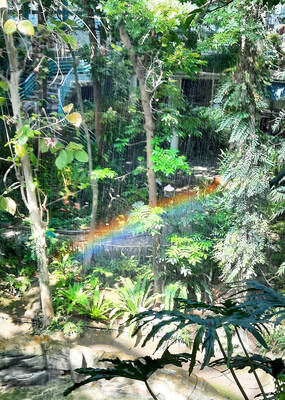
It’s only half the size of its more famous counterpart in Taipei, but the Botanical Garden of the National Museum of Nature Science (NMNS, 國立自然科學博物館植物園) is surely one of urban Taiwan’s most inviting green spaces. Covering 4.5 hectares immediately northeast of the government-run museum in Taichung’s North District (北區), the garden features more than 700 plant species, many of which are labeled in Chinese but not in English. Since its establishment in 1999, the site’s managers have done their best to replicate a number of native ecosystems, dividing the site into eight areas. The name of the Coral Atoll Zone might
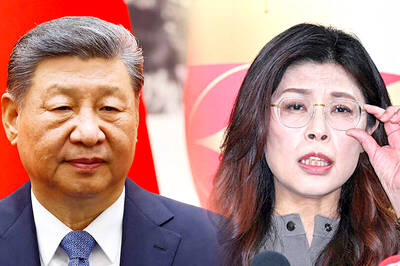
On Monday morning, in quick succession, the Chinese Communist Party (CCP) and the Chinese Nationalist Party (KMT) released statements announcing “that the Central Committee of the Communist Party of China and General Secretary Xi Jinping (習近平) have invited KMT Chairwoman Cheng Li-wun (鄭麗文) to lead a delegation on a visit to the mainland” as the KMT’s press release worded it. The KMT’s press release added “Chairwoman Cheng expressed her gratitude for the invitation and has gladly accepted it.” Beijing’s official Xinhua news release described Song Tao (宋濤), head of the Taiwan Work Office of the CCP Central Committee, as
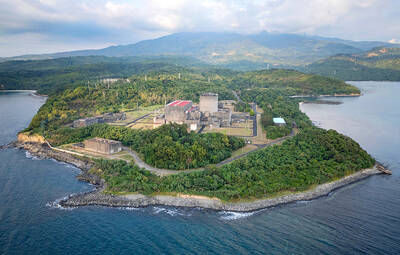
Nuclear power is getting a second look in Southeast Asia as countries prepare to meet surging energy demand as they vie for artificial intelligence-focused data centers. Several Southeast Asian nations are reviving mothballed nuclear plans and setting ambitious targets and nearly half of the region could, if they pursue those goals, have nuclear energy in the 2030s. Even countries without current plans have signaled their interest. Southeast Asia has never produced a single watt of nuclear energy, despite long-held atomic ambitions. But that may soon change as pressure mounts to reduce emissions that contribute to climate change, while meeting growing power needs. The


 RSS
RSS