


Some old masters made a point of including the faces of fellow artists and patrons in the crowds portrayed in large oil paintings. Pablo Picasso paid similar homage to a more unusual friend: a self-assured little dachshund called Lump.
Yes, that's Lump at the bottom of the canvas in Picasso's multiple reinterpretations of Velazquez's masterpiece Las Meninas. Gone is the somnolently regal hound of the original. In its place is, well, a sausage with four short legs and two pointed ears.
Picasso painted 44 studies in his Meninas series between Aug. 17 and Dec. 30, 1957 — and Lump appears in 15 of them.
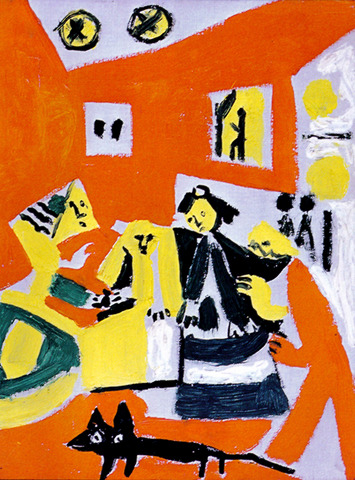
PHOTO: NY TIMES NEWS SERVICE
Now, thanks to the devotion of its former owner, the veteran American photographer David Douglas Duncan, Lump's long-overlooked place in the history of modern art — even if it's just a four-footed note — has at last been heralded.
More than three decades after the deaths of the Spanish-born artist and the German-born dachshund, Duncan has published Picasso and Lump: A Dachshund's Odyssey (Bulfinch Press), a 100-page book of photographs taken in 1957 that show Lump as the top dog in the Villa La Californie, Picasso's hillside mansion in Cannes.
The sequence starts on April 19, 1957, the day that Lump met Picasso. Duncan, who had first photographed Picasso a year earlier, brought Lump along for the ride, largely because the dog did not get along well with Duncan's other pet, an Afghan hound called Kublai Khan.
“Lump immediately decided that this would be his new home,” Duncan recalled in an interview on a visit to Paris, noting pointedly that “lump” means “rascal” in German. “He more or less said, ‘Duncan, that's it, I'm staying here.’ And he did, for the next six years.”
Picasso was apparently equally entranced. That very day, he did his first portrait of Lump, a signed and dated portrait of the dog that he painted on a plate while having lunch with Jacqueline Roque, his new partner, whom he would marry four years later.
Duncan kept returning. Already renowned for his work as a war photographer in Korea, he enjoyed privileged access to La Californie, taking thousands of photographs of Picasso and Roque as well as of Claude and Paloma, Picasso's children with his former mistress Francoise Gilot. And Lump was frequently in the pictures.
Now 90 and still living in the South of France, Duncan has so far published 25 books of photographs, including eight of Picasso at work and play.
He has also long defended Picasso against criticism of his personal life and this continues in his new book: by showing the artist in the intimacy of his home, Duncan seeks to portray him as an affectionate family man with a sentimental attachment to a funny little dog.
Certainly, even though a large boxer called Yan and a goat called Esmeralda already lived in La Californie, Lump enjoyed the run of the house. In Duncan's photographs, the dachshund is seen around the dining table at mealtimes, and in one shot he even stands on Picasso's lap to eat off the artist's plate. In another, Picasso cradles Lump in his arms as he might a baby.
Picasso liked to work alone, albeit allowing Duncan to be present. But Lump is often also on hand, occasionally demanding attention by bringing in a stone and insisting that Picasso kick it away to be chased. One series of images shows Picasso buying some respite by making a cardboard rabbit; Lump immediately seized it and carried it into the garden to chew on. (How much would that Picasso be worth today?)
At times, the dog was merely a silent witness to family scenes recorded by Duncan, as when Picasso amused his children by making — and wearing — a grotesque mask, and when he entertained Yves Montand and Simone Signoret over lunch. On other occasions, Lump was the center of attention as Claude and Paloma played with him in Picasso's studio.
It was clearly an idyllic year for both dog and children. But in time, as Picasso squabbled with Gilot over their children's right to his name, he began distancing himself from them. And in December 1963, shortly before Gilot further infuriated him by publishing her memoir, Life With Picasso, he — or perhaps Roque — forbade Claude and Paloma from visiting him.
That was also the year Lump's life changed. During a visit with Picasso, Duncan learned that Lump was unwell, suffering a spinal problem common to dachshunds, and was being treated by a vet in Cannes. Duncan visited Lump and, told that the dog could not be cured, took him home.
Duncan did not give up. He drove Lump to Stuttgart, Germany, where he had acquired the dog seven years earlier. And he found a vet willing to look after Lump. One year later, Duncan recovered the dog. After that, when Duncan visited Picasso, Lump did not come along.
So, Duncan was asked, in the end, did Picasso neglect Lump?
“No,” Duncan insisted, “he'd have gotten sick anyway. Lump had an absolutely pampered life there. Picasso once said, ‘Lump, he's not a dog, he's not a little man, he's somebody else.’ Picasso had many dogs, but Lump was the only one he took in his arms.”
In April 1973, Duncan lost two dear friends almost simultaneously: Lump died one week before Picasso.
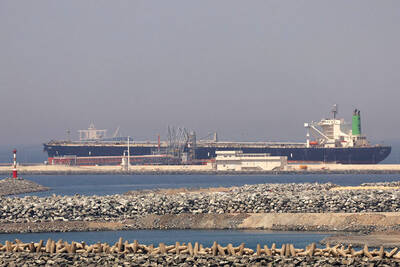
The breakwater stretches out to sea from the sprawling Kaohsiung port in southern Taiwan. Normally, it’s crowded with massive tankers ferrying liquefied natural gas from Qatar to be stored in the bulbous white tanks that dot the shoreline. These are not normal times, though, and not a single shipment from Qatar has docked at the Yongan terminal since early March after the Strait of Hormuz was shuttered. The suspension has provided a realistic preview of a potential Chinese blockade, a move that would throttle an economy anchored by the world’s most advanced and power-hungry semiconductor industry. It is a stark reminder of
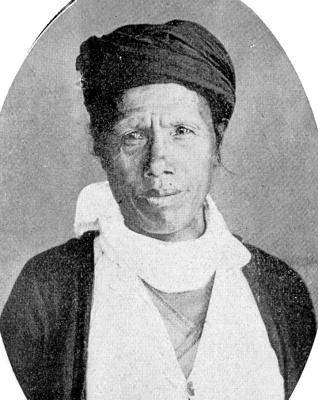
May 11 to May 17 Traversing the southern slopes of the Yushan Range in 1931, Japanese naturalist Tadao Kano knew he was approaching the last swath of Taiwan still beyond colonial control. The “vast, unknown territory,” protected by the “fierce” Bunun headman Dahu Ali, was “filled with an utterly endless jungle that choked the mountains and valleys,” Kano wrote. He noted how the group had “refused to submit to the measures of our authorities and entrenched themselves deep in these mountains … living a free existence spent chasing deer in the morning and seeking serow in the evening,” even describing them as
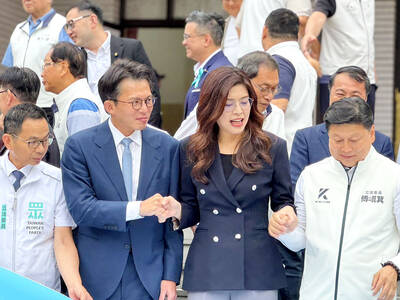
As a different column was being written, the big news dropped that Chinese Nationalist Party (KMT) caucus whip Fu Kun-chi (傅?萁) announced that negotiations within his caucus, with legislative speaker Han Kuo-yu (韓國瑜) of the KMT, party Chair Cheng Li-wun (鄭麗文), Taichung Mayor Lu Shiow-yen (盧秀燕) and Taiwan People’s Party (TPP) Chair Huang Kuo-chang (黃國昌) had produced a compromise special military budget proposal. On Thursday morning, prior to meeting with Cheng over a lunch of beef noodles, Lu reiterated her support for a budget of NT$800 or NT$900 billion — but refused to comment after the meeting. Right after Fu’s
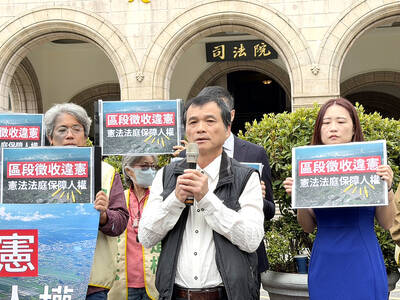
What government project has expropriated the most land in Taiwan? According to local media reports, it is the Taoyuan Aerotropolis, eating 2,500 hectares of land in its first phase, with more to come. Forty thousand people are expected to be displaced by the project. Naturally that enormous land grab is generating powerful pushback. Last week Chen Chien-ho (陳健和), a local resident of Jhuwei Borough (竹圍) in Taoyuan City’s Dayuan District (大園) filed a petition for constitutional review of the project after losing his case at the Taipei Administrative Court. The Administrative Court found in favor of nine other local landowners, but


 RSS
RSS