


Christie Pollin, a high-school tennis player from Mendham, New Jersey, is meticulous about her on-court attire; she always layers bright orange or blue tennis skirts over Nike shorts and pairs them with white Adidas tank tops.
Her clothing is inspired by that of her tennis idols, said Pollin, 16, who came to Manhattan last week with her mother to watch Rafael Nadal play a few points against Roger Federer at a court set up on East 54th Street. The event, co-sponsored by Nike, previewed the fashions that the top-seeded men planned to wear at the US Open.
“I love Nadal's capri pants and sleeveless shirts,” Pollin said. “I like bold outfits that tell your opponent you are going to be a little rebellious and defiant out there.”
Turning to her mother, Cathy, she added, “Mom, do you remember when Serena bedazzled her shorts?”
Grand Slam tournaments have always served as fashion runways for top players. In the 1970s, Bjorn Borg, with his leonine mane and body-hugging Fila shirts, and Jimmy Connors, in tight shorts and sweater vests, were the rock stars of sports. In the 1990s, Pete Sampras chose a more classic style while his frequent opponent, Andre Agassi, espoused a rebel tennis chic.
But, as a new generation of players like Maria Sharapova establish themselves as walking advertisements, promoting merchandise like Tag Heuer watches and Motorola phones, they are relying more heavily on attention-getting fashions as a way to distinguish themselves from their competitors and grab headlines. For some tennis players, the US Open is becoming like the Oscars, an event at which the audience pays as much — or more — attention to the togs as the talent.
“Tennis clothing has always been very revelatory, demonstrating the different personality of each champion, but today's tennis players are becoming fashion idols for a whole generation,” said Diane Elisabeth Poirier, a fashion historian in Paris and the author of Tennis Fashion. “Some of the younger players, especially the Russians, are as alluring as fashion models, which makes more women want to look like them and dress like them.”
Short streamlined tennis dresses and bright-colored tennis shirts have become trendy partly because athletic brands have been hiring fashion-forward designers to create entire lines around celebrity players and because high-fashion designers themselves are suddenly finding inspiration in tennis for their own collections, Poirier said.
Adidas, for example, recently tapped the designer Stella McCartney to create a new line. And, earlier this year, Ralph Lauren designed the officials' uniforms worn at Wimbledon.
Americans spend about US$534 million a year on specialty pro tennis clothes, according to the Tennis Industry Association. When designer clothing is included, the total is closer to US$1 billion, estimated Marshal Cohen, the chief analyst for NPD Group, a market research company that tracks clothing trends and sales.
“This is the year that tennis has really become fashionable attire, the year you walk into any department store and see designers like Ralph, Tommy and Lilly Pulitzer showing tennis-inspired looks,” Cohen said, referring to Ralph Lauren and Tommy Hilfiger.
Although Sharapova has landed on the covers of magazines from Forbes to ESPN, she is not the first player to inspire fashion groupies.
In the 1970s, Chris Evert ushered in an era of girlishness with her cut-out dresses, pleated Ellesse skirts, ruffled bloomers, blown-out hairdos and on-court diamond bangle.
“It was always important to me to prove that you could be athletic and feminine at the same time,” Evert said last week.
But Cohen suggested that Evert's feminine outfits served a deceptive purpose.
“The clothes said she was going to be overpowered by stronger opponents,” he said. “But underneath she was tactical and could take on the giants.”
In the 1990s, Anna Kournikova's Adidas hot pants telegraphed the opposite message — that her glutes were more developed than her tennis game.
“We can thank Kournikova, who never won a major tournament, for getting people more attuned to marketing images,” Cohen said.
But winners, too, are fashion forward. The white Reebok corset dress, designed by Diane von Furstenberg, that Venus Williams wore at Wimbledon in 2003, is now hanging in the Wimbledon Lawn Tennis Museum.
“The girls are getting younger and younger and prettier and prettier and they like to look good,” von Furstenberg said. “They are stars and they want to play tennis in beautiful dresses which are the tools of stars.”
Boys, of course, can harness the power of images, too. Nike's outfits this week for Federer and Nadal will set up a fashion duel that pits finesse against flash. Nadal's look, for example, includes a rakish red bandana, red clam diggers, and a black sleeveless top that will expose his biceps with every serve and volley.
The sleeveless shirt in particular seems designed to play up Nadal's sex appeal and well-honed physique. But he offered a more prosaic explanation for the ventilation: freedom of movement
“I feel more comfortable with these shirts,” Nadal said last week. “It is more easy like this.”
Federer plans to wear a fitted, sky-blue T-shirt and classic white shorts, topped by a blazer with Swiss insignia.
“I would never wear sleeveless,” Federer said last week. “They wanted me to wear the three-quarter pants too, but they can leave that to the other guys.”
Federer's more stately look is a throwback to the 1940s, when the former Open champion Jack Kramer wore sports coats over his tennis shorts, said Bud Collins, the NBC Sports tennis commentator.
But Poirier, the fashion historian, said Federer's less flamboyant outfits hold a deeper meaning.
“He wants people to concentrate more on his game than his clothes,” she said.

Jason Han says that the e-arrival card spat between South Korea and Taiwan shows that Seoul is signaling adherence to its “one-China” policy, while Taiwan’s response reflects a reciprocal approach. “Attempts to alter the diplomatic status quo often lead to tit-for-tat responses,” the analyst on international affairs tells the Taipei Times, adding that Taiwan may become more cautious in its dealings with South Korea going forward. Taipei has called on Seoul to correct its electronic entry system, which currently lists Taiwan as “China (Taiwan),” warning that reciprocal measures may follow if the wording is not changed before March 31. As of yesterday,

The Portuguese never established a presence on Taiwan, but they must have traded with the indigenous people because later traders reported that the locals referred to parts of deer using Portuguese words. What goods might the Portuguese have offered their indigenous trade partners? Among them must have been slaves, for the Portuguese dealt slaves across Asia. Though we often speak of “Portuguese” ships, imagining them as picturesque vessels manned by pointy-bearded Iberians, in Asia Portuguese shipping between local destinations was crewed by Asian seamen, with a handful of white or Eurasian officers. “Even the great carracks of 1,000-2,000 tons which plied

It’s only half the size of its more famous counterpart in Taipei, but the Botanical Garden of the National Museum of Nature Science (NMNS, 國立自然科學博物館植物園) is surely one of urban Taiwan’s most inviting green spaces. Covering 4.5 hectares immediately northeast of the government-run museum in Taichung’s North District (北區), the garden features more than 700 plant species, many of which are labeled in Chinese but not in English. Since its establishment in 1999, the site’s managers have done their best to replicate a number of native ecosystems, dividing the site into eight areas. The name of the Coral Atoll Zone might
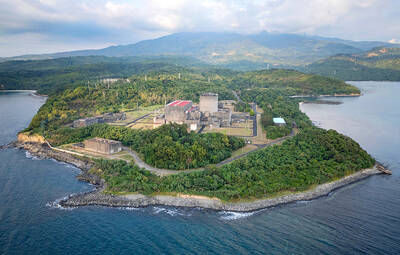
Nuclear power is getting a second look in Southeast Asia as countries prepare to meet surging energy demand as they vie for artificial intelligence-focused data centers. Several Southeast Asian nations are reviving mothballed nuclear plans and setting ambitious targets and nearly half of the region could, if they pursue those goals, have nuclear energy in the 2030s. Even countries without current plans have signaled their interest. Southeast Asia has never produced a single watt of nuclear energy, despite long-held atomic ambitions. But that may soon change as pressure mounts to reduce emissions that contribute to climate change, while meeting growing power needs. The


 RSS
RSS