


Taitung's Puyuma tribe (卑南族) is known for producing talented musicians and singers. Famous members include pop diva A-mei (張惠妹) and award-winning musicians Chen Jien-nien (陳建年) and Samingad (紀曉君). So it comes as no surprise that two young Puyuma musicians, Wu Hao-en (吳昊恩) and Chi Jia-ying (紀家瑩), are generating a lot of buzz with their new group Hao-en and Jia Jia (昊恩與家家).
The duo, who regularly perform at Taipei's Witch House (女巫店), were childhood friends and started played music together in the AM Family (原音社), a folksy Aboriginal group comprised of musicians from several different tribes, including Samingad. Wu and Chi later joined the ensemble's offshoot project AM Band (AM樂團). With Samingad and Chi's older sister, the band has been playing gigs at venues around the island since 2000 and performed at several international musical festivals.
“We [AM Band] have been invited to Singapore, Hong Kong and France for performances and have also been to musical festivals in Japan a dozen times. So we were like an international band right from the beginning,” Wu said.

PHOTO COURTESY OF TAIWAN COLORS MUSIC
A self-taught guitar prodigy, Wu composed his first song when he was a third grader in elementary school. Not limiting himself to tribal music, the 30-year-old musician is open to all kinds of genres and feels especially close to R&B. Indeed, both Wu and AM Band prefer to experiment with different musical genres, especially R&B.
“A large portion of the tribal music that has emerged in recent years is all about Aboriginal cultures and our ancestors and spirits. But in my view, my existence is a representation of my tribe and my people. I don't feel I have to sing tribal music to prove that I am an Aborigine,” the guitarist said.
An accompanist for MC Hotdog and A-mei, Chi is a versatile performer who shares her partner's musical philosophy. Skilled in R&B, blues and funk, the 23-year-old vocalist possesses a celestial voice that is free to go wherever the young crooner wants to take it. Wu proudly states that her skills as a vocalist leave Taiwan's other R&B singers in the dust.
The two began performing at local venues after they formed their band last year. They are currently recording their debut album, which is slated for release by Taiwan Colors Music (角頭音樂) before the end of this year. Don't expect to hear traditional tribal tunes on the upcoming record, because with these two, anything can happen.
Hao-en and Jia-Jia perform at the Witch House tonight at 9:30pm. The venue is located at 7, Ln 56, Hsinsheng S Rd, Sec 3, Taipei (台北市新生南路三段56巷7號). Tickets, which include one drink, cost NT$300 and are available at the door.
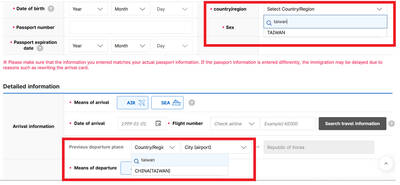
Jason Han says that the e-arrival card spat between South Korea and Taiwan shows that Seoul is signaling adherence to its “one-China” policy, while Taiwan’s response reflects a reciprocal approach. “Attempts to alter the diplomatic status quo often lead to tit-for-tat responses,” the analyst on international affairs tells the Taipei Times, adding that Taiwan may become more cautious in its dealings with South Korea going forward. Taipei has called on Seoul to correct its electronic entry system, which currently lists Taiwan as “China (Taiwan),” warning that reciprocal measures may follow if the wording is not changed before March 31. As of yesterday,
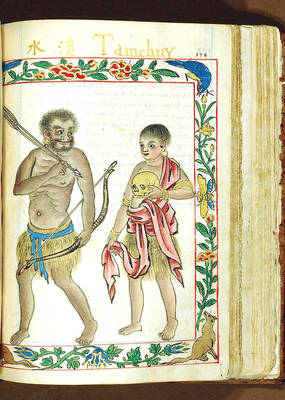
The Portuguese never established a presence on Taiwan, but they must have traded with the indigenous people because later traders reported that the locals referred to parts of deer using Portuguese words. What goods might the Portuguese have offered their indigenous trade partners? Among them must have been slaves, for the Portuguese dealt slaves across Asia. Though we often speak of “Portuguese” ships, imagining them as picturesque vessels manned by pointy-bearded Iberians, in Asia Portuguese shipping between local destinations was crewed by Asian seamen, with a handful of white or Eurasian officers. “Even the great carracks of 1,000-2,000 tons which plied
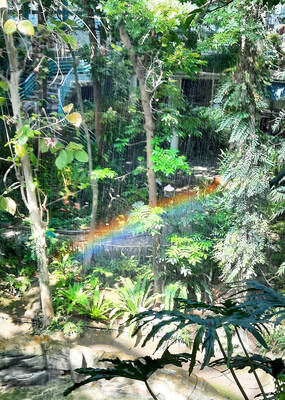
It’s only half the size of its more famous counterpart in Taipei, but the Botanical Garden of the National Museum of Nature Science (NMNS, 國立自然科學博物館植物園) is surely one of urban Taiwan’s most inviting green spaces. Covering 4.5 hectares immediately northeast of the government-run museum in Taichung’s North District (北區), the garden features more than 700 plant species, many of which are labeled in Chinese but not in English. Since its establishment in 1999, the site’s managers have done their best to replicate a number of native ecosystems, dividing the site into eight areas. The name of the Coral Atoll Zone might
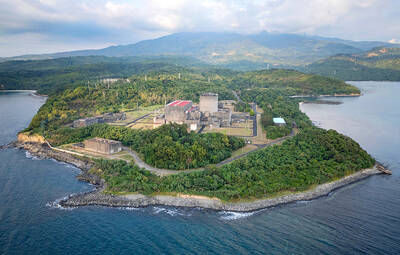
Nuclear power is getting a second look in Southeast Asia as countries prepare to meet surging energy demand as they vie for artificial intelligence-focused data centers. Several Southeast Asian nations are reviving mothballed nuclear plans and setting ambitious targets and nearly half of the region could, if they pursue those goals, have nuclear energy in the 2030s. Even countries without current plans have signaled their interest. Southeast Asia has never produced a single watt of nuclear energy, despite long-held atomic ambitions. But that may soon change as pressure mounts to reduce emissions that contribute to climate change, while meeting growing power needs. The


 RSS
RSS