


It seems that Ron Mueck, in a career spanning barely a decade, has become sculptor laureate of the human condition. From the moment he showed Dead Dad, that piteously half-sized corpse, so supernaturally real, over which a great soul seemed to hover, he has given startling form to the mystery and anguish of existence. Because his figures are so stupendously lifelike he is often accused of mere skill, though it's a skill unparalleled in art history. But which modern sculptures, from his newborns to his derelicts, have drawn such pity and compassion from the public?
Mueck's soaring popularity appears to rile his critics, who denounce him as corny or simple. This is partly because he represents life's great staging posts — birth, death, adolescence, loss — and partly, one suspects, because his background in model-making and special effects (and, possibly, his first work, a spiky little imp) allow some people to equate him with Disney.
His is a narrative art, to be sure, and entirely accessible. Unlike the hyper-real figures of Duane Hanson, those camera-slung tourists and blue-collar workers who keep themselves to themselves, maintaining their otherness and inner identity, Mueck's people offer themselves to interpretation very readily. But although meaning is their raison d'etre — they're exemplars, like so many characters in fiction or drama — they may also have extraordinary force of personality.
Take Ghost, a lanky pubescent girl backed up against the wall in her bathing suit, agonized at such cringing exposure. Her skin is painfully mottled, her forearms downier than she might have hoped and everything about her inspires tenderness: the desire to supply a towel, to tuck back loose hairs, to protect her from her own physicality. Her head is inclined as if sensing your presence, the very paradigm of awkwardness, in short. But she holds fast and her eyes imply endurance. It's not her shame but her courage that strikes.
Ghost would tower above the tallest adult. Two Women — a pair of tightly permed old ladies in slack stockings — are not much bigger than infants. Mueck's figures, unlike Hanson's, are never life-size and these enlargements and miniaturizations are crucial to his purpose. Inner emotion is dramatized by outer scale and this is often counterintuitive. So the girl's vast size makes her not powerful but even more vulnerable, while the two old ladies, seized with tremendous spite, are not to be mistaken for dear little dolls.
The biggest work in the retrospective at the Royal Scottish Academy (RSA), Edinburgh, Scotland, is 3m high — a wild-haired giant on a stool. But this man is naked and flinching as if terrified by your presence. Or by suddenly finding himself here, threatened, viewed, confined: he clings to his stool for protection.
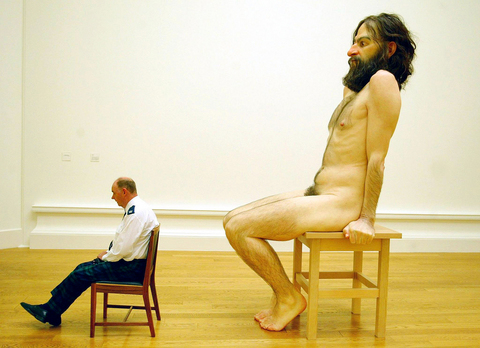
It is, you could say, among the most site-specific sculptures ever made: a man caught in continuous reaction to the here and now and wholly characterized — cowed and even reduced, despite his size — by the circumstances. Viewed from behind, The Wild Man appears tremendously powerful, his back a wall of muscle. Circling, you may coincide with the focus of his gaze and get the shock, no less powerful for being technically predictable, of discovering he is far more frightened than you. Mueck makes the most of sculpture's three dimensions; in this case, the narrative, the back-story, so to speak, changes as you move.
An illusion like this depends on absolute verisimilitude. Mueck's technique is so invisible and so perfect that his figures look begotten, not made. Naturally, you search for flaws — a false skin tone, an obviously man-made follicle — but not to challenge his skill.
It is a more basic compulsion: a coming to terms with the fact that although you know these people are sculptures, some quirk of cognition still insists they are real.
Two characteristic paradoxes are made especially apparent at the RSA. The light flooding down through the cupolas is pitiless, exposing an occasional hard glint in the flesh and yet the figures seem human. Nor does implausible scale ever seem to breach the illusion. Mueck is showing an enormous sculpture of a newborn baby, still sticky with blood, its tiny/huge fists clenched, one eye involuntarily open to the harshness of the new world; and he is showing a miniature figure of the same. Both are profoundly, and equally, moving.
This may be because of the astonishing fact that close up — and this is an art that calls you close — the imitation of reality feels unimpeachably true. But I think it also has to do with the depth and meaning of Mueck's works. There is, for instance, a little naked man seated in the prow of a boat, squinting at something in the distance.
With his calluses and thinning hair, he is as awesomely realistic as usual. But his personality is entirely subordinate to his role as metaphor — adrift, all at sea, embarking on the voyage of life.
Similarly, an outsize woman lies beneath a gigantic duvet, gaze far away, hand to chin like Rodin's Thinker. She is acting a part, performing the concept of reverie, boredom or melancholy; it's hard to tell. But she has no character of her own, whereupon the illusion noticeably wavers.
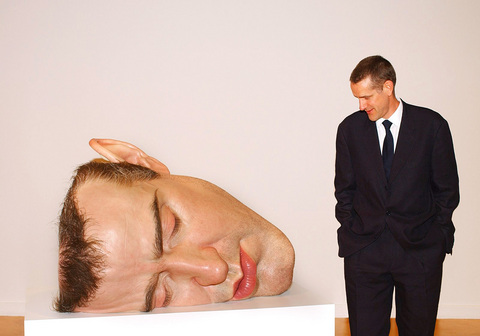
One of the sculptures here is a huge self-portrait of the artist's sleeping face on its side, a dozing Goliath with a touch of drool about the lips. Walk round it and the hollow mould is revealed, as if to say all this is merely skin-deep. That is the modest reticence that characterizes Mueck's best work, where he creates a figure that seems to have autonomous life and soul; as if he had only helped it into existence and then departed, leaving it to fend on its own.

The Portuguese never established a presence on Taiwan, but they must have traded with the indigenous people because later traders reported that the locals referred to parts of deer using Portuguese words. What goods might the Portuguese have offered their indigenous trade partners? Among them must have been slaves, for the Portuguese dealt slaves across Asia. Though we often speak of “Portuguese” ships, imagining them as picturesque vessels manned by pointy-bearded Iberians, in Asia Portuguese shipping between local destinations was crewed by Asian seamen, with a handful of white or Eurasian officers. “Even the great carracks of 1,000-2,000 tons which plied
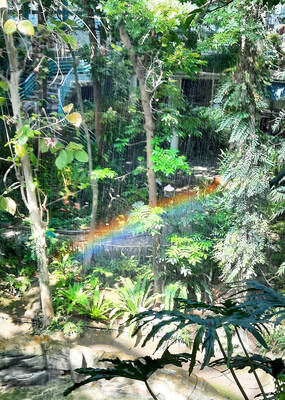
It’s only half the size of its more famous counterpart in Taipei, but the Botanical Garden of the National Museum of Nature Science (NMNS, 國立自然科學博物館植物園) is surely one of urban Taiwan’s most inviting green spaces. Covering 4.5 hectares immediately northeast of the government-run museum in Taichung’s North District (北區), the garden features more than 700 plant species, many of which are labeled in Chinese but not in English. Since its establishment in 1999, the site’s managers have done their best to replicate a number of native ecosystems, dividing the site into eight areas. The name of the Coral Atoll Zone might
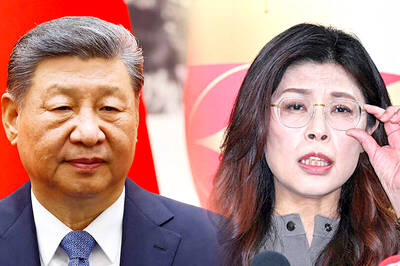
On Monday morning, in quick succession, the Chinese Communist Party (CCP) and the Chinese Nationalist Party (KMT) released statements announcing “that the Central Committee of the Communist Party of China and General Secretary Xi Jinping (習近平) have invited KMT Chairwoman Cheng Li-wun (鄭麗文) to lead a delegation on a visit to the mainland” as the KMT’s press release worded it. The KMT’s press release added “Chairwoman Cheng expressed her gratitude for the invitation and has gladly accepted it.” Beijing’s official Xinhua news release described Song Tao (宋濤), head of the Taiwan Work Office of the CCP Central Committee, as
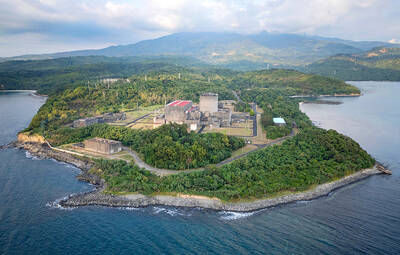
Nuclear power is getting a second look in Southeast Asia as countries prepare to meet surging energy demand as they vie for artificial intelligence-focused data centers. Several Southeast Asian nations are reviving mothballed nuclear plans and setting ambitious targets and nearly half of the region could, if they pursue those goals, have nuclear energy in the 2030s. Even countries without current plans have signaled their interest. Southeast Asia has never produced a single watt of nuclear energy, despite long-held atomic ambitions. But that may soon change as pressure mounts to reduce emissions that contribute to climate change, while meeting growing power needs. The


 RSS
RSS