


The burqa is ‘in.’
Actually the all-enveloping cloak has never really been ‘out’ in the five years since the fall of the ultra-Islamic Taliban regime that forced all women to wear it.
But in today's conflict-ridden Afghanistan, the garment seen by many as a symbol of oppression is finding new followers among Western women worried about anti-foreigner sentiment, and Western men looking for ironic gifts for lovers back home.
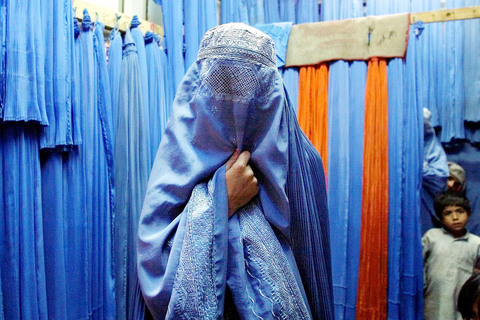
The growing number of women beggars and prostitutes on the streets of the capital are also choosing to hide their supposed shame beneath its all-covering folds.
And there are more and more cases of male insurgents caught using burqas to conceal themselves and their weapons — with security guard searches under the voluminous veil a no-no even in these troubled times.
For most Afghan women the burqa is still a widespread item that can be a security blanket, protection against the pervasive dust, a shield for a breastfeeding baby, or a nifty cover for a nip down to the shops without putting on make-up.
In his burqa boutique in Kabul's main bazaar, Waheedullah Najimi admits sales have roughly halved since the Taliban were forced out of government in 2001.
But he still sells about 20 a day, the shopkeeper says in his small store lined top to bottom with burqas of different colors, sizes and quality.
Most Kabul girls choose gray-blue, while in northern Mazar-i-Sharif white is also popular. Light blue is worn in some provinces, and green is used in Kandahar and Khost, Najimi says.
Among the demure colors are one or two splashes of pink and red — these are for foreigners looking for gifts, he says. As are the pint-size replicas, just right to cover a wine bottle, that sell for one US dollar a pop.
As with any fashion item, the quality depends on the buyer's budget.
A burqa in cheap, rough material delivered in rolls from Pakistan can costs as little as 200 afghani (US$4). One in a soft fabric with careful embroidery in the front can sell for seven times as much.
One of Najimi's customers today is wizened 60-year-old Sufi Qayoom, who has come to buy two new burqas for his dying wife.
“She is sick and old,” the turbaned man says, sitting on a stool near the door as young boys pass in the dust and heat outside with carpets slung over their shoulders, and a hawker shouts about a new readymade tea in a carton.
The burqas will be given to the women who will wash his wife's body before her burial. “If she doesn't have new clothes, maybe no one will wash her,” Qayoom says.
Sixteen-year-old Hangama wants a new burqa for after her wedding in a few weeks. She has hooked the hip-length front of the garment over the back of her head — as many women do when they need to see better — while she browses.
“It is difficult to wear, it is hard to breathe ... but it is good because men cannot see me, nobody can see any part of your body,” she says.
“If we don't wear the burqa, we feel like we are naked,” says 32-year-old Malalalai, who comes in a bit later.
Nineteen-year-old Najia is in the store to deliver 12 burqas into which she and her sisters have painstakingly pressed hundreds of narrow pleats.
Every week the family collects material that they pleat with a hot iron and water, a process they say is hard on their hands but earns around 100 afghani for each one.
They return the garments to the store for other women to pick up and attach the fitted skullcaps and lace grilles.
“I feel safe when I wear it,” Najia says before heading out into the bright afternoon with her escort, her brother of about 10. “I can't see everybody or everywhere, but no one can see me,” she says, her face hidden.
Most Afghan women say safety is the biggest benefit of the burqa, which was also common during the civil war that preceded the 1996 rise of power of the Taliban.
That is also why today some Western aid workers and journalists have one hanging in their closet.
A journalist whose home was in the thick of deadly May 29 riots that engulfed the capital threw one on and escaped on the back of a bicycle as angry crowds milled around following a deadly traffic accident involving a US vehicle.
“The burqa was the safest way to travel through the city during the riots. A number of Western women put them on to get unseen from house to house,” she says.
It also helps to hide one's identity when traveling through the dangerous south where foreigners are targets of Taliban militants.
“It's useful for security as it's not so obvious from the car that you are a foreigner ... it's obvious, though, that you are not local the minute you walk in one because foreigners move differently. They have a much more determined stride than Afghan women,” she says.
An aid worker who also has one says it is for emergencies only, although the garment rubs her the wrong way.
“They erode all sense of identity and are about as demeaning as clothing can get. On a practical level, they are also dangerous in that one's scope of vision is so impaired,” she says.
Afghanistan's educated women were the first to drop the burqa when the Taliban were forced out and they too detest the garment but recognize that for many the time is not right to hang it up.
“Security in Afghanistan is still a problem. Day by day it is getting worse. And the wearing of the burqa is still related directly to security,” says former women's minister Masooda Jalal.
“For more women to stop wearing the burqa, we need to have full security and need to educate families in rural areas,” she says, referring to deeply conservative regions where men believe women should be completely covered.
Jalal, who defied the Taliban by practicing as a doctor from home, acknowledges more modern women sometimes use the garment when they have to go out but can be bothered to dress up. But, “I couldn' do it. It is too heavy and makes me impatient,” she says.
Despite being such an overt sign of women's oppression, the burqa is not the biggest women's rights issue in Afghanistan, says legislator Shukria Barakzai.
Women in this conservative country have difficult lives: most are illiterate and poor, the maternal mortality rate is among the highest in the world, child and forced marriages are common, and women generally live as men tell them to.
“The big issue is tradition and the burqa is a small part of this,” says Barakzai, who doesn't wear the garment even in the conservative provinces because as a “women's activist, you have to be a symbol”.
She recalls the surprise of children when she first ventured outside the morning after the Taliban had fled Kabul with a scarf covering her head but no burqa. “Some little boys and girls never saw women on the street. They thought I was a foreigner,” she laughs.
Barakzai may hate the burqa but she admits it has its uses, such as hiding expensive jewelry from view of potential muggers or modern clothes that may provoke comments, stares and nasty jibes.
“Whichever dress you are wearing, your make-up and your hair — it is all covered, it is an easy solution,” says the modern young woman.
As a symbol closely associated with Afghanistan, it is perhaps inevitable that the garment has become visitors' choice for a gift for people back home that is sometimes meant as a joke but also gives insight into what is an outrageous concept in the West.
One said he brought one for his girlfriend in Britain to pretend to “admonish her for having too good a time while I was away in Afghanistan.”
“It was supposed to annoy her, to make her mad at me, after which I would give her a real gift, and win her over. Funny thing is, she wasn't at all annoyed with the burqa. She immediately tried it on and was shocked at how difficult it is to breathe and see through,” he said.
And while the burqa may not be the new black, it has made it onto the catwalk, causing a stir at Afghanistan's first fashion show held last month.
The white silk and embroidered piece was intended to acknowledge an item so integral to Afghan fashion and give it a more positive look, says designer Zolaykha Sherzad, from the design house that put on the show.
“During the Taliban it was a way to oppress women but it has also given women a certain freedom,” she says.
“It protects you from the dust, from view, all sorts of things. At the same time it helps you to be free, you can really be who you are without worrying what people will say,” she says.
The element of disguise is something she also sees in the West, she says. “I see more and more women wearing dark glasses — it is a way to hide. They can't see you but you can see them.”
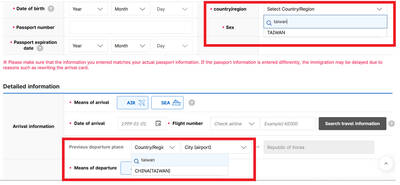
Jason Han says that the e-arrival card spat between South Korea and Taiwan shows that Seoul is signaling adherence to its “one-China” policy, while Taiwan’s response reflects a reciprocal approach. “Attempts to alter the diplomatic status quo often lead to tit-for-tat responses,” the analyst on international affairs tells the Taipei Times, adding that Taiwan may become more cautious in its dealings with South Korea going forward. Taipei has called on Seoul to correct its electronic entry system, which currently lists Taiwan as “China (Taiwan),” warning that reciprocal measures may follow if the wording is not changed before March 31. As of yesterday,
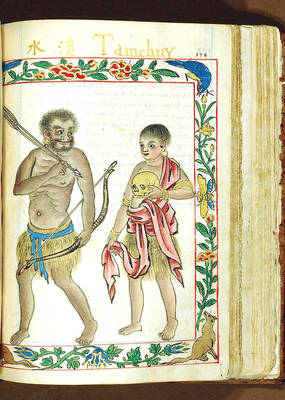
The Portuguese never established a presence on Taiwan, but they must have traded with the indigenous people because later traders reported that the locals referred to parts of deer using Portuguese words. What goods might the Portuguese have offered their indigenous trade partners? Among them must have been slaves, for the Portuguese dealt slaves across Asia. Though we often speak of “Portuguese” ships, imagining them as picturesque vessels manned by pointy-bearded Iberians, in Asia Portuguese shipping between local destinations was crewed by Asian seamen, with a handful of white or Eurasian officers. “Even the great carracks of 1,000-2,000 tons which plied
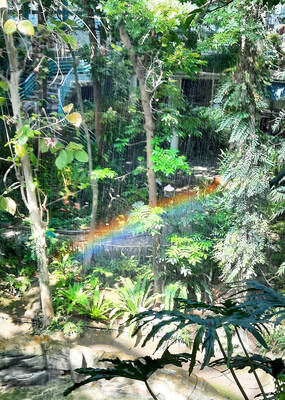
It’s only half the size of its more famous counterpart in Taipei, but the Botanical Garden of the National Museum of Nature Science (NMNS, 國立自然科學博物館植物園) is surely one of urban Taiwan’s most inviting green spaces. Covering 4.5 hectares immediately northeast of the government-run museum in Taichung’s North District (北區), the garden features more than 700 plant species, many of which are labeled in Chinese but not in English. Since its establishment in 1999, the site’s managers have done their best to replicate a number of native ecosystems, dividing the site into eight areas. The name of the Coral Atoll Zone might
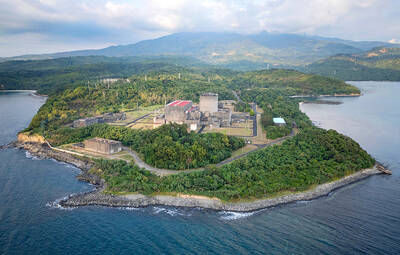
Nuclear power is getting a second look in Southeast Asia as countries prepare to meet surging energy demand as they vie for artificial intelligence-focused data centers. Several Southeast Asian nations are reviving mothballed nuclear plans and setting ambitious targets and nearly half of the region could, if they pursue those goals, have nuclear energy in the 2030s. Even countries without current plans have signaled their interest. Southeast Asia has never produced a single watt of nuclear energy, despite long-held atomic ambitions. But that may soon change as pressure mounts to reduce emissions that contribute to climate change, while meeting growing power needs. The


 RSS
RSS