


A.N. Wilson is becoming an ever more interesting writer. That he was prepared to be independent-minded has been clear since at least 1998 when he published a novel called Dream Children that centered on a pedophile relationship between a man and a young girl that was portrayed as doing no harm to either party. In 2003 he published a book on novelist Iris Murdoch and her critic husband John Bayley, both of whom he knew well, which ended with explicit sexual speculations. He's written controversial books on both Jesus and St. Paul, and in 2002 published The Victorian, a massive and highly successful over-view of 19th-century Britain.
Now he has come up with a sequel, After the Victorians. If it isn't quite as fascinating as its predecessor, this is only because the period it covers — 1901 to 1953 — was largely one of decline for the British, whereas the Victorian era saw them at an all-time peak, dominating the world in trade, and yet at the same time pioneering democracy in Europe, and creating an ever-more reform-minded and liberal state.
This new work is a brilliant book, nonetheless, because it takes you by surprise on almost every page. It's so well-written I was kept reading it one long night recently until the sun rose. Its chapter on Churchill is so breath-takingly original — simultaneously a eulogy and a catalogue of faults — that you feel it should be published separately, with flowers round the edge, and framed.
Asia features, though it was never going to be very significantly. Japan is described as the only country in the world that has ever succeeded in industrializing without dismantling its traditional culture in the process, and the presence of Chiang Kai-shek (蔣介石) at the Tehran Conference in 1943 is shown to have been a ploy by Stalin and Roosevelt that totally wrong-footed Churchill, someone who looked on Asia as material for the British Empire for another 1,000 years (it didn't last another 1,000 weeks, says Wilson).
More particularly, Wilson has a very distinctive view of the English. Paradox lies at the heart of his analysis. They avoided the violent social collapse and revolution that befell the other major European powers, yet were far from being free of fault. They relentlessly bombed civilian targets in Germany and interned totally innocent foreigners during World War II. What became almost individual combat between Hitler and Churchill (both painters, as he remarks) ended up destroying what both men held dear, the Third Reich and the British Empire respectively. Wilson is also notably opposed to the influence of the US on British affairs, pointing out that US aid in World War II was specifically and deliberately given on the understanding that neither the UK, Germany or France would ever again return to being world-powers.
Quirky, odd, idiosyncratic, self-obsessed, nostalgic — this, in Wilson's picture, is what the English are like. The English artists he chooses to celebrate — and any book such as this must be selective — are backward-looking eulogizers of a lost, often rural, way of life — the novelist John Cowper Powys, the painters Stanley Spencer and John Piper, the composer Edward Elgar and the popular satirist Noel Coward (though little cow dung was likely to be found on this last).
What Wilson fails to note is that he too is just like the typical Englishmen he describes. He records his belief, for instance, that the British railway system need not have been pruned in the mid-1950s — technically outside his period — as savagely as in the event it was. Yet he has great sympathy for Irish figures who came to detest the English, men like Roger Casement. As for the Welsh, they fashioned themselves in the 19th century as reincarnated Israelites, as he fascinatingly demonstrates.
Wilson is Britain's equivalent of Americans like Paul Theroux — endlessly entertaining, often shocking, and incapable of writing a dull sentence. He's both scholarly and impossible to put down. He is unusual, too, in his special interest in modern Christianity (he himself once planned a career in the Church of England). His outstanding survey of the Victorian loss of faith, God's Funeral (1999), made the point that the unbelief of the modern British, and the continuing strength of Christianity in the US, is what most divides the two English-speaking nations today.
Christianity did make something of a surprise, albeit brief, come-back in 20th-century Britain, he asserts here, though many major figures such as Churchill had no religious faith, and ordinary men and women in the period he covers were far more likely to revere the royal family than they were to attend church or chapel.
Wilson is also a determined anti-Marxist, implying that the pragmatic and sensible English have always viewed Marxism and Fascism with equal derision. He gleefully points to the public wealth provided by successful industrialists such as Lord Nuffield (the Oxford car-manufacturer), and to the huge amount of simple human happiness created by the mass-production in the 20th century of labor-saving devices such as vacuum-cleaners, electric cookers and washing-machines. He considers the imperialist Rudyard Kipling unquestionably a great writer, but sees the mild-mannered E.M.Forster as having been over-estimated for covert left-wing, anti-imperialist reasons.
The book is also very funny in places, especially in its tart, dismissive asides. Wilson seems effortlessly able to extract the single most hilarious fact from a whole pile of volumes borrowed from the London Library (often more books than were officially allowed, he confesses). In reality he probably employed research assistants with instructions to seek out the most colorful paragraphs in each of a long list of books, and photocopy the relevant pages for his reference.
Lastly, Wilson is especially sympathetic to Edward VIII, the king who abdicated in 1936, seeing him as a representative of a talented younger generation that was systematically trampled on by their seniors in what turned out, partly as a result of this, to be an unusually dark and sinister era.

Jason Han says that the e-arrival card spat between South Korea and Taiwan shows that Seoul is signaling adherence to its “one-China” policy, while Taiwan’s response reflects a reciprocal approach. “Attempts to alter the diplomatic status quo often lead to tit-for-tat responses,” the analyst on international affairs tells the Taipei Times, adding that Taiwan may become more cautious in its dealings with South Korea going forward. Taipei has called on Seoul to correct its electronic entry system, which currently lists Taiwan as “China (Taiwan),” warning that reciprocal measures may follow if the wording is not changed before March 31. As of yesterday,
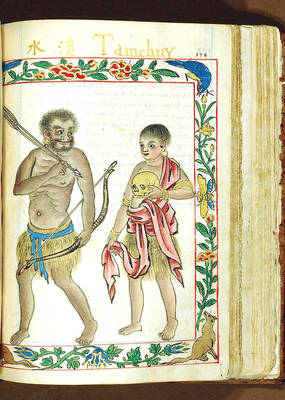
The Portuguese never established a presence on Taiwan, but they must have traded with the indigenous people because later traders reported that the locals referred to parts of deer using Portuguese words. What goods might the Portuguese have offered their indigenous trade partners? Among them must have been slaves, for the Portuguese dealt slaves across Asia. Though we often speak of “Portuguese” ships, imagining them as picturesque vessels manned by pointy-bearded Iberians, in Asia Portuguese shipping between local destinations was crewed by Asian seamen, with a handful of white or Eurasian officers. “Even the great carracks of 1,000-2,000 tons which plied

It’s only half the size of its more famous counterpart in Taipei, but the Botanical Garden of the National Museum of Nature Science (NMNS, 國立自然科學博物館植物園) is surely one of urban Taiwan’s most inviting green spaces. Covering 4.5 hectares immediately northeast of the government-run museum in Taichung’s North District (北區), the garden features more than 700 plant species, many of which are labeled in Chinese but not in English. Since its establishment in 1999, the site’s managers have done their best to replicate a number of native ecosystems, dividing the site into eight areas. The name of the Coral Atoll Zone might
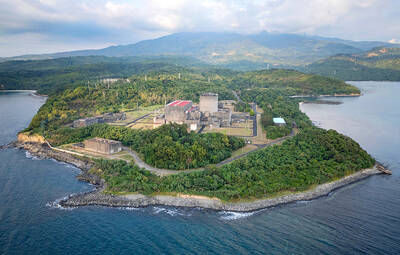
Nuclear power is getting a second look in Southeast Asia as countries prepare to meet surging energy demand as they vie for artificial intelligence-focused data centers. Several Southeast Asian nations are reviving mothballed nuclear plans and setting ambitious targets and nearly half of the region could, if they pursue those goals, have nuclear energy in the 2030s. Even countries without current plans have signaled their interest. Southeast Asia has never produced a single watt of nuclear energy, despite long-held atomic ambitions. But that may soon change as pressure mounts to reduce emissions that contribute to climate change, while meeting growing power needs. The


 RSS
RSS