


Paulina on Anhe Road is a cocktail bar for meeting friends after work, not shooting pool. The clientele is office workers in their 30s and 40s and guests from the Far Eastern Hotel, drinking wine and martinis.
The bar gets its name from owner Pauline Lin (林柏琦). "I put a lot of my own personality into this design," she said Monday during an interview in her recently opened establishment. "The concept can be expressed in two words: `simple' and `luxurious.'"
With exposed concrete walls, a polished black L-shaped bar and blue track lighting, Paulina goes for the stark minimalist look. The interior designer previously did sets for music videos by pop stars such as Jay Chou (周杰倫), and one gets the sense that this is a bar waiting for a few characters to bring it to life.
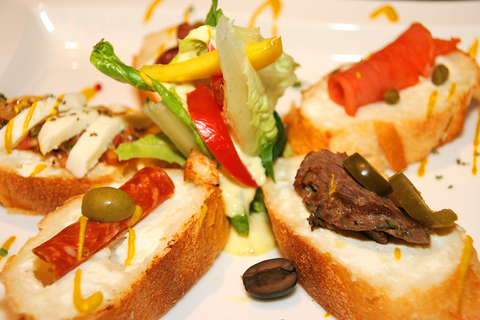
PHOTO COURTESY OF PAULINA
A dozen people can sit at the bar, with room for several more at three black high tables in the center. Downstairs, two large U-shaped couches can be rented for private parties at NT$15,000 each. NT$30,000 rents the entire 72㎡ basement, along with its projector, DVD player and amplifier, for anything from a business presentation to a DJ party.
Upstairs also offers a projection TV screen, which will be turned onto the World Cup Finals this weekend. But this is no sports bar. It's not a lounge bar, either. Lin calls it "the kind of bar like they have in America, where people pop in for a martini and tapas after work."
The menu lists 18 different kinds of vodka and gin martinis, priced from NT$250 to NT$350, in addition to several Chilean wines and German sparkling white wines. Boddingtons, Stella Artois, and Heineken are on tap. Bottle brews include Budweiser, Coors Light, Erdinger, Tiger and Victory Bitter.
At Paulina, tapas means dishes like bruschetta (NT$300), sauteed mushrooms with spicy garlic sauce (NT$200), squid in vinegar and lemon sauce (NT$300), German sausage (NT$400) and the cheeseburger handmade patty (NT$250). Lin says the food is "delicate." But the cheeseburger, which came with a juicy beef-and-pork patty, romaine lettuce, tomatoes and finely sliced pickles, was generously sized.
One of the best things about the place is its potential for staking out someone at Carnegies. Paulina sits a meter or so above street level and its clear glass facade offers a bird's-eye view of that nightspot.
And at NT$180 for a pint of Stella, you would be paying less than your quarry on the opposite side of Anhe Road. There is currently no happy hour, but Paulina has drink specials. On Wednesdays buy one bottle of Glenmorange whisky, get one free.
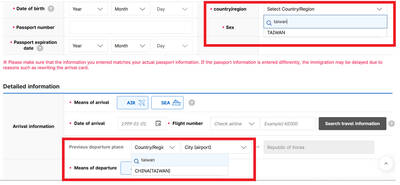
Jason Han says that the e-arrival card spat between South Korea and Taiwan shows that Seoul is signaling adherence to its “one-China” policy, while Taiwan’s response reflects a reciprocal approach. “Attempts to alter the diplomatic status quo often lead to tit-for-tat responses,” the analyst on international affairs tells the Taipei Times, adding that Taiwan may become more cautious in its dealings with South Korea going forward. Taipei has called on Seoul to correct its electronic entry system, which currently lists Taiwan as “China (Taiwan),” warning that reciprocal measures may follow if the wording is not changed before March 31. As of yesterday,

The Portuguese never established a presence on Taiwan, but they must have traded with the indigenous people because later traders reported that the locals referred to parts of deer using Portuguese words. What goods might the Portuguese have offered their indigenous trade partners? Among them must have been slaves, for the Portuguese dealt slaves across Asia. Though we often speak of “Portuguese” ships, imagining them as picturesque vessels manned by pointy-bearded Iberians, in Asia Portuguese shipping between local destinations was crewed by Asian seamen, with a handful of white or Eurasian officers. “Even the great carracks of 1,000-2,000 tons which plied
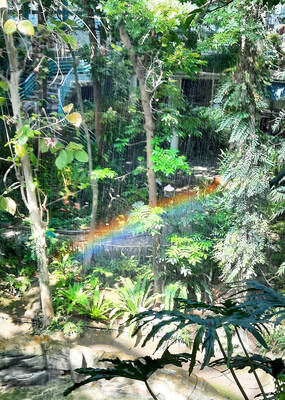
It’s only half the size of its more famous counterpart in Taipei, but the Botanical Garden of the National Museum of Nature Science (NMNS, 國立自然科學博物館植物園) is surely one of urban Taiwan’s most inviting green spaces. Covering 4.5 hectares immediately northeast of the government-run museum in Taichung’s North District (北區), the garden features more than 700 plant species, many of which are labeled in Chinese but not in English. Since its establishment in 1999, the site’s managers have done their best to replicate a number of native ecosystems, dividing the site into eight areas. The name of the Coral Atoll Zone might
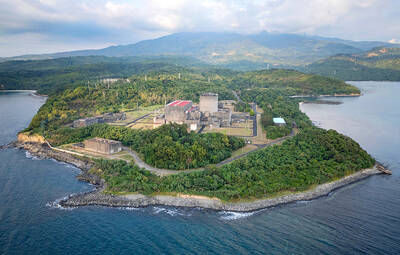
Nuclear power is getting a second look in Southeast Asia as countries prepare to meet surging energy demand as they vie for artificial intelligence-focused data centers. Several Southeast Asian nations are reviving mothballed nuclear plans and setting ambitious targets and nearly half of the region could, if they pursue those goals, have nuclear energy in the 2030s. Even countries without current plans have signaled their interest. Southeast Asia has never produced a single watt of nuclear energy, despite long-held atomic ambitions. But that may soon change as pressure mounts to reduce emissions that contribute to climate change, while meeting growing power needs. The


 RSS
RSS