


Playboy magazine creator Hugh Hefner is in the middle of an interview about his 80th birthday when a TV cameraman asks him to move a statue of former girlfriend Barbi Benton from the shelf behind him.
The statue's nude breasts were in the shot and that might not pass muster with US TV decency standards.
"As much as things change, they stay the same," Hefner remarks, disappointment in his voice. "There is still controversy about, maybe even more than before, not just nudity -- a nude statue."
That is Hefner's point -- that Playboy with its mission of sexual liberation is as relevant as ever in these days of US government crackdowns on television content that some consider indecent.
"Attitudes toward nudity and Playboy have changed, in many ways, very little," says the man who gave the world the Playboy centerfold. "In some ways it is even more political than it was in the 1950s and 1960s."
The invitation to Hefner's Saturday birthday party -- he turns 80 on Sunday -- unfolds to show three photos of him: one as a toddler, one holding his new magazine in 1953, and one showing a smiling young Hefner with wavy black hair and his iconic pipe.
The hair is thinner now and gray, almost white in places. His hearing is gone in one ear and he has the slightest bit of trouble getting up from his library couch after the interview. He quit smoking after a stroke in 1985.
But otherwise, the man dressed in black silk pajamas and a scarlet silk jacket with black lapels shows few other signs that he is becoming an octogenarian.
"Maybe to some extent 80 is the new 40," he says, smiling. "I truly believe that age -- if you're healthy -- age is just a number. On many levels I feel younger today than I did 10, 15 years ago."
Hef has a lot to make him feel young. He lives with three young, blonde girlfriends in his ornate mansion in Holmby Hills, California. Their life is being documented in hit reality TV show "The Girls Next Door" on the E! cable channel.
His company is opening a new Playboy club in Las Vegas and a new edition of the magazine has debuted in Indonesia, sparking controversy in that largely Muslim nation.
The famous mansion, with its free ranging exotic birds, stone grotto and game room, is a part of the fantasy he has carefully crafted around himself.
As Hefner reflects on his life and career, he recalls that he first reinvented himself at 16, when he was rejected by a girl he had a crush on. He began referring to himself as Hef instead of Hugh, learned the jitterbug and began drawing a comic book, "a kind of autobiography that put myself center stage in a life I created for myself."
He did it again in 1960, when he began hosting a TV show, bought a fancy car, started smoking a pipe and bought the first Playboy mansion, in Chicago.
"I came out from behind the desk and became the living personification of the dreams and fantasies that were in the magazine," Hefner said.
Although he continues to personify the Playboy philosophy, he is not unaware of the passing years.
"You come to a point in life in which you begin to lose some very dear friends, some of whom are peers in terms of age," he said. "In the last few years, I have lost some very dear contemporaries, including my best buddy in high school, the first girl I went steady with, Mel Torme, one of my closest friends."
Any regrets?
"Certainly it is a life well-lived and I wouldn't trade places with anybody," he said. "My life has been so rewarding and so satisfying, I would be hesitant to change anything."
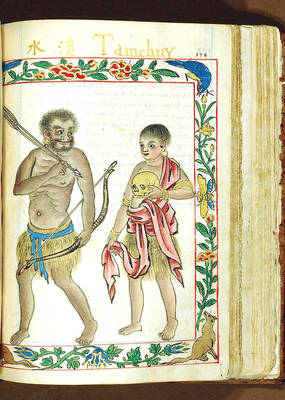
The Portuguese never established a presence on Taiwan, but they must have traded with the indigenous people because later traders reported that the locals referred to parts of deer using Portuguese words. What goods might the Portuguese have offered their indigenous trade partners? Among them must have been slaves, for the Portuguese dealt slaves across Asia. Though we often speak of “Portuguese” ships, imagining them as picturesque vessels manned by pointy-bearded Iberians, in Asia Portuguese shipping between local destinations was crewed by Asian seamen, with a handful of white or Eurasian officers. “Even the great carracks of 1,000-2,000 tons which plied
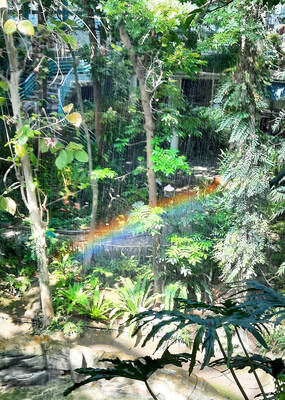
It’s only half the size of its more famous counterpart in Taipei, but the Botanical Garden of the National Museum of Nature Science (NMNS, 國立自然科學博物館植物園) is surely one of urban Taiwan’s most inviting green spaces. Covering 4.5 hectares immediately northeast of the government-run museum in Taichung’s North District (北區), the garden features more than 700 plant species, many of which are labeled in Chinese but not in English. Since its establishment in 1999, the site’s managers have done their best to replicate a number of native ecosystems, dividing the site into eight areas. The name of the Coral Atoll Zone might
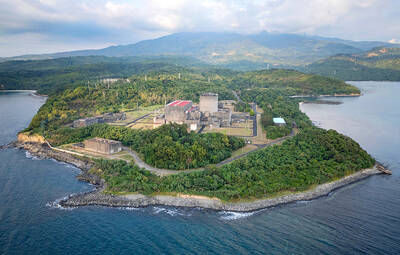
Nuclear power is getting a second look in Southeast Asia as countries prepare to meet surging energy demand as they vie for artificial intelligence-focused data centers. Several Southeast Asian nations are reviving mothballed nuclear plans and setting ambitious targets and nearly half of the region could, if they pursue those goals, have nuclear energy in the 2030s. Even countries without current plans have signaled their interest. Southeast Asia has never produced a single watt of nuclear energy, despite long-held atomic ambitions. But that may soon change as pressure mounts to reduce emissions that contribute to climate change, while meeting growing power needs. The
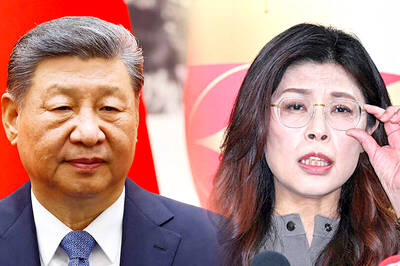
On Monday morning, in quick succession, the Chinese Communist Party (CCP) and the Chinese Nationalist Party (KMT) released statements announcing “that the Central Committee of the Communist Party of China and General Secretary Xi Jinping (習近平) have invited KMT Chairwoman Cheng Li-wun (鄭麗文) to lead a delegation on a visit to the mainland” as the KMT’s press release worded it. The KMT’s press release added “Chairwoman Cheng expressed her gratitude for the invitation and has gladly accepted it.” Beijing’s official Xinhua news release described Song Tao (宋濤), head of the Taiwan Work Office of the CCP Central Committee, as


 RSS
RSS