


In a narrow lane behind the bright and bustling Eslite Bookstore (
The Tonshan Bookstore has been a pivotal site for college students, intellectuals and social activists over the last 25 years. It is a place were they can immerse themselves in the sea of books and periodicals covering humane studies, social science, philo-sophy, literary, gender and Taiwan studies, poetry, art, film and theater. Owner Chen Long-hao (
Chen, who graduated in Social Science from National Taiwan University and received his masters in ethnology from National Chengchi University (
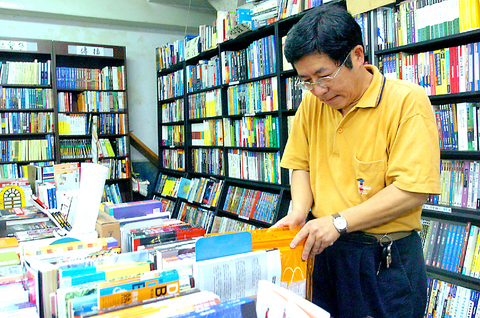
PHOTO: SEAN ZHAO, TAIPEI TIMES
"The Kaohsiung Incident (
In the early 1980s, there was no other local publishers for works on social science and political theory, so Tonshan quickly became a symbol of the revolutionary trend of that era.
However, even as the publishing and bookstore sector has enjoyed a great revival in the last decade, Tonshan's business has suffered. He remains high-spirited and an inspiration to those around him, but admits that he feels the financial pressure.
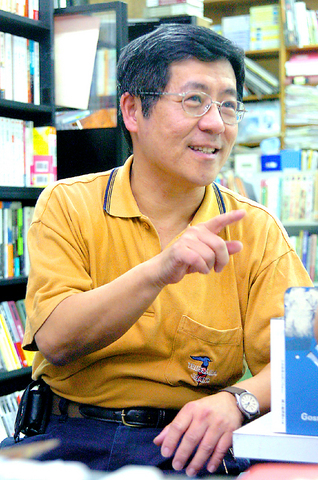
"The Eslite (bookstore chain) has moved into the neighbor-hood, as well as other specialist independent bookstores like Fembooks (
The surge of publications from China has also hurt business. "China has always been strong in social sciences and humanities, and translated titles have been released in a steady stream," Chen pointed out.
Several years ago, these pressures brought Tonshan to the brink of closure. But once news got out, scholars and students spoke out to help keep the store in business. Chen said when he realized how much Tonshan had become an integral part of cherished memories and a symbol to younger generations, he was determined to keep the business going.
Some have suggested taking advantage of developments in digital technology. But Chen pointed to the buyup of the local online bookstore Books.com.tw (博客來) by Uni-President Group (統一集團) as an example of how corporate backing is necessary to make such operations commercially viable.
Changing the bookstore's image to broaden its client base is not really an option either. Chen once put a few copies of the Harry Potter series on the shelves, but there were immediate protests from regulars. "We are who we are," Chen said.
Last year, Chen and other independent bookstore owners in the neighborhood initiated an effort to promote their businesses under the catchy moniker "Wen Luo Ding" (
"Since we have so many interesting bookstores in the neighborhood, we think it a good idea to make the area more recognizable so that when people want to buy books, they will come here, just as young kids will go to Ximending (西門町) for fashion goods," Chen said.
His life-long love affair with books led him to amass a library of thousands of titles. "When I was young, I enjoyed reading books of social and political science and economics. As a Hakka, now I am more into Taiwan studies, especially Hakka culture. Maybe someday I will publish my own Hakka study. After all, I have a publishing house to print whatever I want," Chen said laughing.
But Chen doesn't only think of himself. Like an affectionate uncle, he is always willing to lend a helping hand to people who want to publish often abstruse works that other publishers may shy away from.
In this consummerist age where style alone defines who we are, Tonshan doesn't have the glossy trappings to catch the eyes. While the youth of this generation grow up into slick white-collar yuppies favoring the more glamorous Eslite or Page One bookstores, Chen will continue to hold a torch for the spirit of youthful rebellion, and the passions and dreams of idealists.

Taiwan’s English education system is being pulled apart by three opposing forces. Bilingual Nation 2030 pulls students toward English and global communication. Artificial Intelligence (AI) readiness pulls them toward digital judgment, verification and AI-mediated work. But Taiwan’s old exam culture pulls them back toward memorization, grammar drills, timed reading and correct answers. If the education system keeps using old exams to define success, it risks producing graduates who are neither genuinely bilingual nor genuinely AI-ready, but trained for tasks machines can already perform. The first force is Bilingual Nation 2030. Launched in 2018, the policy aimed to “help Taiwan’s workforce connect
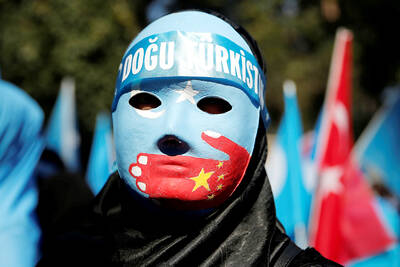
It seems every few days one bumps into one of those “real man” comments in which Taiwan is urged to “face reality” or similar, and “make a deal,” with the speaker implying that soon it will be too late. “Deal” advocates always present themselves as having a superior grip on reality, and the manly ability to make the “hard choice.” Their testosterone-laden language often echoes that of Taiwan sellout advocates. Note that such commentary always specifies a process (“make a deal, work with, make progress”), never the end state of what occupation by a violent authoritarian colonialist state will entail. In

“Taiwan’s Opposition Leader Comes to US With a Message Straight Out of Beijing” read a May 31 headline in the Wall Street Journal. Top US administration officials and members of Congress almost certainly read the WSJ, and if there was a bullet point takeaway that people in Washington should absorb ahead of Chinese Nationalist Party (KMT) Chair Cheng Li-wun’s (鄭麗文) arrival in DC on June 9, that headline is it. The last few columns have discussed this very topic, and the timing is not coincidental. While those top officials likely do not read the Taipei Times, judging by the number
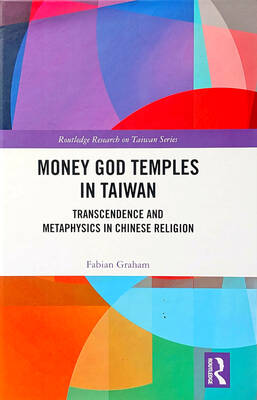
As someone who normally steers clear of books with “transcendence” or “metaphysics” in their subtitles, this reviewer — a casual observer of local belief systems since the 1990s — found Fabian Graham’s Money God Temples in Taiwan a challenging read. Those who’ve only dipped their toes into temple culture will likely need to parse several sections with special care if they’re to keep up with the author, a British ethnographic researcher whose previous books have investigated religious practices among ethnic Chinese in Southeast Asia. This scholarly volume examines a facet of Taiwan’s religious landscape that didn’t exist a century ago, and


 RSS
RSS