


The Neo-Classic Dance Company (
The Neo-Classic Dance Company, now in its 30th year, first performed Carmina Burana in 1992. The National Culture and Arts Foundation came up with the idea of celebrating the best performances of the past 50 years by asking six companies to restage one of their classic productions. This weekend it is the Neo-Classic's turn at the National Theater.
Lin said she recreated her Carmina based on a videotape of the original production and her memory, since less than a handful of the 23 dancers in the company were performing back in 1992.
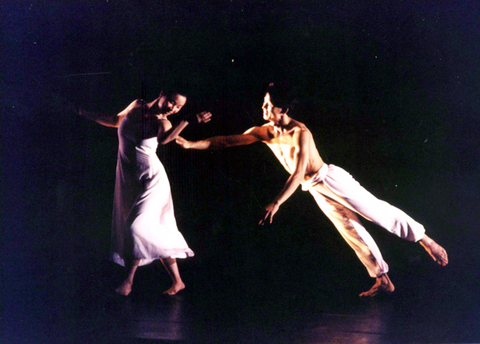
PHOTO COURTESY OF NEO-CLASSICAL
German composer Carl Orff's 1937 Carmina Burana or "Songs of Beuran" was based on a collection of more than 1,000 poems and songs about love, life and liquor written early in the 13th century by wondering poets and young priests or theologians, who obviously had more than religion on their minds.
Orff took selections from this medieval manuscript and set them to music as a "scenic cantata." His pulsating score was composed for a large orchestra, chorus and soloists, with some sections purely instrumental and others for solo voices.
The O Fortuna sections that open and close the five-section cantata have become well-known over the years even to those who are not fans of classical music or dance as they have frequently been excerpted for use in movie scores and TV commercials.
The American choreographer John Butler was the first to choreograph Carmina Burana for a ballet, which he staged for the New York City Opera in 1959. In the 1960s and 1970s both Butler's version and those by other choreographers became a favorite of dance companies both in the US and other countries, while the cantata remained popular as a concert hall offering as well.
Lin has taken this medieval European paean to hedonism and given it an Eastern flavor. Although there is not really a story for Carmina, she said she made a simple narrative line.
"It's about a group of hermits who still haven't put the world completely behind. They break out of their monastery and experience the real world, but eventually they return to their lives as hermits," Lin said in a telephone interview on Wednesday.
"The music has a lot of tension," she said. "It fits my personality; it's very dynamic." She said no props are used, so the dancers must use their bodies and mime to convey the story.
"The body is the only expressive tool... the hair of the dancers is used to represent spring, their skirts represent flowers," she said. "There are hoods attached to their costumes -- when they throw them off it represents the casting away of the core of their lives, their religious life. When they decide to return to their lives [as hermits] they put the hoods back on."
For this weekend's performances, the Neo-Classic company will be accompanied by the YinQi Orchestra (
Performance notes:
What: Neo-Classic Dance Company
Where: National Theater of the CKS Memorial Hall, 21-1, Zhongshan S Rd, Taipei?
When: TTonight and tomorrow night at 7:30; Sunday afternoon at 2:30pm
Tickets: NT$300, NT$500, NT$700, NT$900, NT$1,500; available at the National Theater box office
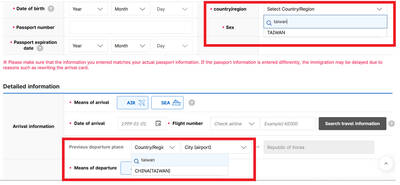
Jason Han says that the e-arrival card spat between South Korea and Taiwan shows that Seoul is signaling adherence to its “one-China” policy, while Taiwan’s response reflects a reciprocal approach. “Attempts to alter the diplomatic status quo often lead to tit-for-tat responses,” the analyst on international affairs tells the Taipei Times, adding that Taiwan may become more cautious in its dealings with South Korea going forward. Taipei has called on Seoul to correct its electronic entry system, which currently lists Taiwan as “China (Taiwan),” warning that reciprocal measures may follow if the wording is not changed before March 31. As of yesterday,
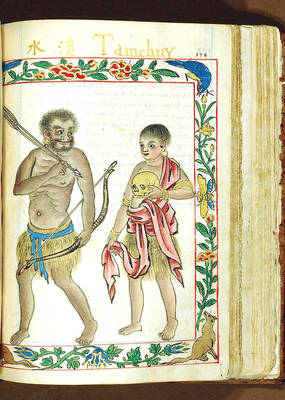
The Portuguese never established a presence on Taiwan, but they must have traded with the indigenous people because later traders reported that the locals referred to parts of deer using Portuguese words. What goods might the Portuguese have offered their indigenous trade partners? Among them must have been slaves, for the Portuguese dealt slaves across Asia. Though we often speak of “Portuguese” ships, imagining them as picturesque vessels manned by pointy-bearded Iberians, in Asia Portuguese shipping between local destinations was crewed by Asian seamen, with a handful of white or Eurasian officers. “Even the great carracks of 1,000-2,000 tons which plied

On Thursday, former Taipei mayor and founder of the Taiwan People’s Party (TPP) Ko Wen-je (柯文哲) was sentenced to 17 years in prison and had his civil rights suspended for six years over corruption, embezzlement and other charges. Seven others related to the case were also handed prison sentences, while two were found not guilty. It has been a bad week for the TPP. On Tuesday, prosecutors charged Chinese immigrant Xu Chunying (徐春鶯) with suspicion of taking part in Beijing-directed election interference. Xu has strong links to the TPP, which once offered her a party list legislator nomination. Tuesday also
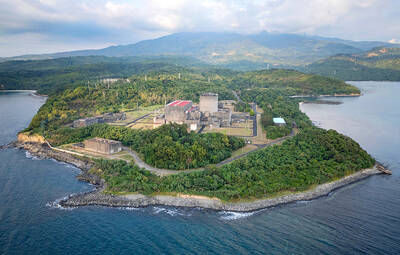
Nuclear power is getting a second look in Southeast Asia as countries prepare to meet surging energy demand as they vie for artificial intelligence-focused data centers. Several Southeast Asian nations are reviving mothballed nuclear plans and setting ambitious targets and nearly half of the region could, if they pursue those goals, have nuclear energy in the 2030s. Even countries without current plans have signaled their interest. Southeast Asia has never produced a single watt of nuclear energy, despite long-held atomic ambitions. But that may soon change as pressure mounts to reduce emissions that contribute to climate change, while meeting growing power needs. The


 RSS
RSS