


Jane Goodall is a name synonymous with chimpanzees. In the 1960s she initiated a groundbreaking study that amounted to the longest unbroken study of any one group of animals in the world.
Her observations and insight into the behavior and characteristics and abilities of these primates -- initially fraught with disappointment that "they'd take one look at this white ape and flee" -- are well documented.
Her research in this field ultimately brought the scientific world closer to understanding the one animal species regarded as closest to humans and gave her worldwide recognition.
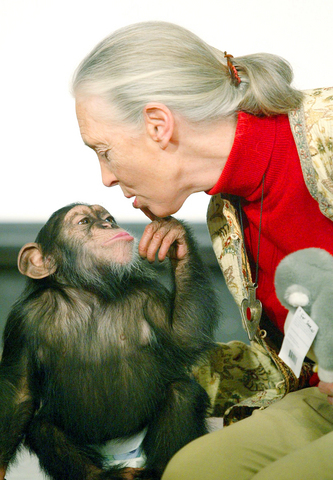
PHOTOS: AFP
On a visit to South Africa last week, the small-framed, gray-haired 71-year-old launched into a host of issues pertaining to the state of the natural world today.
Her personal "mascot," a stuffed toy chimpanzee stood on a table beside her as she spoke softly and passionately about her life's work and her hope for better protection for the planet.
She held guests from business and academic circles who attended the lecture at the Gordon Institute of Business Science spellbound with anecdotes from her early years -- her achievements, her hopes, her legacy and her general belief that "you cannot live for a day and not have an impact on the world."
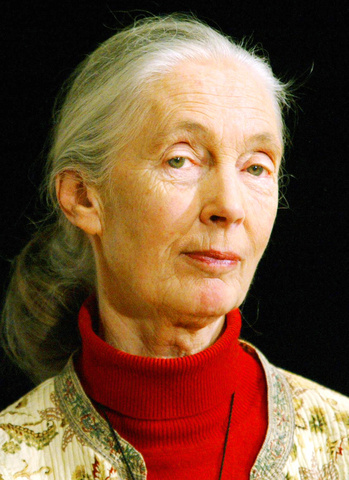
Goodall was an English child with a passion for animals -- beginning with the handful of earthworms she took to bed one night at the age of 18 months, and the frantic search as she hid in the henhouse to determine where exactly hen's eggs came from.
Then there were the Dr. Dolittle stories that inspired most when the character "takes the circus animals back to Africa," enjoyed during a childhood "when there were no cruel factory farms."
Her first visit to Africa -- she traveled to Kenya with a friend -- came at age of 23. There followed the invitation for her -- a secretary -- to study chimp-anzees and her subsequent long and regular spells among the chimpanzees in east Africa's Gombe Nature Reserve.
She also detailed her ongoing work on the continent where she continues to campaign for the protection of chimpanzees and for nature conservation and development through her global network of Roots and Shoots groups aimed at young people.
"The adventure continues," she told her audience before proceeding. It is an adventure that has long moved from her chimp-anzee habitat on the shores of Lake Tanganyika where the reserve is located.
In the 1960s there were an estimated two million chimpanzees living in the Gombe. Today, only an estimated 200,000 remain.
"Some often refer to the population as 150,000," Goodall said.
"I'm always linked to the chimp-anzees. I read about them, I write about them, but I don't live with them and study them," she said.
A turning point came in 1986 when she attended a conference in the US. "I went in as a scientist and came out as an activist," she recalled.
Issues such as the bush meat trade in Africa that had nothing to do with subsistence, commercial hunting and the depletion of wildlife habitat by large companies had caught her attention.
Agricultural methods of "spraying and sprinkling" harmful chemicals, many that came from weapons developed during World War II, also became issues of concern for her.
"We are poisoning the land, its reaching down into the water. We are poisoning the air," she said.
"There are places where our precious children are being poisoned by what they eat and drink," she highlighted.
In her latest book, Harvest for Hope, in which Goodall looks at the consumption and production of food and its impact on the environment, she devotes an entire chapter to children and nutrition.
The rise of superbugs as a result of resistance to antibiotics, conditions at abattoirs and the destruction of land with the estab-lishment of cities in countries like China are also covered in Goodall's book.
These days human disregard for the environment takes her increasingly to places like Japan, China and India in her bid to fulfil her goal of preventing further harm to the natural world.
Goodall told how she has personally witnessed chained elephants "swaying from side to side on concrete" and young chimps being "offered for sale next to the cut up bodies of their mothers."
But in the face of all of this, she has hope, she said. "My reasons are very simplistic. They are not based on science. They are naive."
The lecture returned to a subject that makes her face light up -- chimpanzees. "They are capable of extreme brutality and violence.
"They do have a dark side," she explained.
But, according to Goodall, what sets this animal and humans apart was the latter had an imaginative brain.
"If we have the will with these brains, there are solutions," she said, adding that people the world over were beginning to understand that needless destruction for the sake of civilization could not continue.
"Injustices and dangers on the planet today have created a new kind of business person. One who is successful and wants to put something back," she concluded.
Ever since an American businessman provided the funds she needed to spend her first six months in Gombe, "business has been tremendously helpful in all the things I do," she also noted.
Goodall said she travels to Gombe twice a year for a just a few days at a time. She is no longer a familiar face to the chimpanzees that inhabit the area, she explained. "Most of the chimps I knew very well are not there any more".
But her brief visits are very much about "being alone" in the forest, she said, adding: "Any wilderness is good. Any wilderness is good."
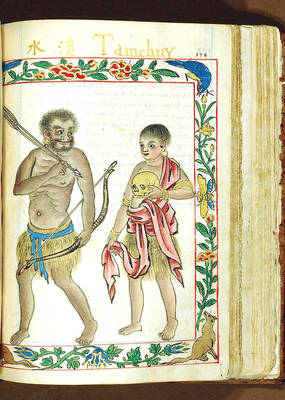
The Portuguese never established a presence on Taiwan, but they must have traded with the indigenous people because later traders reported that the locals referred to parts of deer using Portuguese words. What goods might the Portuguese have offered their indigenous trade partners? Among them must have been slaves, for the Portuguese dealt slaves across Asia. Though we often speak of “Portuguese” ships, imagining them as picturesque vessels manned by pointy-bearded Iberians, in Asia Portuguese shipping between local destinations was crewed by Asian seamen, with a handful of white or Eurasian officers. “Even the great carracks of 1,000-2,000 tons which plied
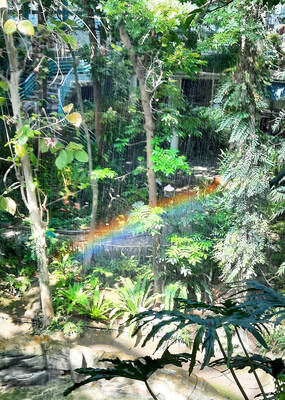
It’s only half the size of its more famous counterpart in Taipei, but the Botanical Garden of the National Museum of Nature Science (NMNS, 國立自然科學博物館植物園) is surely one of urban Taiwan’s most inviting green spaces. Covering 4.5 hectares immediately northeast of the government-run museum in Taichung’s North District (北區), the garden features more than 700 plant species, many of which are labeled in Chinese but not in English. Since its establishment in 1999, the site’s managers have done their best to replicate a number of native ecosystems, dividing the site into eight areas. The name of the Coral Atoll Zone might
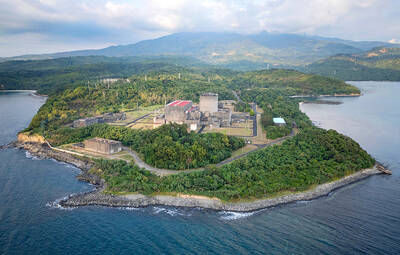
Nuclear power is getting a second look in Southeast Asia as countries prepare to meet surging energy demand as they vie for artificial intelligence-focused data centers. Several Southeast Asian nations are reviving mothballed nuclear plans and setting ambitious targets and nearly half of the region could, if they pursue those goals, have nuclear energy in the 2030s. Even countries without current plans have signaled their interest. Southeast Asia has never produced a single watt of nuclear energy, despite long-held atomic ambitions. But that may soon change as pressure mounts to reduce emissions that contribute to climate change, while meeting growing power needs. The

On Monday morning, in quick succession, the Chinese Communist Party (CCP) and the Chinese Nationalist Party (KMT) released statements announcing “that the Central Committee of the Communist Party of China and General Secretary Xi Jinping (習近平) have invited KMT Chairwoman Cheng Li-wun (鄭麗文) to lead a delegation on a visit to the mainland” as the KMT’s press release worded it. The KMT’s press release added “Chairwoman Cheng expressed her gratitude for the invitation and has gladly accepted it.” Beijing’s official Xinhua news release described Song Tao (宋濤), head of the Taiwan Work Office of the CCP Central Committee, as


 RSS
RSS