


What is art? Many people define art as aesthetic objects containing beauty. Now is your chance to see such beautiful objects at the Taipei Fine Arts Museum where exquisite oil paintings and fine alabaster marble sculptures are on view in the exhibition titled Porte de la Gloire Les Expositions officielles parisiennes au 19eme siecle (19th Century Academic French Painting) that spans the period from the French Revolution in 1789 to the beginning of World War I in 1914.
This is one of the museum's more expensive shows (costing more than NT$200 million) with works lent from the Chi Mei Museum, and will later travel to the National Taiwan Museum of Fine Arts in Taichung and then to the Kaohsiung Museum of Fine Arts.
These French works debuted in a show at the Salon de Paris, the official exhibition space of the Academie des Beaux-Arts first held at the Louvre Museum in 1725. The Salon had strict genres which included mythological themes, portraits and landscapes, that artists had to adhere to. Acceptance at the Salon was vital for young artists who wanted prosperous careers in art. Paintings were displayed from floor to ceiling, so that the bigger the canvas the more exhibition space it received, which promoted a fierce competitive environment of showmanship. The Salon also set the foundation for today's modern art museum and for the field of art criticism.
PHOTOS COURTESY OF TFAM
Meandering through TFAM's exhibition of rose pink and dusty gray painted walls hung with huge gilt-framed oil paintings is a moving aesthetic experience similar to walking through those great western museums such as the Louvre or the Met. Soft lighting, piped in music and the fact that it is open free until 9pm on Saturdays makes this exhibition an enjoyable night out.
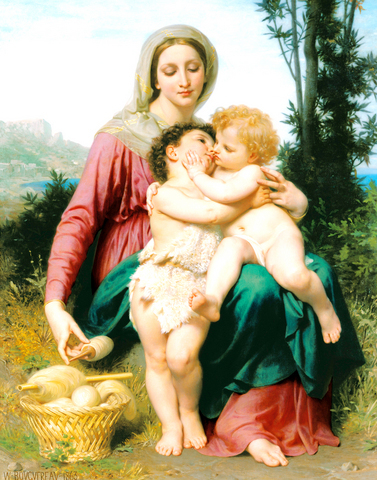
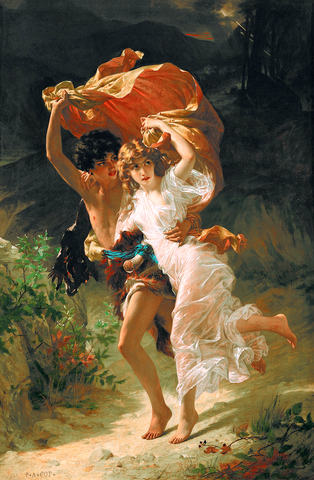
The condition of the paintings is outstanding, making it hard to believe these works are over 100 years old. Besides marveling over their physical condition, the works really come to life. In particular, the portrait paintings sparkle with flesh tones, underlying bluish veins, pouty moist lips, dewy eyes, crisp swaths of satin and crumpled velvet bodices; yet this is just oil paint on canvas.
Upon entering the space, the first piece is a huge painting by Rene Theodore Berthon titled The Departure of Angelica and Medoro. She, the daughter of the King of Cathay (Asia) seeing her moorish knight off to war is a depiction of a famous literary theme. Jacques Nicolas Paillot de Montabert's Self-Portrait shows a moody bohemian clutching his notebook. The portrait speaks to the present. Even though many of these figures seem like literary figures, they also can have a fleeting resemblance to contemporary friends.
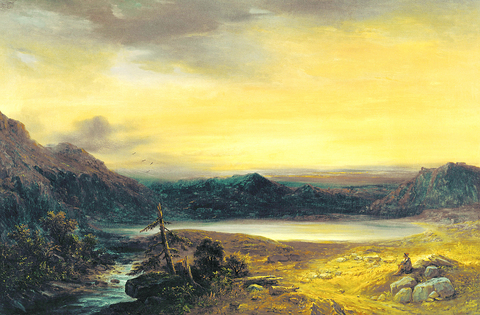
Besides portraits of dandies and ladies, the disenfranchised are included, as the poor and the suffering also made for great subjects. Fantasy-based allegorical and mythological paintings were highly esteemed back then, but now they look ridiculously contrived as in Francois Auguste Biard's sci-fi-like iceberg shipwreck with its polar denizens encountering the seafaring victims.
However, works based on true obser-vation really stand the test of time. Louis-Emile Adan's superb Autumn Evening shows a woman with cheeks aglow deep in reverie looking over a stone wall to the industrial town below with plumes of smoke rising through the chilly crispness of the autumnal sky.
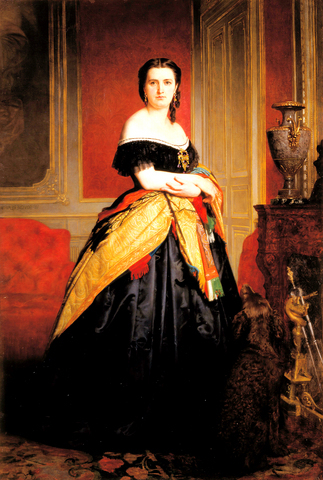
William-Adolphe Bouguereau is one of the more well-known painters on view. In the stunning Portrait of Marie-Therese Bartholoni, the painter shows off his talents by not aiming for flattery, but for realism and astutely conjures up the sitter's personality via the creases in her taffeta skirt, the dark hair outlining her upper lip, and her plain dog-faced expression.
For your information:
What: Porte de la Gloire Les Expositions officielles parisiennes au 19eme siecle (19th Century Academic French Painting)
Where: Taipei Fine Arts Museum,181, Zhongshan N Rd, Sec 3, Taipei (台北市中山北路3段181號)
Telephone: (02) 2595 7656
When: to April 2
If one asks Taiwanese why house prices are so high or why the nation is so built up or why certain policies cannot be carried out, one common answer is that “Taiwan is too small.” This is actually true, though not in the way people think. The National Property Administration (NPA), responsible for tracking and managing the government’s real estate assets, maintains statistics on how much land the government owns. As of the end of last year, land for official use constituted 293,655 hectares, for public use 1,732,513 hectares, for non-public use 216,972 hectares and for state enterprises 34 hectares, yielding
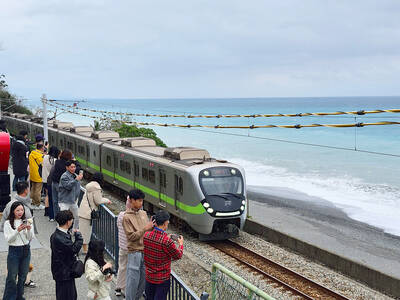
The small platform at Duoliang Train Station in Taitung County’s Taimali Township (太麻里) served villagers from 1992 to 2006, but was eventually shut down due to lack of use. Just 10 years later, the abandoned train station had become widely known as the most beautiful station in Taiwan, and visitors were so frequent that the village had to start restricting traffic. Nowadays, Duoliang Village (多良) is known as a bit of a tourist trap, with a mandatory, albeit modest, admission fee of NT$10 giving access to a crowded lane of vendors with a mediocre view of the ocean and the trains
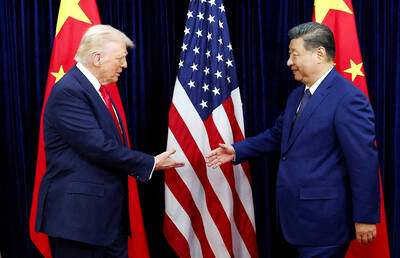
The March/April volume of Foreign Affairs, long a purveyor of pro-China pablum, offered up another irksome Beijing-speak on the issues and solutions for the problems vexing the People’s Republic of China (PRC) and the US: “America and China at the Edge of Ruin: A Last Chance to Step Back From the Brink” rang the provocative title, by David M. Lampton and Wang Jisi (王緝思). If one ever wants to describe what went wrong with US-PRC relations, the career of Wang Jisi is a good place to start. Wang has extensive experience in the US and the West. He was a visiting
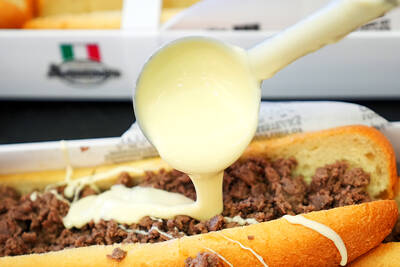
One of the challenges with the sheer availability of food in today’s world is that lots of us end up spending many of our waking hours eating. Whether it’s full meals, snacks or desserts, scientists have found that it’s not uncommon for us to be mindlessly grazing at some point during all of our 16 or so waking hours. The problem? As soon as this food hits the bloodstream in the form of glucose, it initiates the release of the hormone insulin. This in turn activates a switch present in every one of our cells, which is responsible for driving cell


 RSS
RSS