


The "cool" set in town is wearing Abercrombie & Fitch, American Eagle, Banana Republic and Hollister clothes -- though officially you cannot buy the brands in Taipei.
"I first knew of Abercrombie and Fitch during freshman year in college. Many of my classmates in school, especially the ones that grew up or had family abroad wore it, almost religiously," says Chen Lien-fang (
"Later, as we shopped, my friends and I came across more `outlet stores' that sold clothes from abroad [but] were unavailable in Taiwan. Yet to us, who had been in the States before, we immediately knew what we had found."
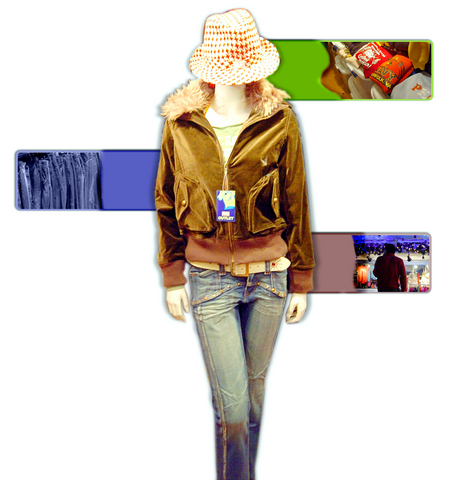
PHOTOS: CHU PEI-HSIUNG, TAIPEI TIMES
And what's even better, "Their prices were about one third the retail price in the States," Chen adds. Sound too good to be true?
Some stores or vendors simply buy the merchandise monthly, either through the Internet, or through taking regular trips abroad. Their prices are often higher than the retail prices abroad.
Others, try to cash in on the craze by offering knock-offs. Finally, there are the kinds of stores that offer real Abercrombie jeans and Hollister track pants at unbelievably low prices. How do they do it?
"Most of the store owners or vendors have contacts with the manufacturing plants in Southeast Asia," explains one of the clerks in an outlet who requested anonymity.
"Let's say Abercrombie in the US orders 10,000 pairs of jeans. But for the fear of defects the plants always manufacture more, say 10,500. After Abercrombie has taken their 10,000, the factories secretly sell the rest to people like us.
"Many of them are marked by cutting a hole through the tags so they're not sellable in the States anymore. We pay the factories a certain fee and take them off their hands and thus sell them for very cheap rates.
"They are not knock-offs, but are exactly the same as those sold in stores abroad. We even have a mutual agreement that to be less conspicuous the factories don't hand us the shipments until that season's merchandise in the official stores are off the rack," the clerk says.
Currently, in Taipei, there are three "hotspots" for the unofficial outlets or vendors that sell these brands. The East Side (Zhongxiao East Road and Xinyi District), Ximending, and Tianmu. In these areas there are up to a dozen shops, many of which are hidden in obscure alleys known only to the experienced Taipei shopper.
Word of mouth, especially among students -- who enjoy the luxury of wearing brands and setting trends, but have less money at their disposal -- do the rest.
Was this trend anticipated? The clerk shakes his head and says a lot of them started selling the brands years before. They simply thought they were good and could move them at cheap prices and for a nice profit.
The craze reached its peak in recent years when almost every girl in Taipei, it seemed, was walking through campus in Hollister pants and a tight-fitting Abercrombie T-shirt with the words "co-ed" printed on the front.
Whether or not these "outlet stores" indirectly started a trend is no longer important. What is certain is that it has created a new mentality among Taipei's youth of what being young and chic should be like.
They wear these seemingly up-scale clothes and walk through town with heads held high, as if they're all part of a select group.
By now however, this trend may be peaking, the clerk says. They sell fewer of these brands by the month than they used to.
Vendors all over the city now sell Hollister sweaters and American Eagle shirts. It was the best-kept secret among kids in Taipei, except by now it's no longer a secret. And that may be where the problems lie.
This is because anything considered cool and trendy depends on being not available except to those in the know.
A recent walk through the East Side reveals that almost one out of every three street vendors now claim to be selling cheap but real "outlet" clothing, while knockoffs run amok.
Chen, who is wearing Ezra Fitch jeans that sell for US$150 in the US, got her pair for NT$690. Her Abercrombie cord jacket? NT$980, as opposed to US$79.50. She too wonders how long this trend will continue.
"The clothing of course is great. The quality is superb and the attitude of the T-shirts, the cut of the jeans and tops really flatter your figure. They are one of the brands that are truly made for and loved by the younger generation."
Wouldn't it be easier if the stores simply opened chains in Taiwan?
"Maybe not. It wouldn't be a bad thing, but then [the clothes] would be everywhere and [being a] symbol of exclusiveness would be gone. More and more people in Taipei these days are starting to wear Juicy Contour or Victoria's Secret, both unavailable in Taiwan."
And thus we have the ironic Taiwan phenomenon of being able to buy real products not officially sold in Taiwan for much less than the real stores selling them abroad. In the end, perhaps, it is another one of the quirky characteristics of Taipei's movement toward a rising international identity.
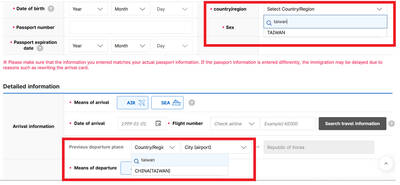
Jason Han says that the e-arrival card spat between South Korea and Taiwan shows that Seoul is signaling adherence to its “one-China” policy, while Taiwan’s response reflects a reciprocal approach. “Attempts to alter the diplomatic status quo often lead to tit-for-tat responses,” the analyst on international affairs tells the Taipei Times, adding that Taiwan may become more cautious in its dealings with South Korea going forward. Taipei has called on Seoul to correct its electronic entry system, which currently lists Taiwan as “China (Taiwan),” warning that reciprocal measures may follow if the wording is not changed before March 31. As of yesterday,

The Portuguese never established a presence on Taiwan, but they must have traded with the indigenous people because later traders reported that the locals referred to parts of deer using Portuguese words. What goods might the Portuguese have offered their indigenous trade partners? Among them must have been slaves, for the Portuguese dealt slaves across Asia. Though we often speak of “Portuguese” ships, imagining them as picturesque vessels manned by pointy-bearded Iberians, in Asia Portuguese shipping between local destinations was crewed by Asian seamen, with a handful of white or Eurasian officers. “Even the great carracks of 1,000-2,000 tons which plied
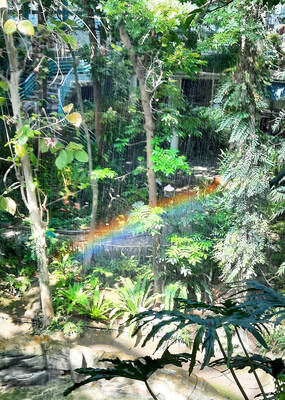
It’s only half the size of its more famous counterpart in Taipei, but the Botanical Garden of the National Museum of Nature Science (NMNS, 國立自然科學博物館植物園) is surely one of urban Taiwan’s most inviting green spaces. Covering 4.5 hectares immediately northeast of the government-run museum in Taichung’s North District (北區), the garden features more than 700 plant species, many of which are labeled in Chinese but not in English. Since its establishment in 1999, the site’s managers have done their best to replicate a number of native ecosystems, dividing the site into eight areas. The name of the Coral Atoll Zone might
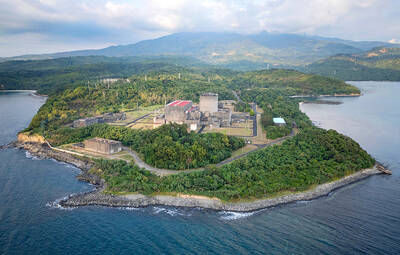
Nuclear power is getting a second look in Southeast Asia as countries prepare to meet surging energy demand as they vie for artificial intelligence-focused data centers. Several Southeast Asian nations are reviving mothballed nuclear plans and setting ambitious targets and nearly half of the region could, if they pursue those goals, have nuclear energy in the 2030s. Even countries without current plans have signaled their interest. Southeast Asia has never produced a single watt of nuclear energy, despite long-held atomic ambitions. But that may soon change as pressure mounts to reduce emissions that contribute to climate change, while meeting growing power needs. The


 RSS
RSS