


This past year, the local film industry has produced a welcome surge of genre-oriented commercial flicks and the vigorous return of art-house movies and non-fictional works. Aiming to make mainstream movies that appeal to a broad scope of audiences, new local production companies have mushroomed over the past couple of years while native-born masters have returned to the scene with their latest works. So here are the five local productions made by veteran film-makers and young talents selected as the most representative works of Taiwanese cinema this year.
Hou Hsiao-hsien's (侯孝賢) Three Times (最好的時光) is rightfully credited as the director's most enjoyable film to date. Though set against a social and political backdrop spanning some 100 years, the movie is oriented more as a romantic vignette than a politically conscious epic such as City of Sadness (悲情城市, 1989). The triptych film was born of both Hou's personal past and his life-long evolution as an artist.
However, Hou's masterpiece is not without its flaws. In the third segment that deals with the anomic life of contemporary youths lost in the urban jungle, the juxtaposition of the stereo-typical, fast-paced imagery of metropolitan life somehow fails to strike a chord with the contemporary soul.
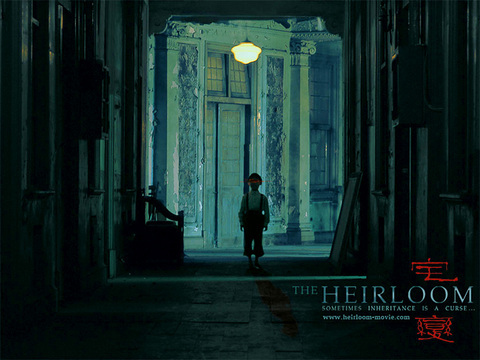
PHOTO COURTESY OF THREE DOTS ENTERTAINMENT
Hou's interest in the so-called lost generation was made apparent in his 2001 Millennium Manbo (
This year's Berlin Film festival winner The Wayward Cloud (
The visual style of the film success-fully delivers the emotional power of the narrative, forming an elegant contrast between a stark cinematic reality and the colorful, vintage-looking musical numbers. The metaphorical use of watermelons and water poignantly manifest the controversial motif of Tsai's work: a human body that never ceases wandering in the landscape of desire.
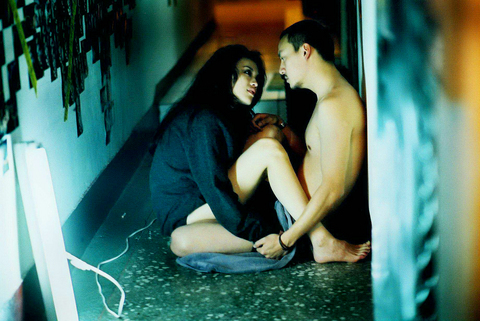
PHOTO COURTESY OF HAI PENG FILMS
In this film, the human body is treated as a machine of desire that eats, drinks, vomits and exchanges bodily fluids but is neither fulfilled nor content. The Wayward Cloud masterfully tells a contemporary story about sex and desire in all their splendor, banality, vulgarity and mystery.
Riding the ongoing horror-movie fever in the local movie scene, Heirloom (
The unexpected box office successes of two documentary productions Let It Be (
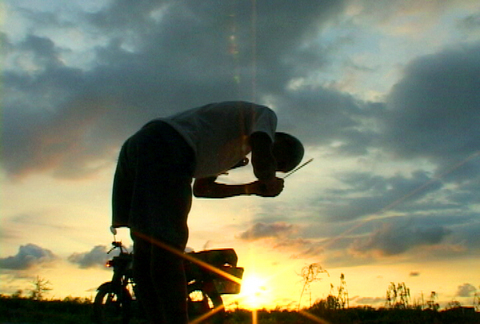
PHOTO COURTESY OF CIMAGE TAIWAN FILM CO
While clutching at one single genre obviously isn't a realistic solution to the movie industry's woes, both films successfully have won over the hearts of audiences through their different filming styles and the caring approach to the documentaries' subjects.
Let It Be's simple and empathetic approach to the plight of elderly rice farmers in Houbi Township, Tainan County (
Though not taking social and political agenda as its main interest, the film offers reflections from ordinary folk in the wake of Taiwan's accession to the WTO and is a valuable document depicting a way of life that may soon disappear in the face of fierce competition from foreign agricultural imports. Amid the beauty of southern Taiwan's farming landscapes, the honest, hard-working farmers epitomize the triumph of their will to survive the daily grind of life while content with what life has forced upon them. Directors Yen Lan-chuan (顏蘭權) and Cres Juang (莊益增) and the local farmers have together raised their voices about the loss of cultural practices in the face of global free trade propagated by the WTO.
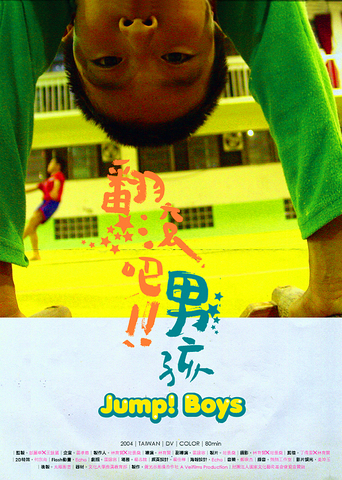
PHOTO COURTESY OF JUMPBOYS FILMS
Veering away from the social commentary-heavy genre of non-fiction cinema, Jump! Boys can be seen as a feature film rather than a documentary with its lively combination of animation, special effects and humor. Taking the director's older brother, a gymnastics coach and a gymnastics team of seven boys as its main characters, the film seems less significant in terms of its subject matter at first but ends up weaving together a charming story about the group of boys, each of whom has a unique personality and lots of fun things to say. The film reaped NT$4 million at the box office and stayed in theaters for three months -- an exceptional achievement for a local film, fiction or non-fiction.

Taiwan’s English education system is being pulled apart by three opposing forces. Bilingual Nation 2030 pulls students toward English and global communication. Artificial Intelligence (AI) readiness pulls them toward digital judgment, verification and AI-mediated work. But Taiwan’s old exam culture pulls them back toward memorization, grammar drills, timed reading and correct answers. If the education system keeps using old exams to define success, it risks producing graduates who are neither genuinely bilingual nor genuinely AI-ready, but trained for tasks machines can already perform. The first force is Bilingual Nation 2030. Launched in 2018, the policy aimed to “help Taiwan’s workforce connect

“Taiwan’s Opposition Leader Comes to US With a Message Straight Out of Beijing” read a May 31 headline in the Wall Street Journal. Top US administration officials and members of Congress almost certainly read the WSJ, and if there was a bullet point takeaway that people in Washington should absorb ahead of Chinese Nationalist Party (KMT) Chair Cheng Li-wun’s (鄭麗文) arrival in DC on June 9, that headline is it. The last few columns have discussed this very topic, and the timing is not coincidental. While those top officials likely do not read the Taipei Times, judging by the number

With weighty, anxiety-inducing geopolitical topics dominating the headlines, checking in on the wild and weird state of local politics can take some of the edge off. This November’s elections will determine who will be in charge of fixing potholes in your neighborhood, not the potholes in Taiwan’s complicated geopolitical space. Recently, after an online interview with a Taipei-based journalist, I commented that Taipei journalists never go further than the MRT can take them. He laughed and agreed. Naturally, the Taipei mayoral race is eating up much of the press attention. TAIPEI CITY Democratic Progressive Party (DPP) candidate Puma Shen (沈伯洋) has
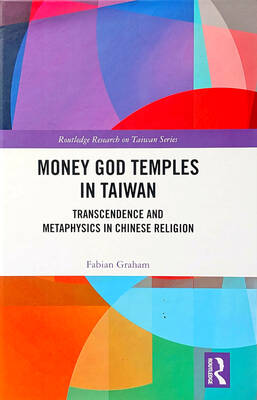
As someone who normally steers clear of books with “transcendence” or “metaphysics” in their subtitles, this reviewer — a casual observer of local belief systems since the 1990s — found Fabian Graham’s Money God Temples in Taiwan a challenging read. Those who’ve only dipped their toes into temple culture will likely need to parse several sections with special care if they’re to keep up with the author, a British ethnographic researcher whose previous books have investigated religious practices among ethnic Chinese in Southeast Asia. This scholarly volume examines a facet of Taiwan’s religious landscape that didn’t exist a century ago, and


 RSS
RSS