


Recently among artists, curators and critics in Taiwan's art circles there has been discussion about the differences in Western and Eastern aesthetics and perceptions. In our media-saturated world formed by Hollywood movie images, the question that many Taiwanese artists ask themselves is: Can today's artists have an Asian perspective. And if so, is an Asian point of view different from a Western one?
Two exhibitions currently on view unwittingly explore this issue, as the three artists are from Taiwan, yet were educated in art institutions in the US.
The medium of choice for these artists is photography.
PHOTOS COURTESY OF THE ARTIST
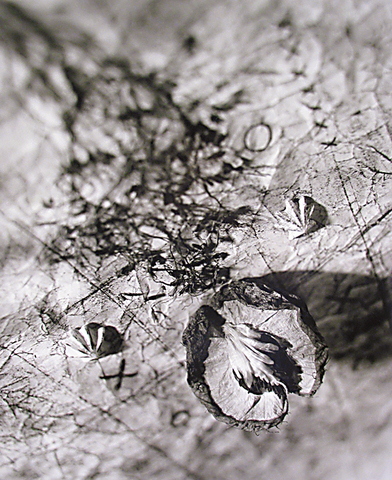
For her exhibition at TIVAC titled Minutiae, Kuo Hsiu-li (
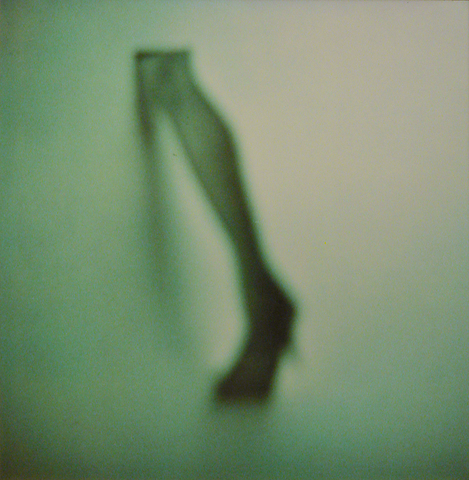
Also at TIVAC are works by Huang Yachi (
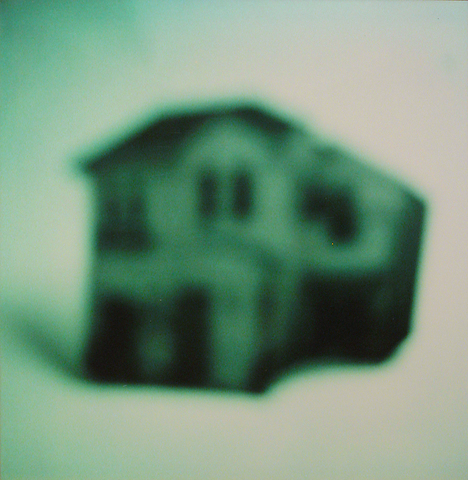
Huang created The Model House as a way to explore the concept of the ideal home. Each image of a home or building is blurred with a greenish tint, as if a sickly pallor has descended on an idealistic idea of home. In this way Huang criticizes media imagery that sells a box and calls it an ideal living situation.
Exhibitions at IT Park tend to have long introductions that border on the poetic. This exhibition is no exception and the title almost prepares you for the viewing experience.
Los Angeles-based artist and Yale graduate Arthur Ou's (
Where Huang's work is quickly recognized and easy to digest, Ou's is like a puzzle that needs to be decoded and deciphered. For a start, the exhibition title sets the tone for what is to follow.
The key word "annihilation" is often repeated at the same time as nuclear explosion. Here Ou refers to the obliteration of experience due to the illusory nature of memory.
He works like an archeologist digging up artifacts via his conceptual photography and sculptural installations, that include a cabinet of ceramic artifacts, a 3D architectural model of a building and lighting fixtures.
Overall, his attention to the most minute detail enhances the viewer's sensory perceptions of the surrounding environment. But Ou's archeology is an archeology of the present moment, as a way to preserve the "now" -- before we forget it.
After looking at these artists' works, categorizing these images and artistic thoughts as Western or Eastern seems a futile endeavor.
Exhibition notes:
What: `The Model House' by Huang Yachi; `Minutiae' by Kuo Hsiu-Li
Where: Taiwan Internat ional Visual Arts Center (TIVAC), 1F, 29, Ln 45, Liaoning Street, Taipei (
Call: (02) 2773 3347
Hours: Tuesday to Friday, 12pm to 9pm; Saturday to Sunday, 12pm to 6pm, to Dec. 21
A Solo Exhibition by Arthur Ou, On Every New Thing There Lies Already the Shadow of Annihilation
Where: IT Park, 2/3fl, 41, Yitong St, Taipei
Call: (02) 2507 7243
Hours: Tuesday to Saturday, 1pm to 10pm
When: To Dec. 24
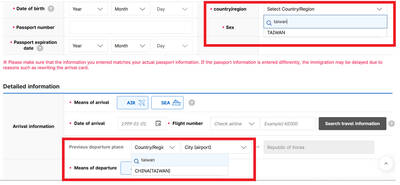
Jason Han says that the e-arrival card spat between South Korea and Taiwan shows that Seoul is signaling adherence to its “one-China” policy, while Taiwan’s response reflects a reciprocal approach. “Attempts to alter the diplomatic status quo often lead to tit-for-tat responses,” the analyst on international affairs tells the Taipei Times, adding that Taiwan may become more cautious in its dealings with South Korea going forward. Taipei has called on Seoul to correct its electronic entry system, which currently lists Taiwan as “China (Taiwan),” warning that reciprocal measures may follow if the wording is not changed before March 31. As of yesterday,
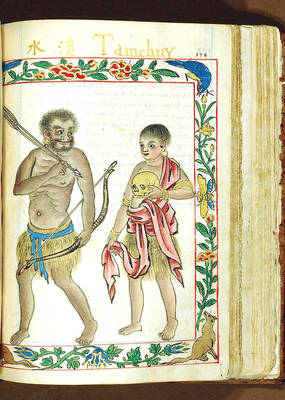
The Portuguese never established a presence on Taiwan, but they must have traded with the indigenous people because later traders reported that the locals referred to parts of deer using Portuguese words. What goods might the Portuguese have offered their indigenous trade partners? Among them must have been slaves, for the Portuguese dealt slaves across Asia. Though we often speak of “Portuguese” ships, imagining them as picturesque vessels manned by pointy-bearded Iberians, in Asia Portuguese shipping between local destinations was crewed by Asian seamen, with a handful of white or Eurasian officers. “Even the great carracks of 1,000-2,000 tons which plied
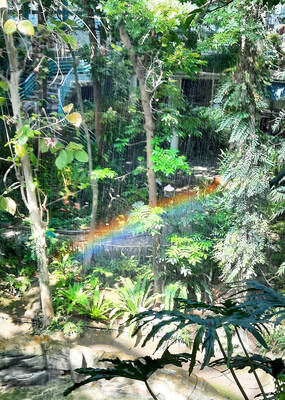
It’s only half the size of its more famous counterpart in Taipei, but the Botanical Garden of the National Museum of Nature Science (NMNS, 國立自然科學博物館植物園) is surely one of urban Taiwan’s most inviting green spaces. Covering 4.5 hectares immediately northeast of the government-run museum in Taichung’s North District (北區), the garden features more than 700 plant species, many of which are labeled in Chinese but not in English. Since its establishment in 1999, the site’s managers have done their best to replicate a number of native ecosystems, dividing the site into eight areas. The name of the Coral Atoll Zone might
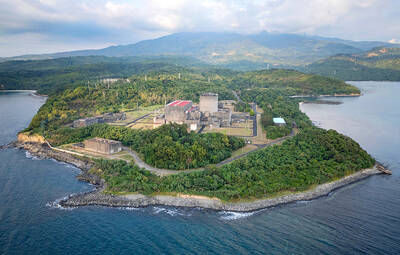
Nuclear power is getting a second look in Southeast Asia as countries prepare to meet surging energy demand as they vie for artificial intelligence-focused data centers. Several Southeast Asian nations are reviving mothballed nuclear plans and setting ambitious targets and nearly half of the region could, if they pursue those goals, have nuclear energy in the 2030s. Even countries without current plans have signaled their interest. Southeast Asia has never produced a single watt of nuclear energy, despite long-held atomic ambitions. But that may soon change as pressure mounts to reduce emissions that contribute to climate change, while meeting growing power needs. The


 RSS
RSS