


Following the commercial and critical disappointments of
Treasure Planet, Brother Bear and Home on the Range, Disney
Animation announced that it would no longer make movies in the traditional, hand-drawn way. The way of the future was
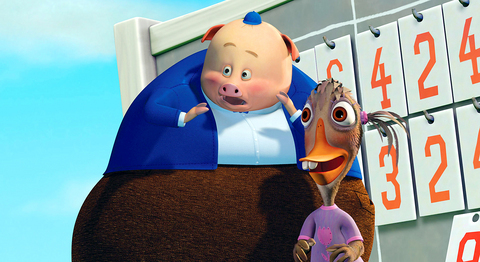
PHOTO: REUTERS
computer-generated animation.
But with its first film in the new format, the shockingly mediocre Chicken Little, Disney has just again proved what animators have been saying all along -- it's not the format, it's the story, stupid.
Given the importance Disney was placing on this film,
particularly in light of its on-again, off-again negotiations with Pixar Animation, it is remarkable that the studio has delivered a movie so plainly derivative and uninspired as this one.
The movie begins promisingly enough, outlining the day when Chicken Little (nicely voiced by Zach Braff) became a
laughingstock by telling the
denizens of his Main Street US town that the sky was falling. There's a good comic bit that manages to squeeze a little more life out of that rolling
boulder from Raiders of the Lost Ark and an opening-credits
sequence that nicely establishes Chicken Little's ingenuity in the face of a series of misfortunes. The kid can make lemonade out of lemons.
But he can't get past that one mistake. Chicken Little's dad (voiced by Garry Marshall) tells him it would be best for him to "disappear," prompting a lot of psychobabble about "closure" and a montage set to Jimmy Webb's
sorrowful anthem All I Know, which tries to jerk tears at a point when the characters have barely been established. Chicken Little's best friend, the ugly duckling Abby Mallard (Joan Cusack, fine as
always), tells her feathered friend that he'll never find redemption until he resolves his father issues.
What follows is an odd pastiche of Bad News Bears, ET and War of the Worlds. The sky does, indeed, fall. Chicken Little gets his closure -- and a movie deal. The film's final sequence shows how Hollywood glamorized the truth of Chicken Little's big adventure, delivering a slick "movie-by-committee." It isn't clear whether the filmmakers were aware that they were parodying their own formulaic creation. One thing is certain: Pixar's bargaining power just got stronger.
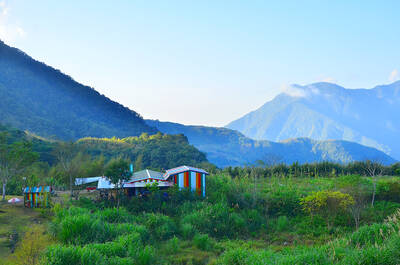
If one asks Taiwanese why house prices are so high or why the nation is so built up or why certain policies cannot be carried out, one common answer is that “Taiwan is too small.” This is actually true, though not in the way people think. The National Property Administration (NPA), responsible for tracking and managing the government’s real estate assets, maintains statistics on how much land the government owns. As of the end of last year, land for official use constituted 293,655 hectares, for public use 1,732,513 hectares, for non-public use 216,972 hectares and for state enterprises 34 hectares, yielding

The small platform at Duoliang Train Station in Taitung County’s Taimali Township (太麻里) served villagers from 1992 to 2006, but was eventually shut down due to lack of use. Just 10 years later, the abandoned train station had become widely known as the most beautiful station in Taiwan, and visitors were so frequent that the village had to start restricting traffic. Nowadays, Duoliang Village (多良) is known as a bit of a tourist trap, with a mandatory, albeit modest, admission fee of NT$10 giving access to a crowded lane of vendors with a mediocre view of the ocean and the trains
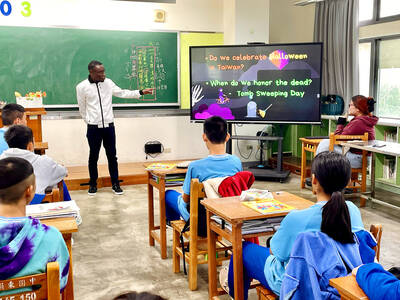
For many people, Bilingual Nation 2030 begins and ends in the classroom. Since the policy was launched in 2018, the debate has centered on students, teachers and the pressure placed on schools. Yet the policy was never solely about English education. The government’s official plan also calls for bilingualization in Taiwan’s government services, laws and regulations, and living environment. The goal is to make Taiwan more inclusive and accessible to international enterprises and talent and better prepared for global economic and trade conditions. After eight years, that grand vision is due for a pulse check. RULES THAT CAN BE READ For Harper Chen (陳虹宇), an adviser
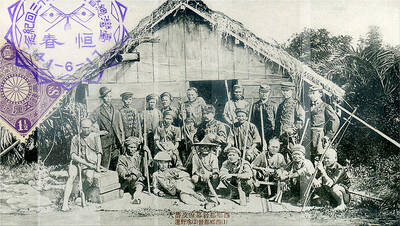
Traditionally, indigenous people in Taiwan’s mountains practice swidden cultivation, or “slash and burn” agriculture, a practice common in human history. According to a 2016 research article in the International Journal of Environmental Sustainability, among the Atayal people, this began with a search for suitable forested slopeland. The trees are burnt for fertilizer and the land cleared of stones. The stones and wood are then piled up to make fences, while both dead and standing trees are retained on the plot. The fences are used to grow climbing crops like squash and beans. The plot itself supports farming for three years.


 RSS
RSS