


Eternal Sunshine (我是陽光的)
Kelly Chen (陳慧琳)
Go East
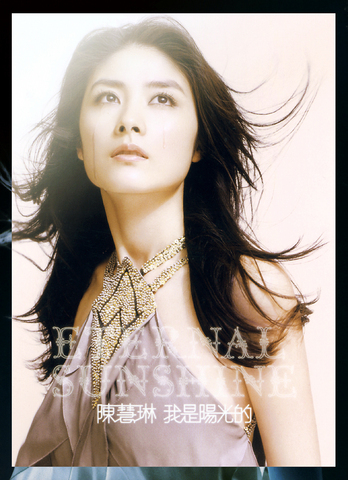
Canto-pop songstress Kelly Chen (
Over the past five years Chen has managed to carve quite a name out for herself as both a singer and an actress, with her most memorable role coming in the hugely successful Hong Kong police action movie Infernal Affairs (
Her latest album shouldn't
disappoint anyone familiar with her previous releases. Packed with a selection of tunes from standalone songs to theme tunes for a couple of TV dramas and the odd movie, Chen hits all the right notes time and time again.
Sure Mando-pop may not be your thing, but Chen can actually sing and is more than simply a record company creation. Tunes like the hip-hop-like Freedom (
Like nearly all albums released these days the CD comes with a DVD. Here we get a behind-the-scenes glimpse of the hardships the songstress endured while making the music video for Freedom as well as a couple of other music videos for tunes from the album.
R.A.Y Band (雷樂隊)
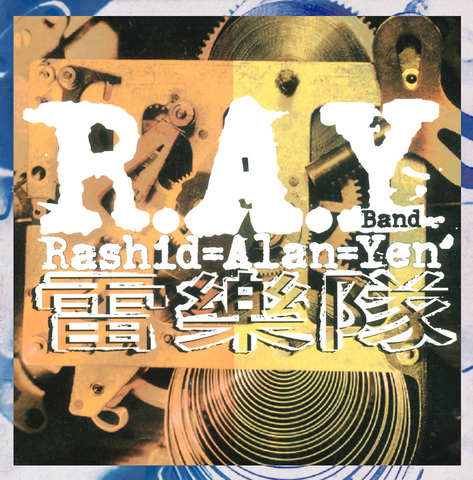
R.A.Y Band (雷樂隊)
Click
Formed by three studio musicians in 2003 the R.A.Y Band (
Individually, guitarist Rashid, drummer Alan (
Considering the trio's reputation as highly sought-after studio musicians it comes as no surprise that the album is well produced, the tunes are tight and well-executed and there's nothing
suspect about their musical attitudes. With the exception of a couple of tunes, however, there is sadly little to scream and shout for and even less to write home about on the trio's debut longplayer.
The album begins well enough with a scorching piece of anthem-like alt-rock titled Rocking with the Big Boys (
Sadly the same cannot be said of the material that follows. While the compositions are certainly not void of songwriting talent the R.A.Y Band appears to be stuck in time warp. Instead of trying to be original the band takes listeners on a sometimes cringingly bad trip through time.
The material is so dated, in fact, that you could be listening to a natty cover band rather than one comprising three of the nation's leading studio musicians. Never too Young to Rock and Roll sounds like a Status Quo tune complete with sing-a-long chorus, Civil Boulevard (
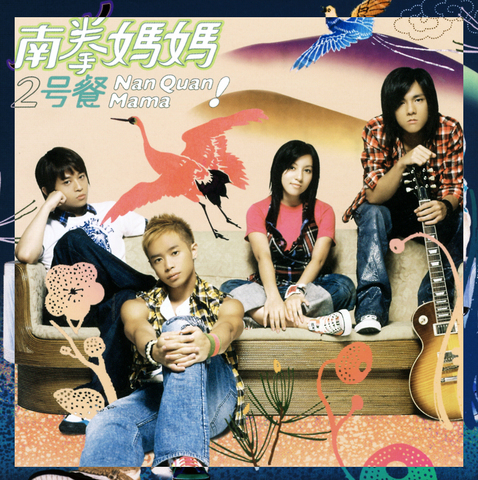
Meal Number 2 [2nd Version] (2號餐)
Nan Quan Mama (南拳媽媽)
Sony
Since the releases of its debut Nan Quan's Summer (
Originally released in mid-August and then re-released with a bonus VCD last week, Nan Quan Mama's second album, Meal Number 2 once again sees the combo choosing to mix it up with a blend of Mando-hip-hop/rap, Mando-pop and straight forward love ballads.
If you happen to be a fan of, or are simply very familiar with Chou's music, then you'll probably find much of Nan Quan's material a poor substitute for the real thing. Whether penned by the self proclaimed "King of Mando-pop" or not, much of Nan Quan's material sounds too Chou-like.
From the album's opener, the moody orchestrated piano driven Mando-hip-hop number Daybreak (
The four-piece does manage to throw one curveball at listeners. The breakneck power-pop number Wild Thing (
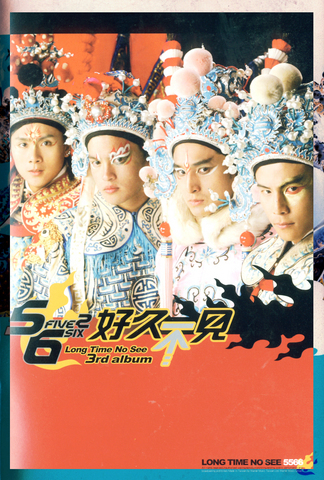
Long Time No See (好久不見)
5566
Warner
Taiwan's most plugged boy band released its third album to much hype late last month and, according to one interview, the boys hope the album's less teenage pop/hip-hop oriented sound along with their new "mature" image will prove popular with both long term fans and newcomers to the group alike.
Chances are even if you've never heard 5566 you've seen their faces adorning 7-Eleven stores, as the
President Group played a big part in promoting the band a couple of years ago. Needless to say, with so many 7-Elevens the promotion worked wonders and 5566 went on to score a string of hits. Both of its previous albums fared exceptionally well in local charts and the group's rare performances were sellouts.
So what's new?
Well, what's new is the sound. Gone is the teenage cutesy pop and instead 5566 have grabbed the studio engineer by the throat and set out to impress with an interesting set of musical vibes and song that are more mature and, dare we say it, better then before.

Taiwan’s English education system is being pulled apart by three opposing forces. Bilingual Nation 2030 pulls students toward English and global communication. Artificial Intelligence (AI) readiness pulls them toward digital judgment, verification and AI-mediated work. But Taiwan’s old exam culture pulls them back toward memorization, grammar drills, timed reading and correct answers. If the education system keeps using old exams to define success, it risks producing graduates who are neither genuinely bilingual nor genuinely AI-ready, but trained for tasks machines can already perform. The first force is Bilingual Nation 2030. Launched in 2018, the policy aimed to “help Taiwan’s workforce connect

“Taiwan’s Opposition Leader Comes to US With a Message Straight Out of Beijing” read a May 31 headline in the Wall Street Journal. Top US administration officials and members of Congress almost certainly read the WSJ, and if there was a bullet point takeaway that people in Washington should absorb ahead of Chinese Nationalist Party (KMT) Chair Cheng Li-wun’s (鄭麗文) arrival in DC on June 9, that headline is it. The last few columns have discussed this very topic, and the timing is not coincidental. While those top officials likely do not read the Taipei Times, judging by the number

With weighty, anxiety-inducing geopolitical topics dominating the headlines, checking in on the wild and weird state of local politics can take some of the edge off. This November’s elections will determine who will be in charge of fixing potholes in your neighborhood, not the potholes in Taiwan’s complicated geopolitical space. Recently, after an online interview with a Taipei-based journalist, I commented that Taipei journalists never go further than the MRT can take them. He laughed and agreed. Naturally, the Taipei mayoral race is eating up much of the press attention. TAIPEI CITY Democratic Progressive Party (DPP) candidate Puma Shen (沈伯洋) has
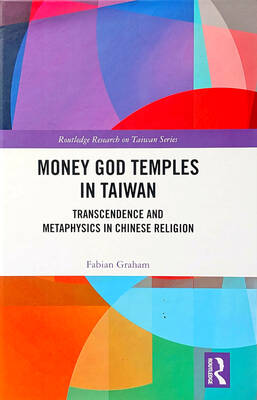
As someone who normally steers clear of books with “transcendence” or “metaphysics” in their subtitles, this reviewer — a casual observer of local belief systems since the 1990s — found Fabian Graham’s Money God Temples in Taiwan a challenging read. Those who’ve only dipped their toes into temple culture will likely need to parse several sections with special care if they’re to keep up with the author, a British ethnographic researcher whose previous books have investigated religious practices among ethnic Chinese in Southeast Asia. This scholarly volume examines a facet of Taiwan’s religious landscape that didn’t exist a century ago, and


 RSS
RSS