


When you have sold more records over the past 40 years than anyone else -- except Elvis Presley, Michael Jackson and The Beatles -- and your concert is selling out without having to do any promotion, it must be tempting to kick back and enjoy yourself.
Robin Gibb of the Bee Gees was not scheduled to do any interviews for his "Magnetic Tour" concert at National Taiwan University Sports Center tomorrow and who can blame him?
The Englishman who emigrated to Australia and then made his money and reputation in America is, according to promoters, planning to take it easy in Taipei. He will look around a bit, do some shopping, entertain fans at his first show in the country, and relax at the Sheraton Taipei Hotel, before the next leg of his world tour.
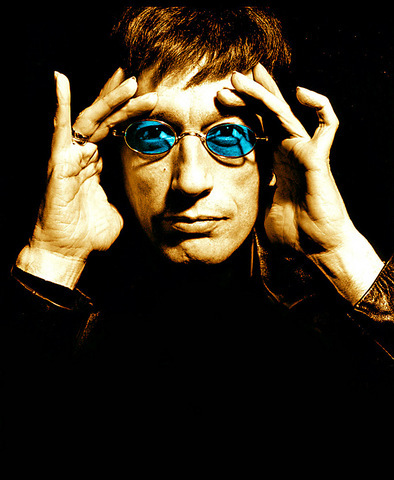
PHOTO COURTESY OF YU KUANG MUSIC MAGAZINE
The Magnet double CD which was released two years ago in Germany and is being re-released worldwide to coincide with the tour gives a clue to the playlist on Saturday, with a first half of predominantly solo material and then digging deep into the classic Bee Gees catalogue. It should be a classic show taking into account the performer's pedigree and the fact he has his own band and a local orchestra backing him.
As a taxi driver the other night in Taipei proved, the Bee Gees are big in Taiwan. His car was set up with flat screens in the front and rear and he played the Bee Gees -- Live by Request DVD on a spine-tingling sound system. He said the Bee Gees made people happy and then sang along to Staying Alive in falsetto.
He had lived in the US and said the Bee Gees concert he saw there was the best he had ever seen. Asked whether he would go to the Robin Gibb gig he said he would be working. It wouldn't be the same without the other two brothers, he added, then turned up the volume so Massachusetts filled the car.
Just as the Bee Gees were blessed with ability and recognition, they also suffered from adversity. They were the whipping boys when there was a backlash against disco and had well-publicized problems with alcohol and drugs. The Gibb brother who was not a Bee Gee, Andy, died at 30 in the late 1980s; and Robin's twin brother Maurice died two years ago.
This tour is 55-year-old Robin's tribute to his late brother, though he has been contradictory about the Bee Gees' future, first saying on UK TV, "The name `Bee Gees' will be reserved in history as the three of us," but later telling Today, "So we [Barry and I] continue on ... for the moment in our separate ways, but who knows? In the future we may work together again as the Bee Gees."
Whatever, Robin has done enough to be considered a pop legend, with solo best-sellers such as Juliet, and the incredible body of work with the Bee Gees spanning over four decades. He's a member of the Songwriters Hall of Fame and the Rock and Roll Hall of Fame. The Bee Gees won seven Grammy Awards and Saturday Night Fever was the best-selling soundtrack ever. They have sold over 180 million albums to date.
But most of all, the Bee Gees will be remembered for the songs and melodies that Robin will reprise for the lovers of nostalgia and artistry tomorrow night.
Performance note:
What: Robin Gibb's Magnetic Tour
Where: National Taiwan University Sports Center, 1F (
When: Saturday, Aug. 27, 7:30pm
Tickets: NT$2800, NT$3,800, NT$5,800, NT$6,800, from ERA Ticket on-line at www.ticket.com.tw.
Telephone: Yu Kuang Music Magazine (02) 2741 5988
Note: At press time, 80 percent of tickets were sold.
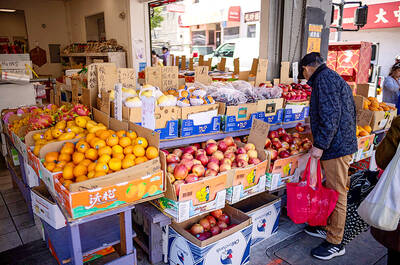
Ajay Verma, a consultant gastroenterologist at Kettering general hospital in Northamptonshire, says our gut is a “complex machine.” “It is constantly providing us with the nutrition we need, initially to grow and develop, and then for us to survive, thrive and repair from injury and illness.” How can we keep it functioning well? Put simply: “Make sure what you put into it is balanced, and that you clear out its waste products adequately,” Verma says. “In a general gastroenterology clinic, the most common conditions we see are irritable bowel syndrome (IBS), gastroesophageal reflux disease, inflammatory bowel disease and constipation,” says Nisha
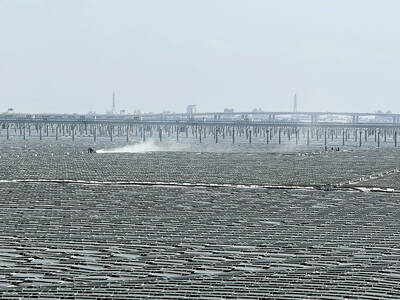
The arithmetic is straightforward and uncomfortable. By the end of 2025, Taiwan had committed itself to a 50-30-20 electricity mix — half natural gas, 30 per cent coal, 20 per cent renewables. The Ministry of Economic Affairs’s (MOEA) own monthly energy reports tell a different story. Natural gas reached 47.8 per cent of generation last year. Coal stood at 35.4 per cent, comfortably above its target ceiling. Renewables came in at 13.1 per cent, well short of the 20 per cent Taipei had pledged a decade earlier. Installed renewable capacity reached roughly half of the 12 gigawatts (GW) the government

Taiwan’s drone exports are taking off, fuelled by the war in Ukraine, as Taiwanese companies seek a stake in the fast-growing global market for unmanned aerial vehicles (UAV). Low-cost drones used for reconnaissance and strikes are in high demand as governments around the world boost defense spending in the face of intensifying conflicts. A relative new player in the increasingly competitive industry, Taiwan’s pitch is to be an “Asian hub” for the production of UAVs and components free of Chinese materials, or “non-red.” That means its UAVs can be up to three times more expensive than their Chinese competitors, like the world’s biggest

There are shadowy cabals plotting to sell out Taiwan to be annexed by China, by invasion if necessary. Fortunately, they are buffoons. In 2019, former Bamboo Union gangster and founder of the China Unification Promotion Party (CUPP), Chang An-le (張安樂, colorfully known as “White Wolf”), led a protest at the Legislative Yuan against comments made by then-premier Su Tseng-chang (蘇貞昌) that in the event of an attack by China, he would never surrender, but would protect the nation by fighting to the end, even if he only had a broom. Chang had party members bring a wooden casket that they


 RSS
RSS