


For decades, if not centuries, the wind has defined Mui Ne, a small fishing village in southern Vietnam's Binh Thuan province. Blowing in straight off the South China Sea, the wind molds and remolds the white and pink-gold sand dunes that surround Mui Ne and frustrates the fishermen, who eke out a living catching squid and tuna on the horizon.
But in recent years, the wind has altered the landscape of Mui Ne in a different way -- by luring to its 15km of gently arcing beach windsurfers and kitesurfers, part of a vanguard of vacationers eager to make the 150km trip northeast from Ho Chi Minh City in search of the next new, clean, unspoiled stretch of sand.
"This is one of the five top places for sailing in the world, and it's definitely the best in Asia," said Pascal Lefebvre, who maintains windsurf-vietnam.com, a repository of wind data that appears to back up his claim. According to the Web site, which has data for the last five years, 2004 saw 246 days when the wind speed averaged greater than 20kph.
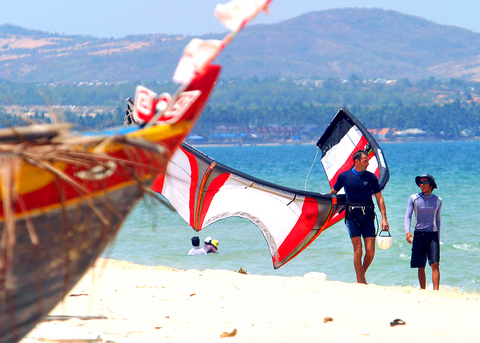
PHOTO: NY TIMES
Ground zero at Mui Ne is Jibe's Beach Club, on Nguyen Dinh Chieu Street. Damaged boards hang on the walls of this beachside bar and restaurant (owned by Lefebvre and his wife, Pham Thi Hong Phuong), and a projection screen displays windsurfing videos. Out back, however, is where the action is: an equipment-rental shop and launching pad for the day's wave-riding adventures.
The acolytes come around 10am, when the wind picks up, and by 11:30am two dozen kites and sails will be crisscrossing the water. By 2pm the wind is at its strongest, and the nonsailing beachgoers start retreating to their resorts' sheltered swimming pools. Around 4pm, the wind turns gusty, launching sailors to greater heights.
The scene today is radically different from just 10 years ago, when the main drag, Nguyen Dinh Chieu Street, was a nameless sand track over which coconut palms formed a shady canopy and the pungent whiff of nuoc mam was the only thing floating in the air. Occasional visitors would explore the Fairy Stream, a small brook that has cut a long canyon into the red earth, or the vast, photogenic sand dunes.
Today, resorts line the beach side of Nguyen Dinh Chieu Street, from the upscale Victoria Phan Thiet to the Palmira, with its Russian onion dome, to myriad smaller hotels whose names invariably include the words coconut, beach or Mui Ne. An international airport is in the works, and a US$900 million resort complex.
For Marek Kanievska, a film director (Less Than Zero) who spends about five months a year in Mui Ne, the beach is enough.
"I am in a constant state of ecstasy," said Kanievska. "I get up at 5am and never run out of things to do till 11 at night."
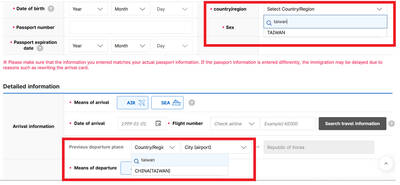
Jason Han says that the e-arrival card spat between South Korea and Taiwan shows that Seoul is signaling adherence to its “one-China” policy, while Taiwan’s response reflects a reciprocal approach. “Attempts to alter the diplomatic status quo often lead to tit-for-tat responses,” the analyst on international affairs tells the Taipei Times, adding that Taiwan may become more cautious in its dealings with South Korea going forward. Taipei has called on Seoul to correct its electronic entry system, which currently lists Taiwan as “China (Taiwan),” warning that reciprocal measures may follow if the wording is not changed before March 31. As of yesterday,

The Portuguese never established a presence on Taiwan, but they must have traded with the indigenous people because later traders reported that the locals referred to parts of deer using Portuguese words. What goods might the Portuguese have offered their indigenous trade partners? Among them must have been slaves, for the Portuguese dealt slaves across Asia. Though we often speak of “Portuguese” ships, imagining them as picturesque vessels manned by pointy-bearded Iberians, in Asia Portuguese shipping between local destinations was crewed by Asian seamen, with a handful of white or Eurasian officers. “Even the great carracks of 1,000-2,000 tons which plied
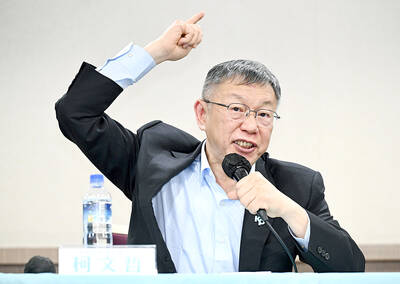
On Thursday, former Taipei mayor and founder of the Taiwan People’s Party (TPP) Ko Wen-je (柯文哲) was sentenced to 17 years in prison and had his civil rights suspended for six years over corruption, embezzlement and other charges. Seven others related to the case were also handed prison sentences, while two were found not guilty. It has been a bad week for the TPP. On Tuesday, prosecutors charged Chinese immigrant Xu Chunying (徐春鶯) with suspicion of taking part in Beijing-directed election interference. Xu has strong links to the TPP, which once offered her a party list legislator nomination. Tuesday also
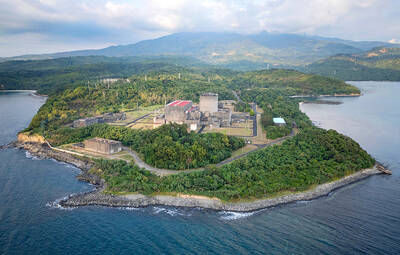
Nuclear power is getting a second look in Southeast Asia as countries prepare to meet surging energy demand as they vie for artificial intelligence-focused data centers. Several Southeast Asian nations are reviving mothballed nuclear plans and setting ambitious targets and nearly half of the region could, if they pursue those goals, have nuclear energy in the 2030s. Even countries without current plans have signaled their interest. Southeast Asia has never produced a single watt of nuclear energy, despite long-held atomic ambitions. But that may soon change as pressure mounts to reduce emissions that contribute to climate change, while meeting growing power needs. The


 RSS
RSS