


Sixteen of the nation's leading expat soccer teams will be battling away this weekend when they take to the soccer pitches at Taipei's Dachia Riverside Park (大佳河濱公園) to compete in the annual Summer Cup.
Now in its fifth year the Taipei Summer Cup 2005 is sponsored by The Tavern Premier and has received additional support from Carlsberg, Lotto, Capones, Carnegie's, Via Technologies and the Master Football Academy.
Organizers have been forced to make a couple of minor adjustments to one of the park's two pitches and the fields are not in good condition, according to Summer Cup coordinator Michael Chandler.
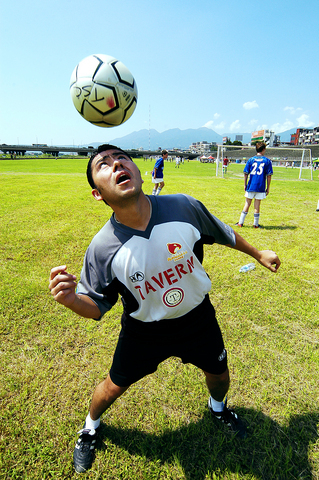
PHOTO COURTESY OF TAIPEI SUMMER CUP
"There was a tree, or rather two trees as it turned out, [near] the halfway line, but we spoke to the Taipei Football Association and [city] government and they agreed to move them for us," Chandler said. "The rocks and concrete that are on the pitches will be moved by Saturday and we'll have the rollers out sometime before the [games] begin to make sure that the pitches are flat."
Although the main focus of the weekend's soccer fiesta is the Summer Cup, there are in fact two trophies up for grabs. Following tomorrow's preliminary league stage the top two teams from each of the four groups will play for the Summer Cup in the competition's final rounds on Sunday, while the bottom two teams of each group will be kept equally busy vying for the right to hoist the Plate.
According to a local expat soccer league pundit, picking a Summer Cup winner is difficult, but the favorites include the Taipei Animals, Red Lions, Taichung Compass, Kaohsiung Pacers and the Tainan Phoenix.
Along with team awards the Summer Cup also celebrates individual players' skills. Squad members will be competing for bragging rights in the best goalkeeper of the tournament, most valuable player, and the golden boot or top scorer.
This year's competition will also see one of the teams hoping to raise the Tony Murray Fair Play Award. Dedicated to the memory of British national Tony Murray who drowned in the seas off Kaohsiung in late June, the fair play award will be presented to the team that displays the most sporting behavior, both on and off the pitch during the competition.
The weekend might be soccer oriented, but attendance should not be limited to just those with a knowledge of the "beautiful game."
Since its inception five years ago, the Summer Cup has become as much a social occasion as a sporting event. A selection of reasonably priced foodstuffs and beverages will be on offer and pavilions will set up in order to shelter both players and spectators from the weather, come rain or shine.
"It's a great weekend of [soccer] all the games are all played in good spirit and the competition is well organized. In fact, it gets better every year and I think that this year it will up another notch in regards organization," said Tianmu B52's goalkeeper Andrew "The Sieve" Ings.
"Michel [Blanc] at the Tavern does a great job of making it a fun weekend for everyone whether they're players or spectators."
The on-field action kicks off at 10:30am both tomorrow and Sunday. Admission to the games is free
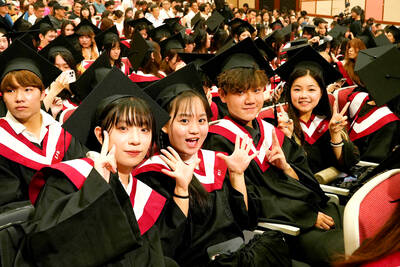
Taiwan’s English education system is being pulled apart by three opposing forces. Bilingual Nation 2030 pulls students toward English and global communication. Artificial Intelligence (AI) readiness pulls them toward digital judgment, verification and AI-mediated work. But Taiwan’s old exam culture pulls them back toward memorization, grammar drills, timed reading and correct answers. If the education system keeps using old exams to define success, it risks producing graduates who are neither genuinely bilingual nor genuinely AI-ready, but trained for tasks machines can already perform. The first force is Bilingual Nation 2030. Launched in 2018, the policy aimed to “help Taiwan’s workforce connect
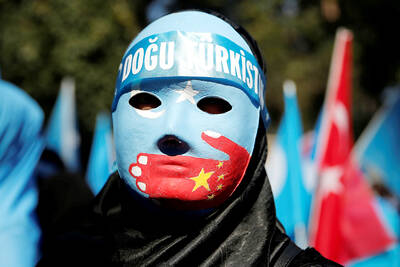
It seems every few days one bumps into one of those “real man” comments in which Taiwan is urged to “face reality” or similar, and “make a deal,” with the speaker implying that soon it will be too late. “Deal” advocates always present themselves as having a superior grip on reality, and the manly ability to make the “hard choice.” Their testosterone-laden language often echoes that of Taiwan sellout advocates. Note that such commentary always specifies a process (“make a deal, work with, make progress”), never the end state of what occupation by a violent authoritarian colonialist state will entail. In

“Taiwan’s Opposition Leader Comes to US With a Message Straight Out of Beijing” read a May 31 headline in the Wall Street Journal. Top US administration officials and members of Congress almost certainly read the WSJ, and if there was a bullet point takeaway that people in Washington should absorb ahead of Chinese Nationalist Party (KMT) Chair Cheng Li-wun’s (鄭麗文) arrival in DC on June 9, that headline is it. The last few columns have discussed this very topic, and the timing is not coincidental. While those top officials likely do not read the Taipei Times, judging by the number
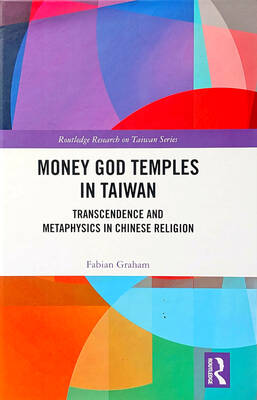
As someone who normally steers clear of books with “transcendence” or “metaphysics” in their subtitles, this reviewer — a casual observer of local belief systems since the 1990s — found Fabian Graham’s Money God Temples in Taiwan a challenging read. Those who’ve only dipped their toes into temple culture will likely need to parse several sections with special care if they’re to keep up with the author, a British ethnographic researcher whose previous books have investigated religious practices among ethnic Chinese in Southeast Asia. This scholarly volume examines a facet of Taiwan’s religious landscape that didn’t exist a century ago, and


 RSS
RSS