


Giuseppe Verdi's Falstaff is one of the greatest delights of all music. He only wrote one comic opera (a youthful failure excepted), and he waited until he was 80 to do it. The result is a concise, quick-silver work of incomparable brilliance and splendor. It combines the theme-weaving technique of Richard Wagner with the Italian comic tradition that had produced Mozart's Don Giovanni but had lain neglected, even in Italy, for half a century.
It's impossible to be neutral about Falstaff -- either it doesn't touch you or you adore it. Conductor Arturo Toscanini thought it was Verdi's greatest opera "because it was his most beautiful." Others have seen it as a chamber work that Verdi essentially wrote for himself. Melodies and brilliant inventions flash past at the speed of light, never to reappear. One can only gasp, then go and see it a second time to hear everything you've missed.
Next week's production in Taipei is by Wei Ying-chuan (
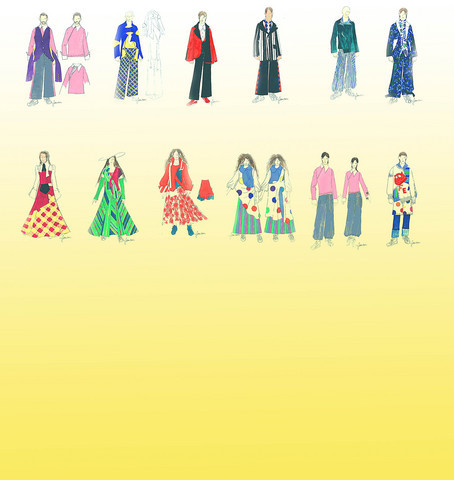
PHOTO COURTESY OF WEI YING-CHUAN
The plot is taken, surprisingly, from one of Shakespeare's least inspired plays, The Merry Wives of Windsor, reputedly written in a mere 11 days at the command of Elizabeth I. It doesn't matter. What does matter is the music, a veritable treasure-trove of joyous subtlety and wit, especially in the orchestra. Conductor Carlo Maria Giulini once said, only half-jokingly, that the ideal would be Falstaff without the singers, and that incidentally is a phenomenon you can hear that on some tracks of a recording of Toscanini rehearsing (Arturo Toscanini Recording Association 248), spoilt only by his outbreak of fury at one of the soloists once they arrive on the scene.
The opera's plot is that the fat, drink-sodden and antiquated knight Sir John Falstaff sets out to seduce two rich-but-married women simultaneously. The husband of one of them, Ford, sets up a plot to catch him, and although this fails he is nonetheless tipped into the River Thames from a laundry basket. Despite this loss of face, he succumbs to a second plot, to meet Ford's wife Alice at night in Windsor Forest.
The opera's last scene in the forest carries with it memories of a long sequence of night love scenes, from Le Nozze di Figaro via Rigoletto and Un Ballo in Maschera to Tristan und Isolde. It's mysterious, evocative and tenderly lyrical, and in every way a sublime conclusion to Verdi's 50-year career as an operatic composer.
"Falstaff is a comic figure because he thinks he's a great lover like Don Giovanni," said Jukka Rasilainen, the Finnish baritone who will sing the title role, earlier this week.
He believes he's attractive to women but in reality he's just old and fat. Yet he knows how to act and that's, in part, his salvation. He may come from a noble family, but the reality is that he lives off theft -- he just gets other people to do his stealing for him. But it could be that his being a minor aristocrat, even a down-at-heel one, appeals to some of the women he chases.
This is Rasilainen's third time in the title role of Falstaff. He has recently sung Wotan in the Ring operas at Paris's Chatelet opera house, as well as repeating the role of Kurwenal in Tristan und Isolde that he sang in Taipei in 2003.
"I love working on this production of Falstaff," he said. "The National Symphony Orchestra [NSO] played Tristan very purely and I'm sure we'll get the same high standard from them again this time. I enjoy the relaxed artistic atmosphere and the enthusiasm here in Taiwan. No, the padding I will wear as Falstaff shouldn't affect my voice. Are the costumes going to be in 2005 style? More like 2010, I would say!"
Several of the other soloists have also been heard in Taipei before. Mewas Lin (Alice Ford) was Madama Butterfly in Felix Chen's celebrated 2001 production with the Taipei Symphony Orchestra, for instance, and Lei Yang (Bardolfo, one of Falstaff's thieving followers) was Goro in the same production. Liau Chong-boon (Pistola, another of Falstaff's followers) was Oroveso in Norma earlier this year. Tenor Fernando Wang, recently returned from Frankfurt, will sing Fenton (a young man in love with Ford's daughter) -- many will remember him as the Duke in a Taiwan Rigoletto that originated in Taichung.
More details about the visual aspects of the production emerged at a vocal rehearsal on Tuesday evening. The most sensational news was that the NSO conductor Chien Wen-pin (簡文彬) will wear a series of costumes, harmonizing in style with those of the characters in the opera. There's no ballet as such in Falstaff, but in this production dancers dressed identically with the conductor will at various points mimic his movements, giving rise to the question of what is reality and what is dream. The orchestra, which was largely hidden from view in the NSO's Don Giovanni and Norma, will occupy a raked block center-stage, with rows of musicians dressed alternately in black and white. This, in other words, has all the promise of being a very stylish production indeed.
It was clear from the Tuesday evening rehearsal that we can expect a strong Ford from Kewei Wang, plus ringing tenor tones from Chen Chung-yi as Doctor Caius. Rehearsing the final pages of the score, Chien Wen-pin organized the taut rhythms and complex vocal forces with precise and eloquent gestures, the soloists and small National Experimental Chorus sitting attentively in a semi-circle in front of him.
It's small wonder that Chien has opted for this opera as one of his series of master works new to Taiwan. Falstaff, like its predecessor Otello, was deliberately written to take its place among the indelible masterpieces of world music. This may sound pretentious, but they were works that each took years of careful composition -- La Traviata, by contrast, was completed in four months. Many great artists, with the years closing in, feel this compulsion to achieve their utmost, irrespective of popular taste -- J.S. Bach with his B Minor Mass, Dante Alighieri with the Divine Comedy, William Shakespeare with King Lear. It's not surprising, then, that Falstaff, so crammed with musical beauty already, concludes with a fiendishly complex nine-part fugue.
No opera gains more from familiarity in advance than Falstaff (and there will only be Chinese subtitles in this
production). The most sensational recording is one of the cheapest, made by Georg Solti back in 1964, with Geraint Evans, Robert Merrill, Mirella Freni and the RCA Italiana Opera Orchestra (Decca 417 168-2). He recorded another with the Berlin Philharmonic and Jose van Dam in 1993 (Decca 440 650-2), probably because the orchestra was regularly rated the world's best, but it doesn't compare for pace, force and scintillating brilliance with the earlier version.
As for a DVD, it's Karajan's, with Giuseppi Taddei and Christa Ludwig (SVD 48422), that gains the most plaudits on the Internet. It's currently on special offer at Chia Chia Record Store, Ximending (02 2312 3437) for NT$499.
Don't miss this opportunity to see one of music's greatest masterpieces in what promises to be a beautiful and innovative production. It's only playing twice and, perhaps because the work has never been performed before in Taiwan, there are seats available at most prices. Go to the first performance next Friday, and then treat yourself to a second visit on the following Sunday afternoon. Why not? Verdi's final masterpiece provides one of life's most exquisite and enduring pleasures.
Bradley Winterton is the author of Falstaff in Macau (Fairfield Books, 1995).

Taiwan’s English education system is being pulled apart by three opposing forces. Bilingual Nation 2030 pulls students toward English and global communication. Artificial Intelligence (AI) readiness pulls them toward digital judgment, verification and AI-mediated work. But Taiwan’s old exam culture pulls them back toward memorization, grammar drills, timed reading and correct answers. If the education system keeps using old exams to define success, it risks producing graduates who are neither genuinely bilingual nor genuinely AI-ready, but trained for tasks machines can already perform. The first force is Bilingual Nation 2030. Launched in 2018, the policy aimed to “help Taiwan’s workforce connect
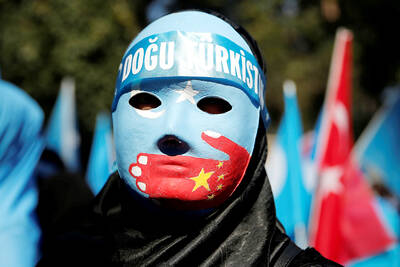
It seems every few days one bumps into one of those “real man” comments in which Taiwan is urged to “face reality” or similar, and “make a deal,” with the speaker implying that soon it will be too late. “Deal” advocates always present themselves as having a superior grip on reality, and the manly ability to make the “hard choice.” Their testosterone-laden language often echoes that of Taiwan sellout advocates. Note that such commentary always specifies a process (“make a deal, work with, make progress”), never the end state of what occupation by a violent authoritarian colonialist state will entail. In

“Taiwan’s Opposition Leader Comes to US With a Message Straight Out of Beijing” read a May 31 headline in the Wall Street Journal. Top US administration officials and members of Congress almost certainly read the WSJ, and if there was a bullet point takeaway that people in Washington should absorb ahead of Chinese Nationalist Party (KMT) Chair Cheng Li-wun’s (鄭麗文) arrival in DC on June 9, that headline is it. The last few columns have discussed this very topic, and the timing is not coincidental. While those top officials likely do not read the Taipei Times, judging by the number
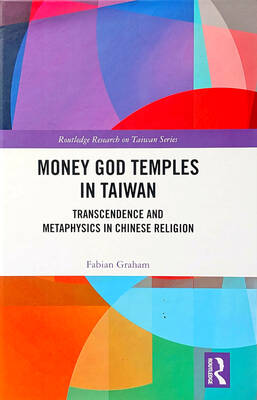
As someone who normally steers clear of books with “transcendence” or “metaphysics” in their subtitles, this reviewer — a casual observer of local belief systems since the 1990s — found Fabian Graham’s Money God Temples in Taiwan a challenging read. Those who’ve only dipped their toes into temple culture will likely need to parse several sections with special care if they’re to keep up with the author, a British ethnographic researcher whose previous books have investigated religious practices among ethnic Chinese in Southeast Asia. This scholarly volume examines a facet of Taiwan’s religious landscape that didn’t exist a century ago, and


 RSS
RSS