


The 110-year old Venice Biennale recently inaugurated the 51st International Art Exhibition, which consists of two sections: national pavilions of 70 represented countries and two international exhibitions that were curated separately by Rosa Martinez and Maria de Corral. This enormous exhibition requires at least three or four days to experience as the venues are spread throughout the labyrinthine stone paths of Venice.
Biennales are platforms for risk taking. For Martinez's exhibition in the Arsenale, a former arms depot, she presents the diverse artworks as chapters in a book, with each area leading to a new thought. Based on Samuel Beckett's Breath, the exhibition overall gives the uplifting message that our lives are too short, so we must make the most of them.
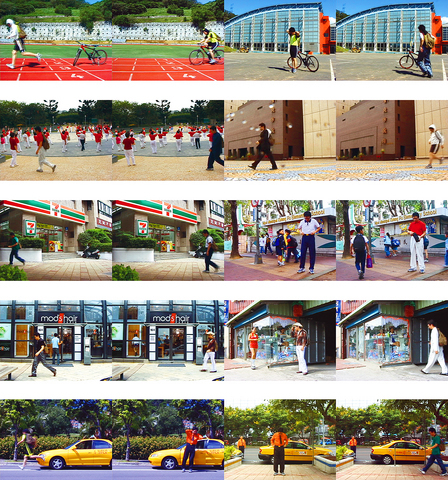
In contrast, de Corral returns to the sterile white-walled museum look with framed paintings hung on walls and sculptures on plinths. However, she included some strong works such as Chen Chieh-jen's (陳界仁) Factory, a film about unemployed garment workers in Taoyuan.
PHOTOS COURTESY OF VENICE BENNALE
The Biennale seems to be divided into two camps: conservatism -- such as in promoting national identity and/or white cube presentation -- and its opposite, experimentation. Several national pavilions have chosen the same safe route, the US Pavilion in the lead with its lackluster presentation of a usually dynamic artist. It comes off looking like little energy and thought was put into the exhibition on behalf of the organizers.
Some dynamic ideas that transcend the traditional art practice of object making are seen in several works. Olaf Nicolai's work is provided by nature; he offers printed matter that tells the viewer to watch the northern sky in August for St Lawrence's Tears, a spectacular star shower.
Meanwhile, artists Gianni Motti and Christoph Buechel propose something more radical. They've initiated talks with the Cuban government to rent Guantanamo Bay and transform the occupied military site into a site of culture.
The Swiss Pavilion shines in its brilliance by showing that nationalism in art, as in sport, is becoming a dated concept. It exhibited four outstanding artists, none of them born in Switzerland.
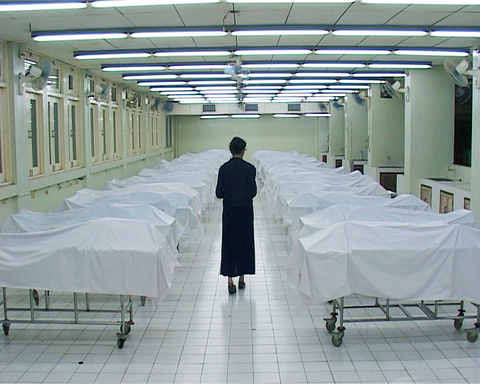
As many of the Western countries chose blue-chip artists in museum-like settings, the exhibitions from Asia are more concise, lively and moving. Thailand's pavilion entitled Those Dying Wishing to Stay, Those Living Preparing to Leave in the cloister of a church show the Buddhist-inspired works of deceased artist Montien Boonma and the videos of Araya Rasdjarmrearnsook, in which she gives
lectures about death to the corpses lying at her feet. Far from being morose, the works poignantly dialogue with the tomb-lined walkway, and leave one feeling contemplative and inspired about life.
Even though it is an art show, politics still comes into play, so the pavilions for Taiwan and Hong Kong are listed in the printed matter as part of the related events. For the debut of the China Pavilion, both Chinese and Italian officials spoke about the opening of future ties between the two nations.
For the opening performance, two artists attempted to launch a small spacecraft created by a farmer living in Anhui Province. Unfortunately, there was no liftoff, but the ersatz UFO hammered the point that this work was a metaphor for the aspiring dreams of the rural residents.
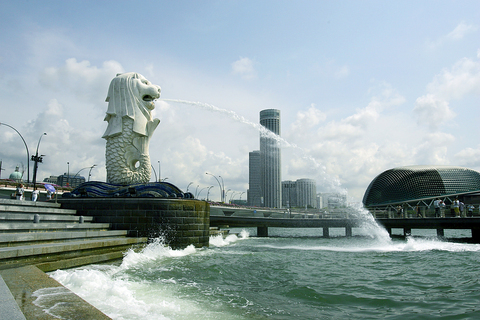
Singapore is represented by one artist, Lim Tzay Chuen. In his wry work, the artist, whose work deals with intervention in real-life situations, proposed to bring one of the state's five Merlion statues (head of a lion, body of a fish) to Venice. Unable to receive permission to undertake this remarkable feat, he installed a M/W restroom instead -- sarcastically -- saying that art can still provide a function.
Taiwan's smartly installed Spectre of Freedom showcases the work of four Taiwanese artists -- Kao Chung-li (高重黎), Tsui Kuang-yu (崔廣宇), Lin Hsin-i (林欣怡) and Kuo I-chen (郭奕臣) -- under the rubric of allusive freedom.
It was fun to see many people wandering San Marco Plaza plastered with Lin's de-strike stickers. In addition, several people from Taiwan came to Venice to give out the newly established Taiwan Art Award funded by private individuals. Part mockery of the art system, this award also mimics what the organizers tried to criticize. While this project can be viewed cynically as an opportunistic free trip based on a simplistic argument, it can also be seen as a positive opportunity, as the large cash prize was awarded to the Afghanistan pavilion, thus creating future possibilities for the artists to continue to create. The award was presented to artist Lida Abdul in an emotionally moving ceremony.
Art Notes:
What: 51st International Exhibition, Venice Biennale
Where: Venice, Italy
WHen: To Nov. 6, 10am to 8pm
See: www.artecommunications.com
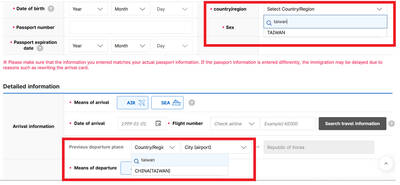
Jason Han says that the e-arrival card spat between South Korea and Taiwan shows that Seoul is signaling adherence to its “one-China” policy, while Taiwan’s response reflects a reciprocal approach. “Attempts to alter the diplomatic status quo often lead to tit-for-tat responses,” the analyst on international affairs tells the Taipei Times, adding that Taiwan may become more cautious in its dealings with South Korea going forward. Taipei has called on Seoul to correct its electronic entry system, which currently lists Taiwan as “China (Taiwan),” warning that reciprocal measures may follow if the wording is not changed before March 31. As of yesterday,

The Portuguese never established a presence on Taiwan, but they must have traded with the indigenous people because later traders reported that the locals referred to parts of deer using Portuguese words. What goods might the Portuguese have offered their indigenous trade partners? Among them must have been slaves, for the Portuguese dealt slaves across Asia. Though we often speak of “Portuguese” ships, imagining them as picturesque vessels manned by pointy-bearded Iberians, in Asia Portuguese shipping between local destinations was crewed by Asian seamen, with a handful of white or Eurasian officers. “Even the great carracks of 1,000-2,000 tons which plied
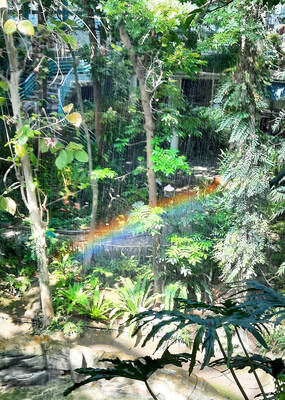
It’s only half the size of its more famous counterpart in Taipei, but the Botanical Garden of the National Museum of Nature Science (NMNS, 國立自然科學博物館植物園) is surely one of urban Taiwan’s most inviting green spaces. Covering 4.5 hectares immediately northeast of the government-run museum in Taichung’s North District (北區), the garden features more than 700 plant species, many of which are labeled in Chinese but not in English. Since its establishment in 1999, the site’s managers have done their best to replicate a number of native ecosystems, dividing the site into eight areas. The name of the Coral Atoll Zone might
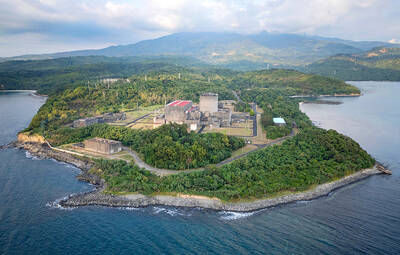
Nuclear power is getting a second look in Southeast Asia as countries prepare to meet surging energy demand as they vie for artificial intelligence-focused data centers. Several Southeast Asian nations are reviving mothballed nuclear plans and setting ambitious targets and nearly half of the region could, if they pursue those goals, have nuclear energy in the 2030s. Even countries without current plans have signaled their interest. Southeast Asia has never produced a single watt of nuclear energy, despite long-held atomic ambitions. But that may soon change as pressure mounts to reduce emissions that contribute to climate change, while meeting growing power needs. The


 RSS
RSS