


Shoot the breeze with Cheryl Howard -- who adds her grandmother's maiden name for her pen name Cheryl Howard Crew -- and you'll know without a shadow of a doubt that you're with an outgoing, optimistic, carefree woman.
Certainly she is not one to harbor dark thoughts, not one to begin a novel with the massacre of a small village and fill that book with murders, rapes and a grisly land-mine explosion or two.
On that second point, you'd be wrong.
"I know!" Howard says with a laugh, amused at the notion that she seems too placid to have authored In the Face of Jinn. The book is the saga of Christine, a young American importer who traverses the hardened terrains of Pakistan, India and Afghanistan in search of her sister, a possible victim of that aforementioned massacre. Along the way, she encounters all manner of danger, usually in the form of armed men who consider women property.
"I've had a book group for about 16 years and they read this," she continues. "And for one of them, a friend who's a New Age fashion designer, it may not be the book she would've otherwise picked up. She was so disconcerted; she said, `Oh my god, I can't believe that's in our little Cheryl's head!'"
Her husband, Oscar-winning filmmaker Ron Howard (who has scarcely made a movie as wrenchingly violent as portions of In the Face of Jinn), says, "I call her the Mom of Macabre. It was even more intense before her editor got to it."
"I had to keep analyzing it and seeing if it was too much," says the author, confessing that she went through 50 drafts of the book. "I was trying to be authentic."
What In the Face of Jinn seeks more than anything is to illuminate the tragic circumstances in which many women in the Central Asia subsist. Her novel has won early raves -- "The sights, sounds and smells of this harsh land leap from every page," enthused Booklist magazine -- as well as a Global Women's Rights Award from the Feminist Majority Foundation.
Asked what women have to live for in some areas, she states, flatly, "Nothing. They're trapped. There's nothing anyone can do. They have each other, the women there -- the matriarch, the first wife and the second wife, laughing together -- they were fine. I know freedom, but they didn't know any better, which is sort of a blessing. But I also encountered a younger girl who understood her situation. I can't imagine living like that. I would be trying to escape."
To get her story as accurate as possible, she visited the area on three separate occasions in 1997: Once as a tourist with a Pakistani friend, the second trip "as a detective, not as a tourist," as her husband put it.
The third time was not the charm. Accompanied by Pakistani military men she contacted through a CIA operative, she was smuggled into Afghanistan at the time the Taliban was installing its brutal regime.
"I knew what my risks were in tribal areas," she says between bites of a chicken salad. "Clansmen will fight to the death for you, but then you're part of that tribe. You have to know who and how to bribe, to get in and out of areas quickly, as unannounced as you can possibly be. I went through areas that Alexander the Great went through, and they were still raw and virginal. My adrenalin was running. It's an easy way to lose weight -- I lost 8 pounds in a week."
And then, Howard employs the kind of euphemistic language that she eschews in her book: "I had a bit of a concern with one of my guides who became too familiar," she says, with understatement. She wasn't raped, she says: "I had a situation, and I got through it.
"My biggest mistake -- if I were to do that trip over, I would change guides every three days," she says, as opposed to hiring her escorts for her entire three-and-a-half-week journey. "But there were situations I was able to use in the book. That incident gave me a sense of what oppression is like, just a little."
Her husband says, "That was more intense than any of us had bargained for. It was scary, but at the same time, it sort of underscored that she was on to something."
"I am hardly a Lara Croft; I will tell you that up front," she says. "If I tried to be a Lara Croft, I would've been killed. But I had to be smart; I had to know my place. I had to do what Muslim women do, which is to acquiesce. And at the same time, move forward and keep this person in a professional mode."
Howard also visited a drug lord and an open-air arms bazaar.
"I bought pen guns, which shoot a single 9-millimeter bullet, for three bucks each -- I should've haggled more," she reports. She was forced to relinquish them at the Marriott Hotel in Islamabad.
"I called my CIA operative, and I didn't even say what they were; I just started, `Can I bring ...' and he said, `Do not bring those here. Leave them there!'" she recalls. Her laugh belies the fact that she's discussing an illegal arms deal, although admittedly a pretty puny one.
"I left them in a paper sack on the TV in my room" -- which would seem to be one of the more interesting tips left behind for one's maids.
"I hope they didn't try to write with them," she says.
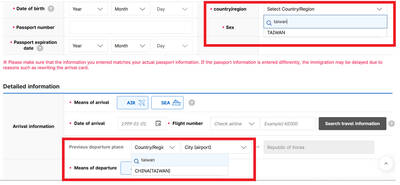
Jason Han says that the e-arrival card spat between South Korea and Taiwan shows that Seoul is signaling adherence to its “one-China” policy, while Taiwan’s response reflects a reciprocal approach. “Attempts to alter the diplomatic status quo often lead to tit-for-tat responses,” the analyst on international affairs tells the Taipei Times, adding that Taiwan may become more cautious in its dealings with South Korea going forward. Taipei has called on Seoul to correct its electronic entry system, which currently lists Taiwan as “China (Taiwan),” warning that reciprocal measures may follow if the wording is not changed before March 31. As of yesterday,
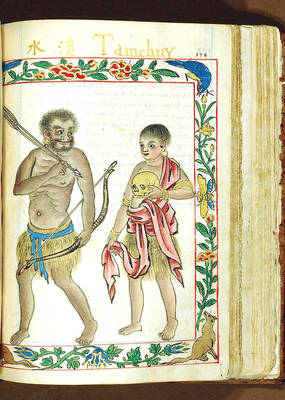
The Portuguese never established a presence on Taiwan, but they must have traded with the indigenous people because later traders reported that the locals referred to parts of deer using Portuguese words. What goods might the Portuguese have offered their indigenous trade partners? Among them must have been slaves, for the Portuguese dealt slaves across Asia. Though we often speak of “Portuguese” ships, imagining them as picturesque vessels manned by pointy-bearded Iberians, in Asia Portuguese shipping between local destinations was crewed by Asian seamen, with a handful of white or Eurasian officers. “Even the great carracks of 1,000-2,000 tons which plied
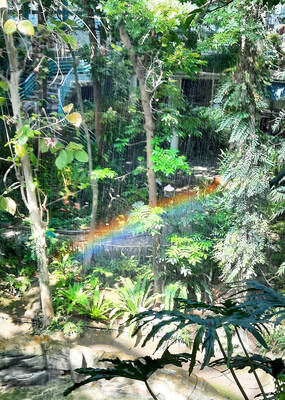
It’s only half the size of its more famous counterpart in Taipei, but the Botanical Garden of the National Museum of Nature Science (NMNS, 國立自然科學博物館植物園) is surely one of urban Taiwan’s most inviting green spaces. Covering 4.5 hectares immediately northeast of the government-run museum in Taichung’s North District (北區), the garden features more than 700 plant species, many of which are labeled in Chinese but not in English. Since its establishment in 1999, the site’s managers have done their best to replicate a number of native ecosystems, dividing the site into eight areas. The name of the Coral Atoll Zone might
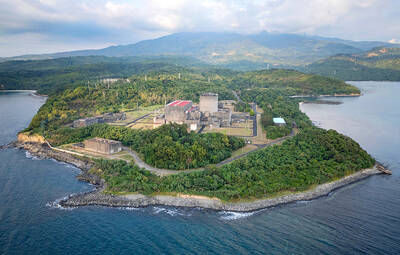
Nuclear power is getting a second look in Southeast Asia as countries prepare to meet surging energy demand as they vie for artificial intelligence-focused data centers. Several Southeast Asian nations are reviving mothballed nuclear plans and setting ambitious targets and nearly half of the region could, if they pursue those goals, have nuclear energy in the 2030s. Even countries without current plans have signaled their interest. Southeast Asia has never produced a single watt of nuclear energy, despite long-held atomic ambitions. But that may soon change as pressure mounts to reduce emissions that contribute to climate change, while meeting growing power needs. The


 RSS
RSS