


In mid-2002, when the video game Narc was only six months into development, the most startling element in it may have been a barrel-throwing sumo wrestler. Or it may have been the inclusion of a villainous flamenco dancer named El Toro.
When the game is released for PlayStation 2 and the Xbox next week, however, the most arresting aspect will most likely be that players of Narc will -- as part of the gameplay -- be able to take drugs.
In an industry known for depicting violence, Narc's foray into substance abuse is a venture into a largely untracked frontier.
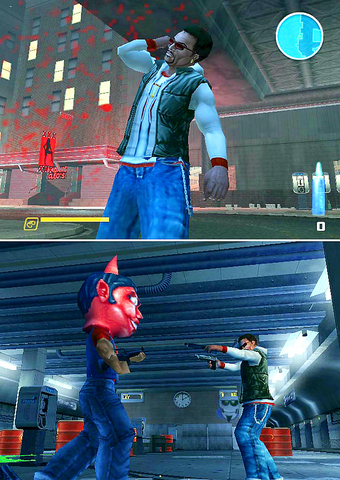
PHOTOS: NY TIMES
"This is something that nobody else has tackled," said Steve Allison, 37, chief of marketing for Narc's publisher, Midway.
In Narc, which is rated appropriate for ages 17 and older in the US, players control one of two narcotics officers, partners who separate after one becomes addicted to drugs.
The gameplay primarily involves arresting dealers, whose drugs can be confiscated and used.
A digital puff of marijuana, for example, temporarily slows the action of the game like a sports replay. Taking an Ecstasy tablet creates a mellow atmosphere that can pacify aggressive foes. The use of crack momentarily makes the player a marksman: a "crack" shot.
But using each drug also leads to addiction, which can lead to blackouts that cost the player inventory and to demotions or even expulsion from the police force, which halts progress in the game. In measured doses, the substances can make a tough challenge easier, but the makers of the game say it is possible to play without using the drugs at all.
"Should you be able to use them?" the game's producer, Wayne Cline, 31, said. "We decided, yeah, if they're part of the life of a cop. Just like in the movie Narc and the movie Training Day, sometimes they use."
More drug-related games are coming. Take Two Interactive, the publisher of the Grand Theft Auto series, recently announced a title to be released this year called Snow. According to a company news release, the game "will challenge players to oversee every aspect of the drug trade."
Vivendi Universal is planning to release a game based on the film Scarface, which featured extensive cocaine use. The company has also announced Bulletproof, a game starring the likeness of 50 Cent, the rapper and acknowledged former crack dealer, in an adventure set upon "a bloody path through New York's drug underworld."
Representatives from Take Two and Vivendi declined to comment for this article. But game publishers increasingly seek to appeal to older players with provocative content. More than half of the regular players of home consoles like the PlayStation 2 and the Xbox are adults, according to the Electronics Software Association, a trade group. But while nearly 3,000 games have been cited for violence since 1994 by the Entertainment Software Rating Board, the independent organization that rates games, only 40 have been tagged for drug references or for the use of drugs. Most refer to drugs only peripherally.
Patricia Vance, president of the rating board, said the trend was not so much about drugs as it was a move toward greater realism. Games increasingly include more character development and deeper stories, she said, which lead to a broader range of topics.
But for some, Narc's inclusion of drug use is a reality they feel is unwise for games to reflect. "Narc was a bad idea," said Michael Pachter, an analyst who follows Midway for Wedbush Morgan Securities. "Violence is embraced in our culture, which is why you see violence in video games. I don't believe society believes drugs are an appropriate thing. I think that alienates consumers."
Pachter said he had not seen the final version of the game but was familiar with its use of drugs as ability enhancers. He likened the game's drugs to steroids, and said that the recent scorn directed at baseball players suspected of using steroids indicated society's current mood about drugs.
Some gaming professionals think otherwise, suggesting that if movies, music and literature have drug-oriented cultural touchstones, so should games.
"If you can blow someone's head off, I don't see why you can't have drugs, as long as it fits the context," said Doug Walker, game designer for the Dutch developer Guerrilla Games.
If one asks Taiwanese why house prices are so high or why the nation is so built up or why certain policies cannot be carried out, one common answer is that “Taiwan is too small.” This is actually true, though not in the way people think. The National Property Administration (NPA), responsible for tracking and managing the government’s real estate assets, maintains statistics on how much land the government owns. As of the end of last year, land for official use constituted 293,655 hectares, for public use 1,732,513 hectares, for non-public use 216,972 hectares and for state enterprises 34 hectares, yielding

The small platform at Duoliang Train Station in Taitung County’s Taimali Township (太麻里) served villagers from 1992 to 2006, but was eventually shut down due to lack of use. Just 10 years later, the abandoned train station had become widely known as the most beautiful station in Taiwan, and visitors were so frequent that the village had to start restricting traffic. Nowadays, Duoliang Village (多良) is known as a bit of a tourist trap, with a mandatory, albeit modest, admission fee of NT$10 giving access to a crowded lane of vendors with a mediocre view of the ocean and the trains

For many people, Bilingual Nation 2030 begins and ends in the classroom. Since the policy was launched in 2018, the debate has centered on students, teachers and the pressure placed on schools. Yet the policy was never solely about English education. The government’s official plan also calls for bilingualization in Taiwan’s government services, laws and regulations, and living environment. The goal is to make Taiwan more inclusive and accessible to international enterprises and talent and better prepared for global economic and trade conditions. After eight years, that grand vision is due for a pulse check. RULES THAT CAN BE READ For Harper Chen (陳虹宇), an adviser
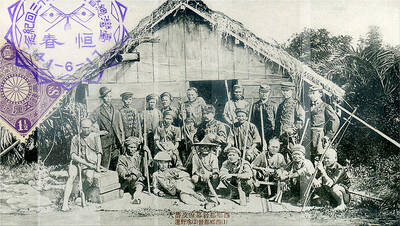
Traditionally, indigenous people in Taiwan’s mountains practice swidden cultivation, or “slash and burn” agriculture, a practice common in human history. According to a 2016 research article in the International Journal of Environmental Sustainability, among the Atayal people, this began with a search for suitable forested slopeland. The trees are burnt for fertilizer and the land cleared of stones. The stones and wood are then piled up to make fences, while both dead and standing trees are retained on the plot. The fences are used to grow climbing crops like squash and beans. The plot itself supports farming for three years.


 RSS
RSS