


More than a decade after the March Student Movement (
With these questions in mind, directors Yang Yi-tse (
Titled the Stormy Times -- Taiwan's Student Movements (
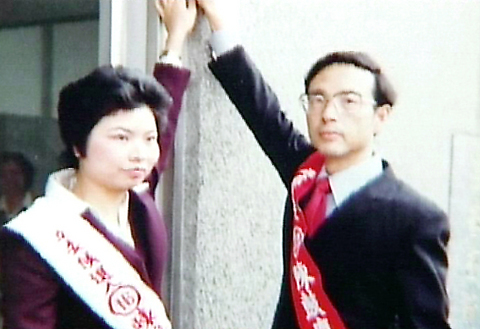
PHOTO: TAIPEI TIMES AND COURTESY OF PTS
"It was like cooking a pot of soup with stones -- a long process where you have to keep adding water and ingredients," Yang said.
A history of protests
He originally had planned to make a film about the March Student Movement featuring only Lin Chia-lung, Luo Wen-chia and Lee Wen-chung, but later broadened the time-span to almost a century, starting in the Japanese colonial period and extending to last year's post-presidential-election demonstrations.
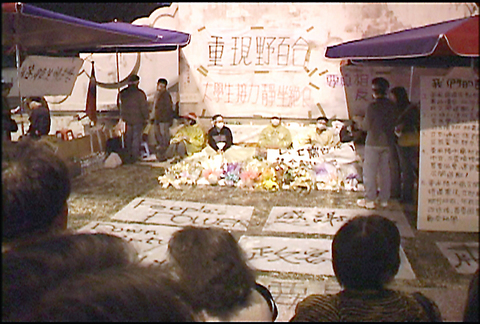
In 1910, a group of Taiwanese students studying in Japan started a publication titled Taiwan Youth (
According to Yang Tu (
"Students groups here were seeking allies with mainland Chinese student groups. Campus upheavals spread like wildfire in Taiwan and China from 1947 to 1949," Yang said at the premiere of the documentary series this week.
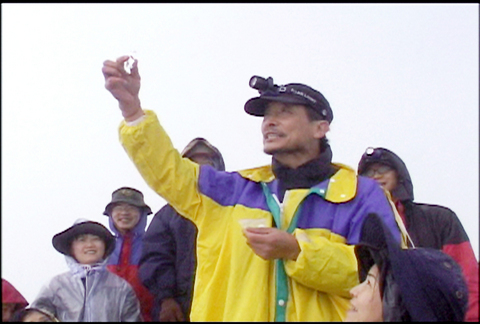
But the sprouting leftist movement was silenced by the so-called "white terror" beginning in 1950 when the ruling regime sought to consolidate its power by eradicating left-leaning dissidents through imprisonment and executions.
One of the directors of the series, Chang Chao-wei (
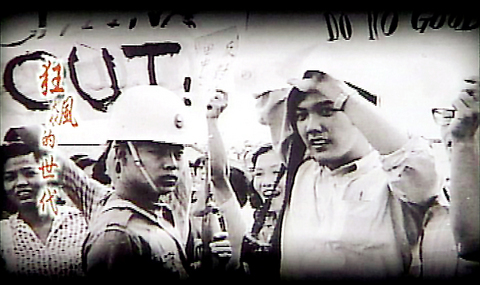
It wasn't until 1970, when a movement arose to defend claims to the Tiaoyutai island group, did Taiwan's campuses resume political activism. Taipei Mayor Ma Ying-jeou (馬英九), then a student at Harvard Law School, was one of the active students in the movement.
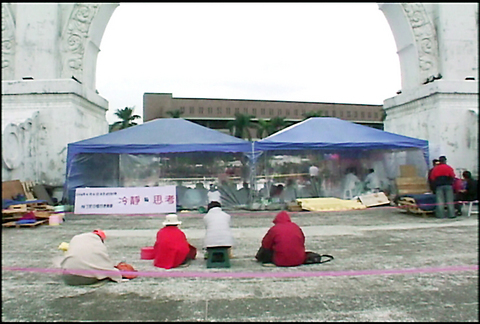
Originally a patriotic movement to back Taiwan's claim to the islands and denounce Japan's assumption of sovereignty over the uninhabited rocks in the ocean, the movement also gave voice to calls for freedom of speech and democratic reform in Taiwan.
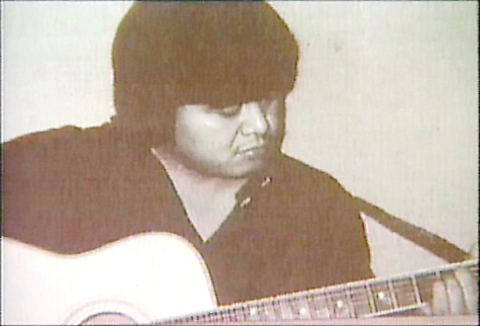
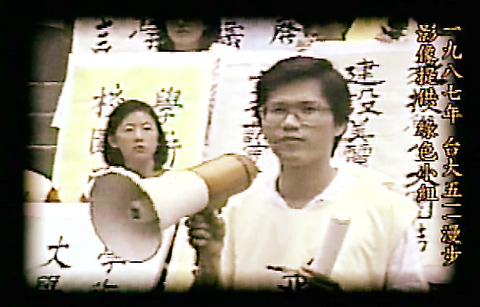
By the 1980s, student clubs at National Taiwan University began to organize demonstrations led by Lin Chia-lung and Lee Wen-chung advocating free speech on campus.
These student clubs eventually established a united student movement with different universities culminating in the March Student Movement, which was the largest student rally in Taiwan in 20 years.
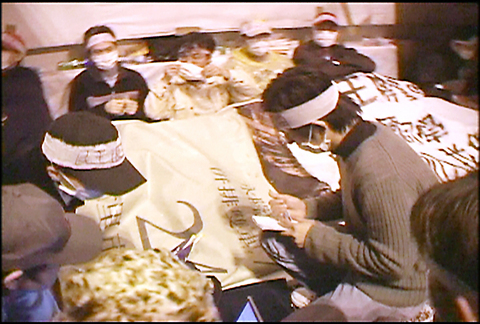
In March 1990, two college students began a demonstration to protest the National Assembly, which at that time was filled with representatives who held their posts for life. As more students joined, the protest expanded to 5,000 students and 100 professors, lasting 16 days and eventually forced a series of reforms in the legislature and National Assembly.
"We wanted to recapture the passion and spirit of those student actions and re-position those incidents in the history of Taiwan," said producer Yang.
"Many of the past incidents have been buried in each individual's memories. I am very glad to see them being discussed anew and contextualized historically," said philosophy scholar Chen Ku-ying (
New questions
The retrospective series also stirred new questions among the former activists that speak to Taiwan's current political situation.
"Back then, we advocated the principles of science and democracy. But society now is still filled with superstition and selfish ideas," said Lin Hsiao-hsin (
Filmmaker Chang, a participant in the March Student Movement, took the Korean student movements of the 1980s as a counterexample to Taiwan's student-led democracy movements. The former student leaders in Korea have now become the leading members of that country's government and are the key persons behind its flourishing cultural and creative industries, he said.
"But looking at Taiwan, did the March Student Movement really liberate anything? Have we really experienced a revolution?" he said.
Looking at more recent times, only sporadic student protests have taken place, and not always in support of the lofty principles of the former pro-democracy movement. Three years ago, students at National Chiao-tung University protested to demand better food and service in the campus cafeteria. Two years ago, National Cheng-kung University students gathered to protest the arrests of students for illegally downloading MP3 files.
Most recently, about 100 students protested the result of last year's presidential election and what they called the suspicious circumstances of the election-eve assassination attempt on the president and vice president. But the action lost steam after 10 days.
The apparent lack of political consciousness among Taiwan's youth has given rise to the expression "Strawberry Generation" (
"Young people tend to have little concern about bigger issues in society and politics. And very few wish to run for government posts," said professor Lee Chia-tung (
The perceived indifference to politics of the Strawberry Generation worries many of the former student leaders, who say it reflects a problem in Taiwan's democraticization.
"It is not young people's fault. It's us adults who did not take the responsibility to teach them to be unselfish and to help the others," said Yang Tsu-chun (
According to Yang and Chang, the series aims to inspire reflection instead of romanticizing past student movements.
"I no longer fantasize about the next large-scale social or cultural liberation movement. But I do hope that anyone who sees the films series can look to the future by reviewing the past, not just for Taiwan, but for his or her personal life," Chang said.
`Stormy Times - Taiwan's Student Movements' is now showing on the Public Television Service channel at 10pm every Tuesday.
If one asks Taiwanese why house prices are so high or why the nation is so built up or why certain policies cannot be carried out, one common answer is that “Taiwan is too small.” This is actually true, though not in the way people think. The National Property Administration (NPA), responsible for tracking and managing the government’s real estate assets, maintains statistics on how much land the government owns. As of the end of last year, land for official use constituted 293,655 hectares, for public use 1,732,513 hectares, for non-public use 216,972 hectares and for state enterprises 34 hectares, yielding
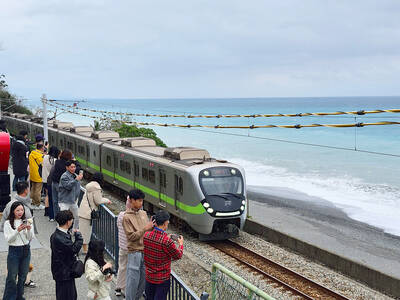
The small platform at Duoliang Train Station in Taitung County’s Taimali Township (太麻里) served villagers from 1992 to 2006, but was eventually shut down due to lack of use. Just 10 years later, the abandoned train station had become widely known as the most beautiful station in Taiwan, and visitors were so frequent that the village had to start restricting traffic. Nowadays, Duoliang Village (多良) is known as a bit of a tourist trap, with a mandatory, albeit modest, admission fee of NT$10 giving access to a crowded lane of vendors with a mediocre view of the ocean and the trains

The March/April volume of Foreign Affairs, long a purveyor of pro-China pablum, offered up another irksome Beijing-speak on the issues and solutions for the problems vexing the People’s Republic of China (PRC) and the US: “America and China at the Edge of Ruin: A Last Chance to Step Back From the Brink” rang the provocative title, by David M. Lampton and Wang Jisi (王緝思). If one ever wants to describe what went wrong with US-PRC relations, the career of Wang Jisi is a good place to start. Wang has extensive experience in the US and the West. He was a visiting

One of the challenges with the sheer availability of food in today’s world is that lots of us end up spending many of our waking hours eating. Whether it’s full meals, snacks or desserts, scientists have found that it’s not uncommon for us to be mindlessly grazing at some point during all of our 16 or so waking hours. The problem? As soon as this food hits the bloodstream in the form of glucose, it initiates the release of the hormone insulin. This in turn activates a switch present in every one of our cells, which is responsible for driving cell


 RSS
RSS