


The Indian film Final Solution by Rakesh Sharma is a long, slow trudge through the politics of hate in the state of Gujarat and the violence that it spawned in such deadly fashion in 2002.
Sharma, a Hindu, travels throughout the state, interviewing Muslim victims of sectarian violence that broke out in the state after mobs, egged on by ultra-nationalist Vishwa Hindu Parishad (VHP) politicians, sought revenge for an attack on Hindu pilgrims that left 58 people dead. Over 10,000 Muslims are said to have been killed by rampaging Hindus, while police reportedly looked on helpless or unwilling to stop the killing.
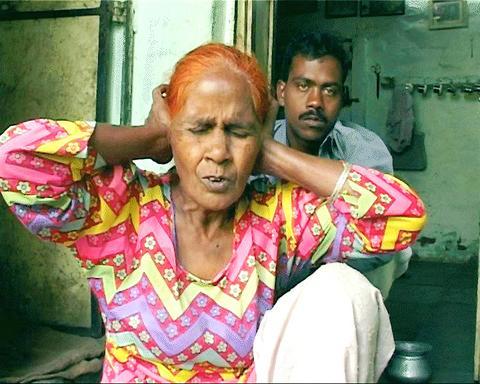
PHOTO COURTESY OF TIDF
The film, which screens today in the Taiwan International Documentary Festival, attempts to make a case that what took place in Gujarat amounts to genocide. From the first-person accounts of the victims and the footage of hate-spewing VHP politicians, the facts seem to be on Sharma's side.
One of the charismatic VHP leaders in a stump speech says to raucous laughter: "It's true that not all muslims are terrorists, but it's true that all terrorists in the world are muslims." He then goes on to disparage Muslims for a litany of problems and openly uses the word "purge" when demanding that Muslims be removed from the state.
By covering the shocking activities of the VHP in a reportorial style and relying on the stories of the terrorized victims, the film provides thorough context to the situation in the state as it tells the story of the degeneration of the political situation in Gujarat that eventually set loose murderous crowds of machete-wielding young men hunting for Muslims.
This year's festival has contained a large number of films that look at the issue of sectarian strife, mostly between Palestinians and Israelis, but this film stands out for the starkness of the images and the harrowing story of what looks a lot like state-sanctioned murder. Most of the violence is insinuated instead of displayed in graphic pictures, but the accounts of the victims, who seem overwhelmingly to be women and children perhaps because the men were killed off, send chills down the spine.
Opening and closing the film are interviews with a wide-eyed young Muslim boy whose family and relatives were attacked and some of them killed in the riots. In the fidgety, hyper fashion of a young boy, he wriggles and laughs his way through the story of the riot and ends by saying that his sole ambition in life is to kill Hindus when he grows up. It's not a very hopeful message, but Gujarat isn't a place that radiates hope, especially given its recent past.
FILM NOTE:
Final Solution
Running time: 148 minutes
Screening times and location:
Today, 10:50am, Showtime Cinema
仇恨終結賴
可辛薛曼
印度
2004柏林影展青年論壇沃爾夫岡獎及評審團特別獎
2004香港電影節傑出紀念片人道主義獎
本片為一部有關政治仇恨的調查研究。透過對印度辜加蘭省回教徒集體屠殺事件的研究,紀錄了2002年2、3月到2003年7月這段期間,印度右翼政權的變遷,並以回顧的眼光,特地檢視了他們儼然追隨三零年代早、中期德國納粹的政治傾向。和那些因遺忘歷史而註定忍受歷史重演之苦的人們一樣,本片清楚地站在反對仇恨、暴力的立場。並因此在印度遭電檢局禁演長達數月之久。
Film festival notes:
What: The 4th Taiwan International Documentary Festival.
When: Ends today.
Where: Showtime Cinema (欣欣晶華影城),
247 Linsen N Rd, Taipei (台北市林森北路247號).
Spot-Taipei Film House (光點台北),
18 Zhongshan N Rd, Sec 2, Taipei
(台北市中山北路二段18號).
Shih-ming Hall of Taiwan Cement
Building (台泥大樓士敏廳)113 Zhongshan N Rd, Sec 2, Taipei (台北市中山北路二段113號).
Huashan Creative Arts and Industry Center (華山文化園區), for outdoor screenings only, 1 Bade Rd, Sec 1, Taipei (台北市八德路一段號)
Tickets: NT$10, available
at SPOT - Taipei Film House.
On the web: www.tidf.org.tw
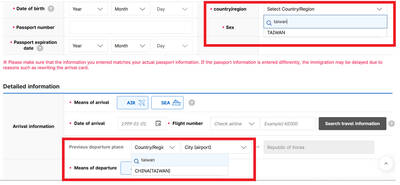
Jason Han says that the e-arrival card spat between South Korea and Taiwan shows that Seoul is signaling adherence to its “one-China” policy, while Taiwan’s response reflects a reciprocal approach. “Attempts to alter the diplomatic status quo often lead to tit-for-tat responses,” the analyst on international affairs tells the Taipei Times, adding that Taiwan may become more cautious in its dealings with South Korea going forward. Taipei has called on Seoul to correct its electronic entry system, which currently lists Taiwan as “China (Taiwan),” warning that reciprocal measures may follow if the wording is not changed before March 31. As of yesterday,

The Portuguese never established a presence on Taiwan, but they must have traded with the indigenous people because later traders reported that the locals referred to parts of deer using Portuguese words. What goods might the Portuguese have offered their indigenous trade partners? Among them must have been slaves, for the Portuguese dealt slaves across Asia. Though we often speak of “Portuguese” ships, imagining them as picturesque vessels manned by pointy-bearded Iberians, in Asia Portuguese shipping between local destinations was crewed by Asian seamen, with a handful of white or Eurasian officers. “Even the great carracks of 1,000-2,000 tons which plied

On Thursday, former Taipei mayor and founder of the Taiwan People’s Party (TPP) Ko Wen-je (柯文哲) was sentenced to 17 years in prison and had his civil rights suspended for six years over corruption, embezzlement and other charges. Seven others related to the case were also handed prison sentences, while two were found not guilty. It has been a bad week for the TPP. On Tuesday, prosecutors charged Chinese immigrant Xu Chunying (徐春鶯) with suspicion of taking part in Beijing-directed election interference. Xu has strong links to the TPP, which once offered her a party list legislator nomination. Tuesday also
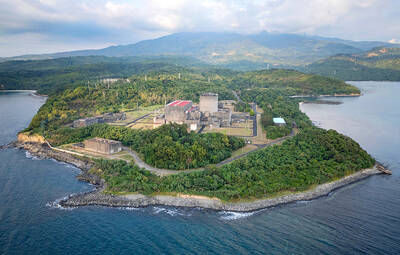
Nuclear power is getting a second look in Southeast Asia as countries prepare to meet surging energy demand as they vie for artificial intelligence-focused data centers. Several Southeast Asian nations are reviving mothballed nuclear plans and setting ambitious targets and nearly half of the region could, if they pursue those goals, have nuclear energy in the 2030s. Even countries without current plans have signaled their interest. Southeast Asia has never produced a single watt of nuclear energy, despite long-held atomic ambitions. But that may soon change as pressure mounts to reduce emissions that contribute to climate change, while meeting growing power needs. The


 RSS
RSS