


Some of the finest noses in the French wine world are snorting into their decanters over a new film which claims they are complicit in the American-led homogenization of world tastes and the steady destruction of France's centuries-old tradition of "terroir."
Mondovino, a low-budget documentary by American sommelier-turned-filmmaker Jonathan Nossiter, has been a surprise hit at the box office since it opened last month -- pulling in some 200,000 viewers -- but the reaction among many in the wine-making establishment has been as sour as a corked bottle of chateau plonk.
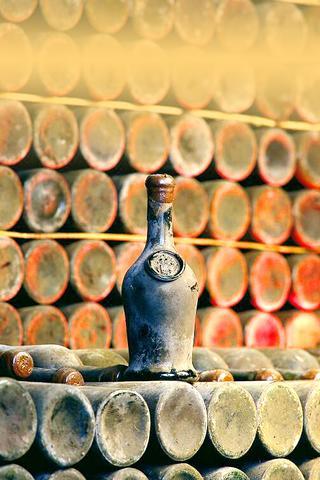
PHOTO: AP
"The most hacked off are the people with a great deal of power in the wine world: magazines that are hand-in-glove with the big Bordeaux dealers; multinationals with advertising and marketing clout. These people are very unhappy," according to Nossiter, who spent three years touring the world to make his two-and-a-quarter-hour sitrep on the state of the industry.
"There are some very powerful people who have done all that they can to censure the film. We have had a lot of libel threats -- which we are ignoring," he said in an interview.
Setting out to "take the pulse" of the international wine business, Nossiter uses it as a metaphor for larger issues of globalization and the defense of local particularity against the standardization wrought by mass commerce.
Travelling with a small digital camera, he speaks to Argentinian peasants, magnates in California's Napa valley, Tuscan aristocrats, Burgundian small-holders and a host of experts, oenologists, dealers, auctioneers and critics.
The result -- which opens in Britain this week and the US early next year -- is a tolerant and often humorous film that is a thousand miles from the invective of a polemicist like Michael Moore.
However, at root the message is not so different: that power has become concentrated in the hands of a few multi-national producers, who with the help of ultra-influential critics such as the ubiquitous Robert Parker are flooding the market with Identikit variety-based vintages that are as bland as they are easy to sell.
In France -- where wine is close to a national religion -- the surprise has been that the bogeymen are not all Yankee carpetbaggers, but come in more familiar guises.
The closest the film gets to a true villain is the renowned French consultant Michel Rolland, who is seen being chauffeur-driven around the Bordeaux vineyards offering the same advice over and again to anxious clients: "la micro-oxygenation."
Elsewhere the head of wine at the London auction house Christies notes how the classic Chateau Kirwan found overnight success when it hired Rolland's services to develop the wine. "Its taste became global. It's no more Margaux than [top-selling US wine] Opus One ... but it's selling. So what the hell can you say," Michael Broadbent exclaims.
Rolland was not amused at his portrayal, complaining to Liberation newspaper that he was misrepresented as a "dictator of consulting" and accusing Nossiter of basing his film on a "simplistic intellectual-sociological-ecological ideology."
For others, Nossiter is guilty of over-romanticizing the notion of "terroir" -- the basis for France's appellation system of labeling -- according to which each wine-growing area has a specific character nurtured since Gallo-Roman times.
The centerpiece of the film is an attempt by the Californian conglomerate Mondavi to buy a large piece of realestate at Aniane in the vineyards of Languedoc.
The bid fails thanks to the opposition of local growers such as Aime Guibert who is seen proclaiming, "Wine is dead!" But it then transpires the land has been sold off to the French actor Gerard Depardieu and his multi-millionaire partner, wine-dealer Bernard Magrez.
As Aniane's former mayor complains: "Mondavi, Depardieu -- I can't see the difference!"
For others, including the legendary Parker himself who is interviewed surrounded by farting bulldogs at his Maryland home, it was precisely the obscurity and corruption linked to the appellation system that made a new way of judging wine inevitable. And if people like the wine he chooses -- that is hardly his fault.
According to Nossiter, who worked on Fatal Attraction and more recently won best film at the Sundance festival with Sunday, his depiction of the wine business is a mirror on the world as a whole.
"What is happening in wine is happening to you," he says.
"Wine is an expression of civilization, but it is also an expression of power. It was the Romans who introduced wine to the Mediterranean basin, and for them it was part of their mission to civilize. If you'd made a film about wine in Roman times it would have painted a very revealing picture.
"Today the picture is paradoxical. On the one hand never have so many people taken seriously the notion that their place of origin and identity have meaning and are worth preserving. And yet never has the world been under such threat from the forces of homogenization."
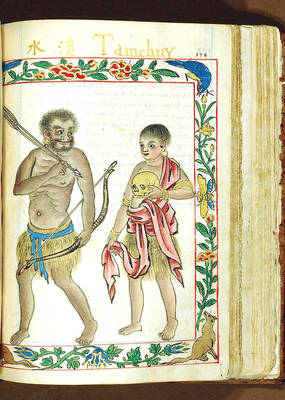
The Portuguese never established a presence on Taiwan, but they must have traded with the indigenous people because later traders reported that the locals referred to parts of deer using Portuguese words. What goods might the Portuguese have offered their indigenous trade partners? Among them must have been slaves, for the Portuguese dealt slaves across Asia. Though we often speak of “Portuguese” ships, imagining them as picturesque vessels manned by pointy-bearded Iberians, in Asia Portuguese shipping between local destinations was crewed by Asian seamen, with a handful of white or Eurasian officers. “Even the great carracks of 1,000-2,000 tons which plied
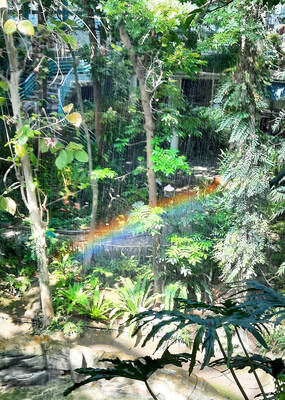
It’s only half the size of its more famous counterpart in Taipei, but the Botanical Garden of the National Museum of Nature Science (NMNS, 國立自然科學博物館植物園) is surely one of urban Taiwan’s most inviting green spaces. Covering 4.5 hectares immediately northeast of the government-run museum in Taichung’s North District (北區), the garden features more than 700 plant species, many of which are labeled in Chinese but not in English. Since its establishment in 1999, the site’s managers have done their best to replicate a number of native ecosystems, dividing the site into eight areas. The name of the Coral Atoll Zone might

On Monday morning, in quick succession, the Chinese Communist Party (CCP) and the Chinese Nationalist Party (KMT) released statements announcing “that the Central Committee of the Communist Party of China and General Secretary Xi Jinping (習近平) have invited KMT Chairwoman Cheng Li-wun (鄭麗文) to lead a delegation on a visit to the mainland” as the KMT’s press release worded it. The KMT’s press release added “Chairwoman Cheng expressed her gratitude for the invitation and has gladly accepted it.” Beijing’s official Xinhua news release described Song Tao (宋濤), head of the Taiwan Work Office of the CCP Central Committee, as
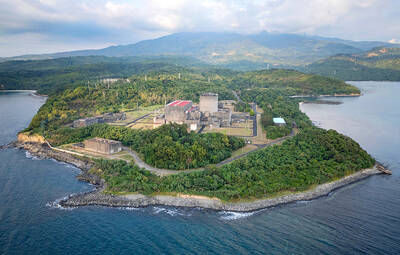
Nuclear power is getting a second look in Southeast Asia as countries prepare to meet surging energy demand as they vie for artificial intelligence-focused data centers. Several Southeast Asian nations are reviving mothballed nuclear plans and setting ambitious targets and nearly half of the region could, if they pursue those goals, have nuclear energy in the 2030s. Even countries without current plans have signaled their interest. Southeast Asia has never produced a single watt of nuclear energy, despite long-held atomic ambitions. But that may soon change as pressure mounts to reduce emissions that contribute to climate change, while meeting growing power needs. The


 RSS
RSS