


The Incredibles is the movie that computer-generated animation has been waiting to do. Or maybe The Incredibles was waiting around for CG animation to catch up with its outsized ambitions. Either way, one fits into the other like sliding a skintight super-suit over a well-muscled torso: They look like they were made for each other.
The latest home run from Pixar -- the studio behind Monsters, Inc and Finding Nemo -- is about a family of superheroes, and its look is as bold and neon-intense as the subject implies. With more than a dozen slam-bang action scenes, the movie comes at you like a showoff itching to display all its best tricks ... except it lives up to the hype -- and then some.

Take, as just one for-instance, the bit where the family's middle child is running away from the bad guys at super-speed. The pace grows faster and faster as he dodges their deadly bladed whirligig vehicles, careening off trees and through cave tunnels, and generally making the speeder bike chase in The Return of the Jedi look positively leaden. Then the boy is chased into the ocean, and he looks down and realizes he's running on water -- something he didn't even know he could do. He hoops and hollers with joy as the race jumps to a whole new level of excitement.

PHOTOS COURTESY OF UNIVERSAL PICTURES
Essentially, The Incredibles feels like a 1950s comic book that's been jabbed with Captain America's super-soldier formula and sprung to brawny, brash 3-D life. It has the iconic look of that era but exudes hip, modern sensibilities. For instance, the idea that the superhero business would be shut down by lawsuits has a very 21st century flavor.
This duality is not surprising, considering the film was written and directed by Brad Bird and produced by John Walker, a pair of Pixar rookies who created 1999's wonderful (and woefully underappreciated) animation gem, The Iron Giant. In making the move to Pixar, they're like a pair of kids who've had to make do with a broken set of Tinker Toys, and are suddenly let loose in an FAO Schwarz store.
Set in a generic mid-century metropolis, the story opens with the marriage of the super-strong Mr. Incredible (voice of Craig Nelson) to Elastigirl (Holly Hunter), whose name says it all. The whole city seems to be teeming with super-folk, among them Mr. Incredible's best bud, the also aptly named Frozone (Samuel Jackson).
But everyone has to hang up their costumes after a rash of legal trouble (Mr. Incredible is sued for saving the life of a man attempting suicide). Flash 15 years later, and the buff Mr. Incredible has become regular old Bob Parr, an insurance adjustor with a receding hairline and expanding paunch. His wife Helen is too busy wrangling their kids -- speedster Dash (Spencer Fox), disappearing teen Violet (Sarah Vowell) and normal baby Jack Jack -- to regret the loss of her former life. But it weighs Bob down like an anchor. The slump-shouldered posture of surrender he presents to his screeching boss (Wallace Shawn) says everything, as does his look of resignation when he must cram his massive, hulking shoulders into the tiny econo-box car he drives to work.
His shot at redemption arrives in the form of a mysterious employer who hires him to defeat a runaway robot, helping bulk up his ego and his bank account. But there's more than meets the eye, and it's all tied up with Syndrome (Jason Lee), a superhero wannabe Mr. Incredible knew way back when.
The real scene-stealer is Edna Mode (voiced by Bird), who's sort of the Edith Head of superhero costume designers. With her Eurotrash accent and munchkin stature, Edna is all passive-aggressive egomania -- but then, who else can manufacture flameproof leotards that are also machine washable? Plus, she knows the downside of costumes with capes.
It's true that The Incredibles doesn't have the emotional resonance of the other Pixar flicks. It makes only a vague stab at life-lessons moments by gently critiquing the "no winners, no losers" approach many parents and educators take with kids these days. "Everyone is special, Dash," Helen instructs. "Which is another way of saying no one is," he retorts.
But if The Incredibles is content to splash around in the shallow end of the pool, it does it with such an exuberant charge of creativity that the best thing to do is just look up in the sky, and admire.

If one asks Taiwanese why house prices are so high or why the nation is so built up or why certain policies cannot be carried out, one common answer is that “Taiwan is too small.” This is actually true, though not in the way people think. The National Property Administration (NPA), responsible for tracking and managing the government’s real estate assets, maintains statistics on how much land the government owns. As of the end of last year, land for official use constituted 293,655 hectares, for public use 1,732,513 hectares, for non-public use 216,972 hectares and for state enterprises 34 hectares, yielding

The small platform at Duoliang Train Station in Taitung County’s Taimali Township (太麻里) served villagers from 1992 to 2006, but was eventually shut down due to lack of use. Just 10 years later, the abandoned train station had become widely known as the most beautiful station in Taiwan, and visitors were so frequent that the village had to start restricting traffic. Nowadays, Duoliang Village (多良) is known as a bit of a tourist trap, with a mandatory, albeit modest, admission fee of NT$10 giving access to a crowded lane of vendors with a mediocre view of the ocean and the trains
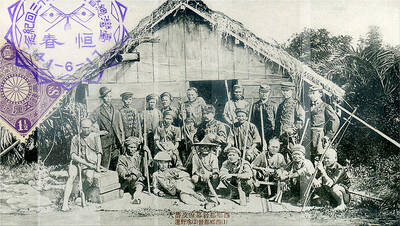
Traditionally, indigenous people in Taiwan’s mountains practice swidden cultivation, or “slash and burn” agriculture, a practice common in human history. According to a 2016 research article in the International Journal of Environmental Sustainability, among the Atayal people, this began with a search for suitable forested slopeland. The trees are burnt for fertilizer and the land cleared of stones. The stones and wood are then piled up to make fences, while both dead and standing trees are retained on the plot. The fences are used to grow climbing crops like squash and beans. The plot itself supports farming for three years.
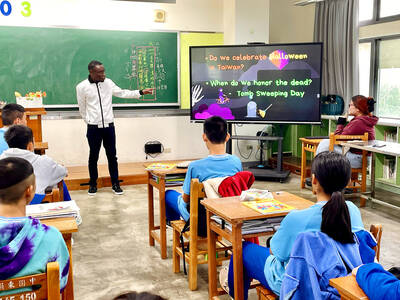
For many people, Bilingual Nation 2030 begins and ends in the classroom. Since the policy was launched in 2018, the debate has centered on students, teachers and the pressure placed on schools. Yet the policy was never solely about English education. The government’s official plan also calls for bilingualization in Taiwan’s government services, laws and regulations, and living environment. The goal is to make Taiwan more inclusive and accessible to international enterprises and talent and better prepared for global economic and trade conditions. After eight years, that grand vision is due for a pulse check. RULES THAT CAN BE READ For Harper Chen (陳虹宇), an adviser


 RSS
RSS