


During World War II, Burma was the most important Asian area of military operations for the British. They had lost Singapore, Malaya and Hong Kong, and the advancing Japanese not only wanted to attack a British imperial possession but also to cut the supply route into China that ran from Rangoon to Lashio -- the famous Burma Road. The British army quickly retreated -- the longest retreat in its history, Jon Latimer says in Burma: The Forgotten War. Thereafter, they were fighting what must have sometimes seemed like a rearguard action.
Important though the war in Burma was, it was felt that it was widely ignored elsewhere. The Americans had other priorities, notably the defeat of Japan (though they were keen to do everything they could to help Chiang Kai-shek (蔣介石), busy in China fighting both the Japanese and the Communists). As for the British, their attention was on the fighting in North Africa and later Europe. Burma was seen as a long way away.
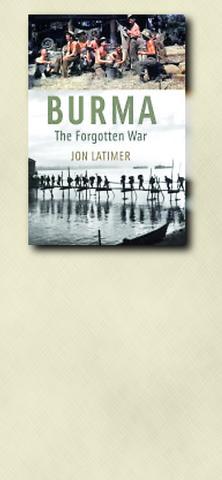
Burma in peacetime could appear something of a paradise, with its charming people, profuse flowering vegetation and tranquil Buddhist temples. But wartime conditions were appalling -- diarrhea, dysentery, sodden bedding, mildew, malaria, cholera, scrub typhus and field hospitals where major surgery was routine -- limbs amputated on all sides, with bullet and bayonet wounds, hideous head injuries and horrendous burns everywhere commonplace.
In compensation, the British drank tea made in someone's sock, perhaps attended a one-off concert by the singer Vera Lynn and lived with the constant fear of letters from home saying their girlfriends couldn't wait for them. (The Japanese soldiers didn't even get personal mail, merely letters from schoolchildren urging them to fight hard for their country).
The British leaders who dominate this book are Louis Mountbatten, William Slim and Orde Wingate.
Mountbatten, a member of the royal family, was, according to Latimer, the youngest Supreme Commander since Napoleon.
Slim, in total contrast, was the son of an impoverished Birmingham ironmonger, and in his teens had taught elementary school in a deprived inner-city area to make money, as well as writing short stories under a pseudonym. A professional soldier since World War I, he became commander of the Burma Corps shortly after the evacuation of Rangoon. He was noted for his cool-headedness under stress, and was knighted in the field in December 1944 by special permission of King George VI. The book contains a photo of the ceremony conducted by the Viceroy of India, Field-Marshal Archibald Wavell, with Mountbatten looking on.
Wingate was a typical English eccentric who became a legend. Considered by many to be obsessive, rude and overbearing, he was seen by others as a brilliant tactician and even a mystic. He ordered his troops to eat one raw onion a day and wear shorts whenever it rained. He was fond of buffalo milk and hard-tack biscuits, and considered his men didn't need that much more either, onions excepted. His specialty was attacking behind the Japanese lines. The press back in Britain, badly in need of heroes in 1942, inevitably compared him to Lawrence of Arabia.
Training was severe -- at one point 70 percent of Wingate's men were on, or trying to get on, the sick list. Wingate had this percentage reduced to 3 percent following what he grimly described as "certain measures" taken in cooperation with the medics. His small guerrilla-like units became known as "Chindits," a word derived from a mythical creature that guarded Burmese temples, and he supplied them mostly from the air, a novelty at the time. He died in an air crash in 1944.
While the author doesn't exactly endorse the post-war feature-film vision of one side grinning stoically while the other indulges in bayonet practice on its prisoners, the book is nevertheless in essence an adulatory history of the British at war in the area.
All books describing war are depressing, and in almost equal measure. Why? Because they're almost all one-sided, and invariably show that men will stop at nothing in order to win. At the ancient temple city of Pagan, for instance, Japanese troops were discovered in tunnels. When even napalm wouldn't force them out, the tunnels were simply sealed, burying them alive (though the author refrains from explicitly saying as much).
Race played its part too. Wingate, for example, only wanted to command British soldiers. And for one attack, across a river at dawn, an unprepared British unit was given the "privilege" of the assault rather than a better prepared Indian one. The majority of the British were shot to death in sinking boats, leaving the Indians, correctly supported, to follow up and overrun the position the following day.
Jon Latimer is a military historian, the author of works on the battle of El Alamein and the use of deception in warfare. The true drama of the story, the contrast between the glorious names of the regiments and the utter horror of the actual conflict, remains unremarked. Latimer doesn't anywhere in this book question the justice of men's arms and legs being blown off in defense of a state's distant territorial possessions. But then that comes as no great surprise in the circumstances.
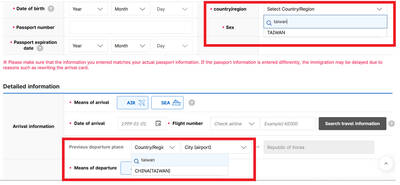
Jason Han says that the e-arrival card spat between South Korea and Taiwan shows that Seoul is signaling adherence to its “one-China” policy, while Taiwan’s response reflects a reciprocal approach. “Attempts to alter the diplomatic status quo often lead to tit-for-tat responses,” the analyst on international affairs tells the Taipei Times, adding that Taiwan may become more cautious in its dealings with South Korea going forward. Taipei has called on Seoul to correct its electronic entry system, which currently lists Taiwan as “China (Taiwan),” warning that reciprocal measures may follow if the wording is not changed before March 31. As of yesterday,
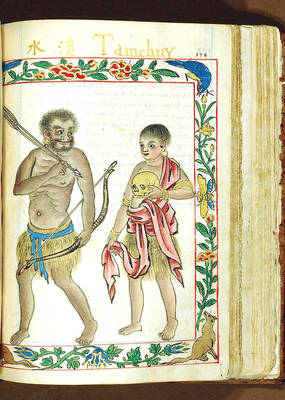
The Portuguese never established a presence on Taiwan, but they must have traded with the indigenous people because later traders reported that the locals referred to parts of deer using Portuguese words. What goods might the Portuguese have offered their indigenous trade partners? Among them must have been slaves, for the Portuguese dealt slaves across Asia. Though we often speak of “Portuguese” ships, imagining them as picturesque vessels manned by pointy-bearded Iberians, in Asia Portuguese shipping between local destinations was crewed by Asian seamen, with a handful of white or Eurasian officers. “Even the great carracks of 1,000-2,000 tons which plied
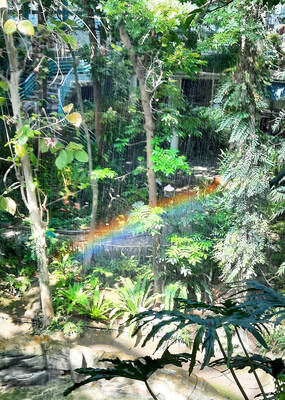
It’s only half the size of its more famous counterpart in Taipei, but the Botanical Garden of the National Museum of Nature Science (NMNS, 國立自然科學博物館植物園) is surely one of urban Taiwan’s most inviting green spaces. Covering 4.5 hectares immediately northeast of the government-run museum in Taichung’s North District (北區), the garden features more than 700 plant species, many of which are labeled in Chinese but not in English. Since its establishment in 1999, the site’s managers have done their best to replicate a number of native ecosystems, dividing the site into eight areas. The name of the Coral Atoll Zone might
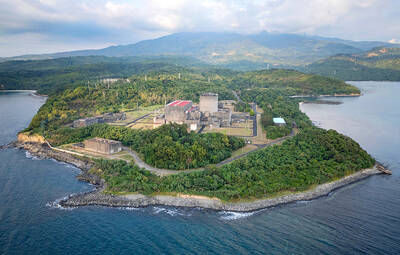
Nuclear power is getting a second look in Southeast Asia as countries prepare to meet surging energy demand as they vie for artificial intelligence-focused data centers. Several Southeast Asian nations are reviving mothballed nuclear plans and setting ambitious targets and nearly half of the region could, if they pursue those goals, have nuclear energy in the 2030s. Even countries without current plans have signaled their interest. Southeast Asia has never produced a single watt of nuclear energy, despite long-held atomic ambitions. But that may soon change as pressure mounts to reduce emissions that contribute to climate change, while meeting growing power needs. The


 RSS
RSS