


It used to be that after crossing the footbridge at Fulung's beach, you stepped onto a football-field-size
expanse of golden sand. Well, no longer.
PHOTO: MAX WOODWORTH, TAIPEI TIMES
Depending on the tides and the height of the waves, stepping off the bridge today could land you in roiling surf well over your head. After the succession of powerful storms in August and September, the beach was largely washed away, leaving a giant question mark hanging over the future of the beach resort.
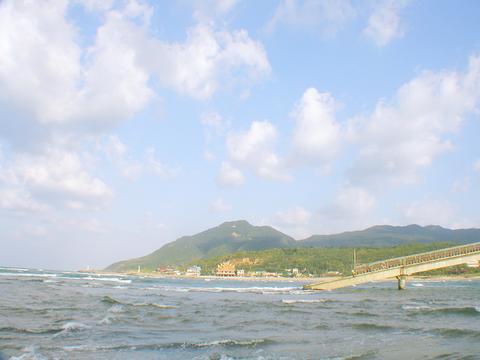
PHOTO: MAX WOODWORTH, TAIPEI TIMES
The hope now is that nature will cooperate and bring the beach back by next summer.
"There's really no way to predict whether the tides will bring the sand back in sufficient amounts. We're going to have to let nature do its work," said Yang Yung-sheng (楊永盛), spokesman for the Northeast Coast Scenic Area Administration, which manages the beach.
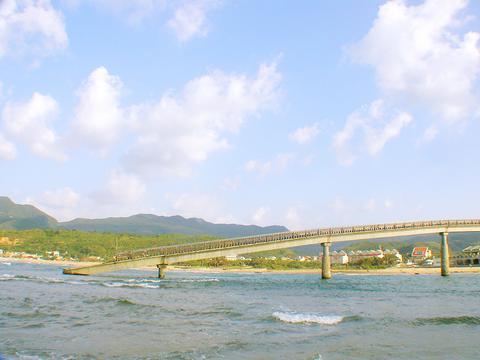
PHOTO: MAX WOODWORTH, TAIPEI TIMES
Fulung is a favorite destination of Taipei's residents and for the past five years its beach has been the venue for the Ho-Hai-Yan Rock Festival, which this year attracted up to 100,000 people over three days, according to some estimates. The tourism income that visitors generate during visits to the beach also provides the prime revenue source for the township.
PHOTO: MAX WOODWORTH, TAIPEI TIMES
Fulung's beach forms naturally at the mouth of the Shuangshi River, which empties into the island's east coast. Depending on the flow of water out of the river and the ocean tides, the beach's size and
location fluctuates greatly.
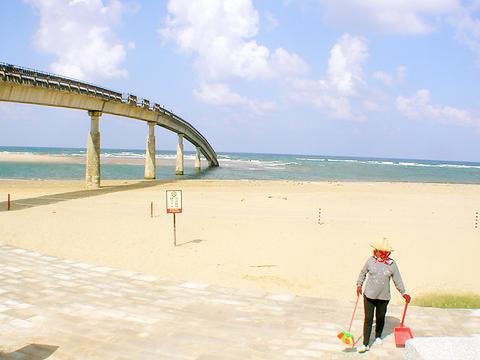
PHOTO: MAX WOODWORTH, TAIPEI TIMES
"In principle, we try as little as possible to tamper with nature. Besides, any man-made effort to control the ocean at Fulung would be pointless or prohibitively expensive, or both," Yang said.
Yang said that some years the outer beach on the opposite side of the mouth of the river (which the footbridge provides access to) is narrower than during other years. Likewise, the inner beach changes size every season forcing the Ho-Hai-Yan festival to be held on whichever beach is the larger in a given year.
This natural ebb and flow of the beach has meant that alarm bells aren't yet ringing at the coastal administration, though the level of concern about the beach's future is higher this year than at any other time in recent memory.
"This year is exceptional in that the three storms took out the entire beach. We've seen parts of the beach come and go and high tides cover large parts of its area before, but for it to be completely gone is quite worrying," Yang said.
A review will be held in March or April, Yang said, to assess the situation of the beach and make recommendations about which side of the beach, if any, to open to the public. Until then, hopes are set on the northeasterly winds and changing ocean currents during the winter months to return the sand to its original location.
But whether the time and force of the tides will be enough to restore Fulung to its former state is in the hands of nature.
Yang mentioned the beach at Yenliao, Taipei County, which several years ago lost much of its sand to a typhoon and has yet to see most of it return.
"We know the sand is out there, we just don't know whether it'll make it back," Yang said.
"No one comes here in winter anyway," said one woman whose job for the scenic area administration is to serve as custodian of the beach during the week. "And I think I've seen more sand coming back in the last few days."
Looking out at the waves where two months ago there was a pristine stretch of beach, it sounded a bit like wishful thinking.
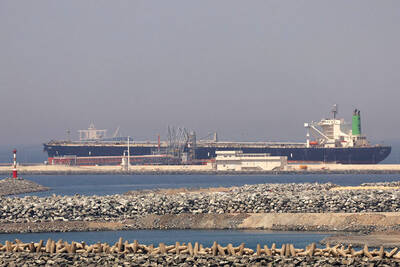
The breakwater stretches out to sea from the sprawling Kaohsiung port in southern Taiwan. Normally, it’s crowded with massive tankers ferrying liquefied natural gas from Qatar to be stored in the bulbous white tanks that dot the shoreline. These are not normal times, though, and not a single shipment from Qatar has docked at the Yongan terminal since early March after the Strait of Hormuz was shuttered. The suspension has provided a realistic preview of a potential Chinese blockade, a move that would throttle an economy anchored by the world’s most advanced and power-hungry semiconductor industry. It is a stark reminder of
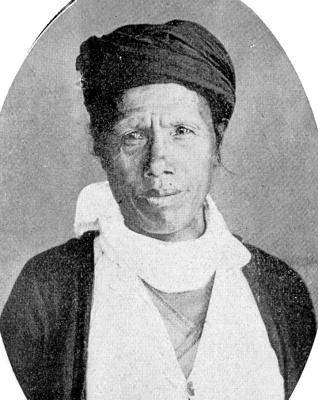
May 11 to May 17 Traversing the southern slopes of the Yushan Range in 1931, Japanese naturalist Tadao Kano knew he was approaching the last swath of Taiwan still beyond colonial control. The “vast, unknown territory,” protected by the “fierce” Bunun headman Dahu Ali, was “filled with an utterly endless jungle that choked the mountains and valleys,” Kano wrote. He noted how the group had “refused to submit to the measures of our authorities and entrenched themselves deep in these mountains … living a free existence spent chasing deer in the morning and seeking serow in the evening,” even describing them as

As a different column was being written, the big news dropped that Chinese Nationalist Party (KMT) caucus whip Fu Kun-chi (傅?萁) announced that negotiations within his caucus, with legislative speaker Han Kuo-yu (韓國瑜) of the KMT, party Chair Cheng Li-wun (鄭麗文), Taichung Mayor Lu Shiow-yen (盧秀燕) and Taiwan People’s Party (TPP) Chair Huang Kuo-chang (黃國昌) had produced a compromise special military budget proposal. On Thursday morning, prior to meeting with Cheng over a lunch of beef noodles, Lu reiterated her support for a budget of NT$800 or NT$900 billion — but refused to comment after the meeting. Right after Fu’s
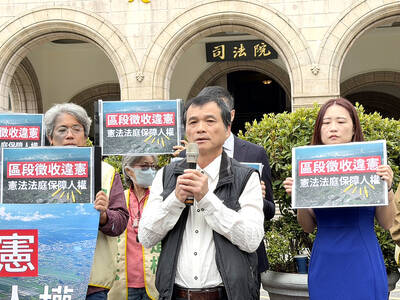
What government project has expropriated the most land in Taiwan? According to local media reports, it is the Taoyuan Aerotropolis, eating 2,500 hectares of land in its first phase, with more to come. Forty thousand people are expected to be displaced by the project. Naturally that enormous land grab is generating powerful pushback. Last week Chen Chien-ho (陳健和), a local resident of Jhuwei Borough (竹圍) in Taoyuan City’s Dayuan District (大園) filed a petition for constitutional review of the project after losing his case at the Taipei Administrative Court. The Administrative Court found in favor of nine other local landowners, but


 RSS
RSS