


The Sound of Music, with Julie Andrews playing the leading role, is a film that has invaded our consciousness whether we like musicals or not. Even if you regard the film as insufferably schmaltzy, you can probably still hum a couple of bars from Edelweiss or DoRe Me. So New Aspect (
The show will run over a period of 17 days, an unprecedentedly long run for an imported show in Taiwan.

PHOTO: IAN BARTHOLOMEW, TAIPEI TIMES
Although New Aspect is one of the organizations most active in bringing high-profile performers into Taiwan, including numerous musicals, Fan Man-nong (
With a cast and crew of over 60 people, it is a major undertaking, but having met with a huge reception in China, where the musical was staged in Shanghai, Beijing, Shenyang and Ningbo, it is likely to be equally popular in Taipei. "So many people in China already knew the songs," said Michael Duff, the musical director. Language is clearly not going to be a barrier in this case.
Duff said that even though the screen version is what has made The Sound of Music an indelible piece of 20th century Western culture, it was originally made as a stage musical.
So, The Sound of Music Asia Tour will not be just more of the same Julie Andrews fare, quite apart from the truly delightful presence of the cast of children who are such an integral part of the production.
The seven actors playing the Von Trapp family children, ranging in age from five to 22, bring freshness to the show and it is hard to get away from the intended cozy feeling that it is all one big happy family.
"We really have grown together," said Lisa Carter, 15, who plays Louisa Von Trapp. Three of the Von Trapp children are real-life siblings, with Ashley Easterly, Charles Easterly and Mary Easterly taking the roles of Marta, Friedrich and Gretl.
"There is such a good feeling of love about the whole show," Carter said, adding that the tour was enormous fun despite the tight schedule of rehearsals and schooling that the junior members of the troupe must undergo.
"We have a really great tutor, but sometimes we would really just get out and see some of the great places we are in," Carter said.
The Sound of Music was premiered in 1959 by Rogers and Hammerstein, the last of a hugely successful collaboration which included Oklahoma!, Carousel, South Pacific and The King and I, all of which have weathered the last half century remarkably well.
Its message of love, family unity in times of trouble and the joy of music has even moved the Fubon Cultural and Educational Foundation (
Performance notes:
What: Sound of Music
When: Oct. 1 to Oct. 17
Where: Sun Yat-sen Memorial Hall
Tickets: NT$800 to NT$3,600 available through ERA ticketing system, Kingstone, Hess and Senseio bookstores.
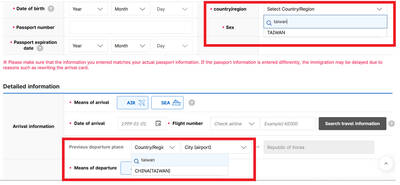
Jason Han says that the e-arrival card spat between South Korea and Taiwan shows that Seoul is signaling adherence to its “one-China” policy, while Taiwan’s response reflects a reciprocal approach. “Attempts to alter the diplomatic status quo often lead to tit-for-tat responses,” the analyst on international affairs tells the Taipei Times, adding that Taiwan may become more cautious in its dealings with South Korea going forward. Taipei has called on Seoul to correct its electronic entry system, which currently lists Taiwan as “China (Taiwan),” warning that reciprocal measures may follow if the wording is not changed before March 31. As of yesterday,
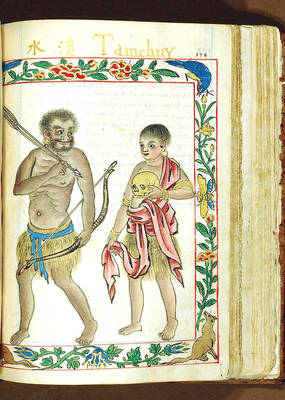
The Portuguese never established a presence on Taiwan, but they must have traded with the indigenous people because later traders reported that the locals referred to parts of deer using Portuguese words. What goods might the Portuguese have offered their indigenous trade partners? Among them must have been slaves, for the Portuguese dealt slaves across Asia. Though we often speak of “Portuguese” ships, imagining them as picturesque vessels manned by pointy-bearded Iberians, in Asia Portuguese shipping between local destinations was crewed by Asian seamen, with a handful of white or Eurasian officers. “Even the great carracks of 1,000-2,000 tons which plied
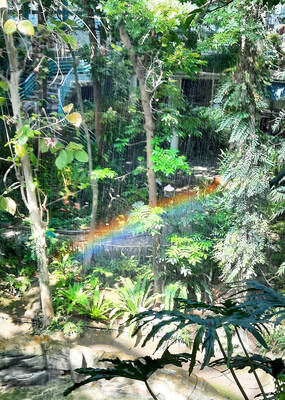
It’s only half the size of its more famous counterpart in Taipei, but the Botanical Garden of the National Museum of Nature Science (NMNS, 國立自然科學博物館植物園) is surely one of urban Taiwan’s most inviting green spaces. Covering 4.5 hectares immediately northeast of the government-run museum in Taichung’s North District (北區), the garden features more than 700 plant species, many of which are labeled in Chinese but not in English. Since its establishment in 1999, the site’s managers have done their best to replicate a number of native ecosystems, dividing the site into eight areas. The name of the Coral Atoll Zone might
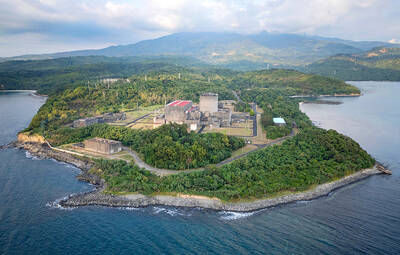
Nuclear power is getting a second look in Southeast Asia as countries prepare to meet surging energy demand as they vie for artificial intelligence-focused data centers. Several Southeast Asian nations are reviving mothballed nuclear plans and setting ambitious targets and nearly half of the region could, if they pursue those goals, have nuclear energy in the 2030s. Even countries without current plans have signaled their interest. Southeast Asia has never produced a single watt of nuclear energy, despite long-held atomic ambitions. But that may soon change as pressure mounts to reduce emissions that contribute to climate change, while meeting growing power needs. The


 RSS
RSS