


The Stepford Wives, Frank Oz's madcap re-engineering of a dusty, second-rate thriller from 1975, opens with a montage of happy housewives and their household gadgets. Making fun of images like these -- smiling women in Eisenhower-era perms and evening gowns swooning over their automated kitchen cabinets -- has become such a tiresome pop-culture staple that you may wonder if the movie has anything new to say about feminism, suburbia or consumer society. The answer is not really, but it does manage to fire off a handful of decent jokes and a few sneaky insights before losing its nerve and collapsing into incoherence.
The source for both this film and the earlier one, which starred Katharine Ross and Paula Prentiss, is a slim, efficient novel by Ira Levin that uses the conventions of suspense fiction as a vehicle for allegory and social satire. Levin's Stepford, Connecticut, was a pleasant middle-class suburb whose menfolk, threatened by the rather mild feminism of their wives, killed them off and replaced them with subservient, sexually compliant robots.

The first Stepford Wives exploited the horror-movie implications of this premise, rather than its comic possibilities. Oz and Paul Rudnick, the screenwriter, swerve maniacally in the opposite direction, whipping up a gaudy, noisy farce that perpetually threatens to spin out of control and eventually does. The music, by David Arnold, is full of overdone, campy melodrama, like an Elmer Bernstein score for a Three Stooges picture. The performances -- in particular that of Glenn Close as Stepford's robot matriarch -- are both sly and overstated, giving Rudnick's sneaky one-liners a chance to be heard amid the cacophonous silliness.
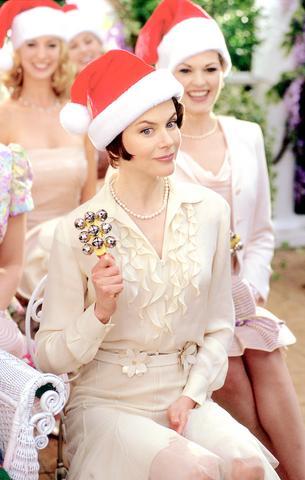
PHOTO COURTESY OF UNIVERSITY
Needless to say, a lot has changed in 30 years: now, Stepford is a gated subdivision full of late-model SUVs and sprawling stone McMansions, where a gay couple is welcomed and where everyone is white. (In Levin's novel a black family had just come to town, but I guess they've moved away.) Sexual politics have also come a long way. Joanna Eberhart, who dabbled in photography when she was played by Ross, is now, in the person of Nicole Kidman, the ruthless, ambitious head of a television network.
Fired in the wake of a reality-show disaster, Joanna has a quick nervous breakdown and is then spirited off to Stepford by her nebbishy, beta-male husband, Walter (Matthew Broderick).
In the earlier Stepford, the flight from New York was implicitly motivated by fear of urban chaos and social collapse. This time, though, the Eberharts are fleeing from the soul-emptying consequences of their own ambition, seeking out the cozy simplicity of an affluent world in which no one seems to have, or to need, a job. The husbands, a collection of lumpy, khaki-wearing dweebs (with the exception of Christopher Walken, their guru of old-school masculinity), congregate in the clubby headquarters of the Men's Association, which is also where their robot workshop is housed. The wives, meanwhile, cheerfully perform their household and bedroom duties, steered by personalized brass remote-control devices wielded by their owners -- 'er, mates.
Though Joanna is repelled by the empty-headed obedience of the Stepford wives, she also wants to repair the damage that her career has inflicted on her husband and children. This damage is mentioned rather than shown, and the repair work is highly theoretical, since children in Stepford are only slightly more visible than black people.
There is, however, a schticky pair of token Jews, played by Jon Lovitz and Bette Midler, whose character, until she is robotized, is a slovenly, loud-mouthed novelist and one of Joanna's few friends.
Rudnick is best at forging tiny verbal darts that tickle more than they sting. (Late in the game, Joanna discovers that one of the robot-designers once worked for AOL. "Is that why the women are so slow?" she asks.) Occasionally, as in the film's clever, cautionary view of gay marriage, you might intuit a crackle of genuine satire, but for the most part The Stepford Wives is as cheerful and inoffensive as its title characters. Every time you think it might be venturing toward social criticism, it pulls back into homily and reassurance, refusing to tell anyone in the audience anything she -- or he -- might not want to hear.
There are, of course, some real tensions and resentments embedded in this story -- the hard choices facing ambitious women, the immaturity and misogyny that surge through so much popular culture, a rampaging materialism that makes the Stepford of 1975 look like a kibbutz -- but the movie, especially in its disastrous and nonsensical final act, works as hard as it can to suppress them.
The Stepford Wives is, in other words, the opposite of satire. It is intended not to provoke but to soothe, to tell us, once again, that we can have it all, that nobody's perfect, and that if there is trouble in the world, or in our own homes, it's nothing we need to worry our pretty little heads about.

If one asks Taiwanese why house prices are so high or why the nation is so built up or why certain policies cannot be carried out, one common answer is that “Taiwan is too small.” This is actually true, though not in the way people think. The National Property Administration (NPA), responsible for tracking and managing the government’s real estate assets, maintains statistics on how much land the government owns. As of the end of last year, land for official use constituted 293,655 hectares, for public use 1,732,513 hectares, for non-public use 216,972 hectares and for state enterprises 34 hectares, yielding

The small platform at Duoliang Train Station in Taitung County’s Taimali Township (太麻里) served villagers from 1992 to 2006, but was eventually shut down due to lack of use. Just 10 years later, the abandoned train station had become widely known as the most beautiful station in Taiwan, and visitors were so frequent that the village had to start restricting traffic. Nowadays, Duoliang Village (多良) is known as a bit of a tourist trap, with a mandatory, albeit modest, admission fee of NT$10 giving access to a crowded lane of vendors with a mediocre view of the ocean and the trains

For many people, Bilingual Nation 2030 begins and ends in the classroom. Since the policy was launched in 2018, the debate has centered on students, teachers and the pressure placed on schools. Yet the policy was never solely about English education. The government’s official plan also calls for bilingualization in Taiwan’s government services, laws and regulations, and living environment. The goal is to make Taiwan more inclusive and accessible to international enterprises and talent and better prepared for global economic and trade conditions. After eight years, that grand vision is due for a pulse check. RULES THAT CAN BE READ For Harper Chen (陳虹宇), an adviser

Traditionally, indigenous people in Taiwan’s mountains practice swidden cultivation, or “slash and burn” agriculture, a practice common in human history. According to a 2016 research article in the International Journal of Environmental Sustainability, among the Atayal people, this began with a search for suitable forested slopeland. The trees are burnt for fertilizer and the land cleared of stones. The stones and wood are then piled up to make fences, while both dead and standing trees are retained on the plot. The fences are used to grow climbing crops like squash and beans. The plot itself supports farming for three years.


 RSS
RSS