


Technology is being sewn into the fabric of our lives -- literally. From products manufactured to serve industrial purposes, to ones made for public consumption, "wearware" as it's called, is re-engineering the way we interface with computers and redesigning our wardrobes.
Only a few years ago, wearable computers were the sole domain of the geeks at Massachusetts Institute of Technology's "Borg Lab." It was pretty easy to tell which kids on campus were a part of this department -- they were the ones wearing virtual-reality headgear in the cafeteria or had miniature keyboards strapped to their wrists. Their goal was, and is, to make personal computers truly personal and blur the lines between cognition and computation.
Their efforts have been noticed by several industries, who have themselves endeavored to make various kinds of "smartclothing." Their own purpose isn't to stitch a PC into a pair or pants for the wearer to use, but to stitch computer components into clothing that can monitor the wearer. The most notable of these is the LifeShirt, designed and manufactured by VivoMetrics, a company that started as late as 1999 and already has some very important contracts.
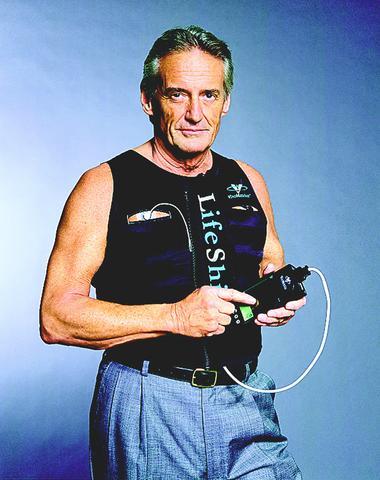
PHOTO COURTESY OF VIVOMETRICS
LifeShirt is a vest that continuously monitors the vital signs of its wearer. It collects 30 kinds of data, including heart rate, respiration, blood pressure, blood oxygen saturation, EEG, skin temperature, core temperature and even the posture of the person wearing it. A hand-held computer and voice recorder attached to the vest also serves as an electronic diary for recording subjective data: "I'm in a bad mood" or "Damn, this thing itches."
All this information is logged into a file for a doctor to later examine. Where a single visit to a hospital can give doctors a picture of a patient's health, the LifeShirt can provide them with a movie. The data can also be transferred real-time via wireless network.
This latter method has been adopted by no less an institution than the US military. VivoMetrics announced in May that they will be providing LifeShirt components to the US Army's Research Institute of Environmental Medicine to be integrated into their Warfighter Physiological Status Monitor (WPSM) program. The WPSM will be worn by soldiers during training and combat operations and will enable army medics to remotely locate soldiers, assess their health status and even begin triage for necessary medical attention.
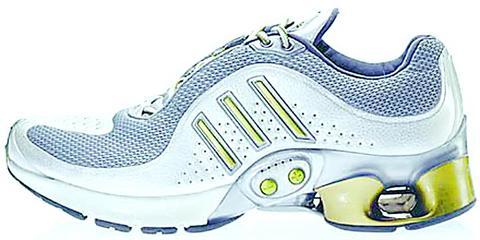
PHOTO COURTESY OF ADIDAS
The army contract came on the heels of a similar program that took place on Super Bowl Sunday last year. While the Raiders and Buccaneers battled it out and Canadian Celine Dion sang God Bless America, another bowl, the Shadow Bowl was taking place in San Diego.
The Shadow Bowl was a civil readiness drill that incorporated the city's police and fire departments with a slate of high-tech companies in simulating a "Scenario of mass medical surge" (read: terrorist attack). VivoMetrics' LifeShirt was worn by the first personnel on the scene underneath their normal hazmat suits. It monitored their vital signs and sent information about possible chemical, radiological or biological agents at the scene back to base operators, essentially turning the emergency worker into a human canary in a coalmine.
"When you save the life of one emergency worker, you can literally save thousands of civilian lives," said VivoMetrics' founder, Andrew Behar.
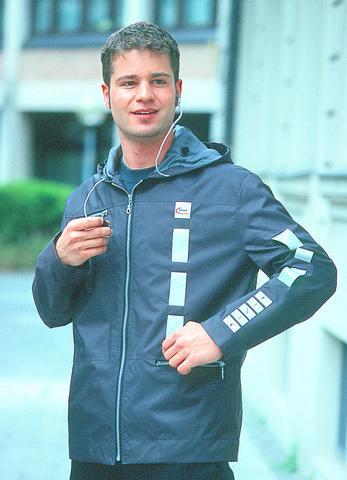
PHOTO COURTESY OF O'NEILL
The potential applications go well beyond military and emergency use, though. Several universities have begun looking at ways to turn the traditional soccer kit into a kind of LifeShirt monitoring system that would feed a continuous stream of information about players to the team physician on the sidelines, thereby allowing coaches to know if a player is becoming winded even before the player himself knows. Sport teams may soon become wireless radio networks. The University of Athens has also been trying to incorporate electronic sensors into the soccer ball itself as a way of verifying if it had, in fact, crossed the goal line.
And not just soccer kits, already shoes are becoming "Smart." Adidas announced in May that it has created what the company claims is the world's first "smart shoe" by mating it with a computer chip. The chip is implanted in the arch of the sole and is capable of making 5 million calculations per second to adjust the heel cushioning depending on the runner's size and stride. The Adidas 1 is scheduled to hit stores shelves in December with a price tag of US$250.
Sport gear outfitter O'Neill recently teamed up with Infineon Electronics to create The Hub, a ski jacket that incorporates an MP3 player and Bluetooth module for controlling a mobile phone. Headphones are built into the hood and a microphone is sewn into the collar. On the sleeve is a flexible keypad to operate the MP3 player or answer your jacket if you get a call. The Hub will be sold in Europe this coming winter and will retail for US$638. It promises to withstand rain, snow and freezing temperatures, and can be thrown into the wash without worrying about short-circuiting your US$600 jacket.
The MP3 player will provide eight hours of playback time before having to plug the jacket's USB cable into your PC. However, Infineon is already experimenting with what may well be the way future wearware is powered: by body heat. A miniature thermogenerator uses the temperature difference between the body surface and the surrounding clothing to generate electrical power -- a technology previously used in space exploration. It generates enough electricity to power the microelectronic chips embedded in the jacket. Researchers are also looking at fabrics capable of generating power as they flex.
The potential applications of computerizing clothing are limitless. But with new technology comes the responsibility to use it wisely. The "Firefly Dress" encrusted LEDs into a sheer fabric that changed colors as the wearer moved. I saw it modeled at the 1998 SIGGRAPH convention and remember one man's reaction to it. "If my wife had one of those," he said, "I'd finally have a reason to wear my light-up tie!"

The Portuguese never established a presence on Taiwan, but they must have traded with the indigenous people because later traders reported that the locals referred to parts of deer using Portuguese words. What goods might the Portuguese have offered their indigenous trade partners? Among them must have been slaves, for the Portuguese dealt slaves across Asia. Though we often speak of “Portuguese” ships, imagining them as picturesque vessels manned by pointy-bearded Iberians, in Asia Portuguese shipping between local destinations was crewed by Asian seamen, with a handful of white or Eurasian officers. “Even the great carracks of 1,000-2,000 tons which plied

It’s only half the size of its more famous counterpart in Taipei, but the Botanical Garden of the National Museum of Nature Science (NMNS, 國立自然科學博物館植物園) is surely one of urban Taiwan’s most inviting green spaces. Covering 4.5 hectares immediately northeast of the government-run museum in Taichung’s North District (北區), the garden features more than 700 plant species, many of which are labeled in Chinese but not in English. Since its establishment in 1999, the site’s managers have done their best to replicate a number of native ecosystems, dividing the site into eight areas. The name of the Coral Atoll Zone might
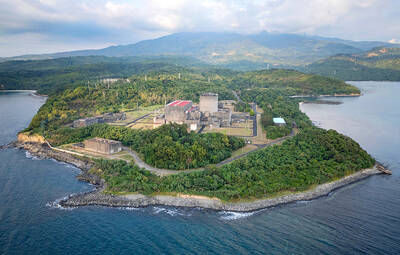
Nuclear power is getting a second look in Southeast Asia as countries prepare to meet surging energy demand as they vie for artificial intelligence-focused data centers. Several Southeast Asian nations are reviving mothballed nuclear plans and setting ambitious targets and nearly half of the region could, if they pursue those goals, have nuclear energy in the 2030s. Even countries without current plans have signaled their interest. Southeast Asia has never produced a single watt of nuclear energy, despite long-held atomic ambitions. But that may soon change as pressure mounts to reduce emissions that contribute to climate change, while meeting growing power needs. The

On Monday morning, in quick succession, the Chinese Communist Party (CCP) and the Chinese Nationalist Party (KMT) released statements announcing “that the Central Committee of the Communist Party of China and General Secretary Xi Jinping (習近平) have invited KMT Chairwoman Cheng Li-wun (鄭麗文) to lead a delegation on a visit to the mainland” as the KMT’s press release worded it. The KMT’s press release added “Chairwoman Cheng expressed her gratitude for the invitation and has gladly accepted it.” Beijing’s official Xinhua news release described Song Tao (宋濤), head of the Taiwan Work Office of the CCP Central Committee, as


 RSS
RSS