


Actress Lin Wei-chun (
Not surprisingly, given the importance of superstition and ghosts in Taiwan, the hospital's administration, according to The Great Daily News (
Meanwhile, Lin's agency is trying to mediate with the hospital and find some way to apologize for Lin's verbal slip-up so the show can continue filming at the site.

PHOTO: TAIPEI TIMES
Taiwan's own supermodel Lin Chi-ling (林志玲) is paying the price for fame recently with the endless gossip about her rumored lovers and whether or not her University of Toronto diploma was fake. So far none of the rumors have stuck, but that hasn't stopped the gossip rags from slinging mud. Next Magazine (壹週刊) this week rolled out one of its favorite old tricks with a piece about a Japanese porno look-a-like of Lin Chi-ling. The magazine even dug into its archives for a retrospective photo layout of other stars with porno doppelgangers. News anchorwoman Patty Ho (侯佩岑), A-mei (阿妹) and Coco Lee (李玟) are all featured, but the most uncanny resemblance is of Jay Chou's (周杰倫) porno stunt doubles.
Hong Kong singer/actor (aren't they all singer/actors?) Leon Lai (
Another shout out from Hong Kong went to John Woo (

PHOTO: TAIPEI TIMES
Closer to home, tomorrow starts the Taipei Pop Music Festival at the Songshan Tobacco Factory. Wen Lan (
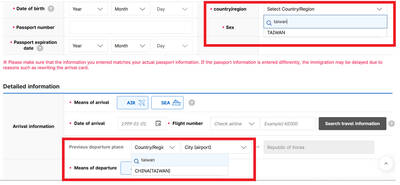
Jason Han says that the e-arrival card spat between South Korea and Taiwan shows that Seoul is signaling adherence to its “one-China” policy, while Taiwan’s response reflects a reciprocal approach. “Attempts to alter the diplomatic status quo often lead to tit-for-tat responses,” the analyst on international affairs tells the Taipei Times, adding that Taiwan may become more cautious in its dealings with South Korea going forward. Taipei has called on Seoul to correct its electronic entry system, which currently lists Taiwan as “China (Taiwan),” warning that reciprocal measures may follow if the wording is not changed before March 31. As of yesterday,
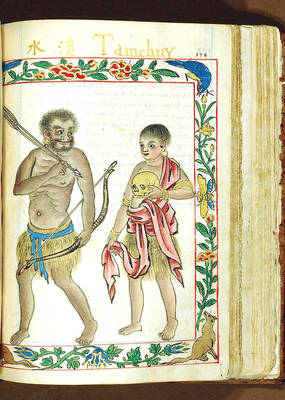
The Portuguese never established a presence on Taiwan, but they must have traded with the indigenous people because later traders reported that the locals referred to parts of deer using Portuguese words. What goods might the Portuguese have offered their indigenous trade partners? Among them must have been slaves, for the Portuguese dealt slaves across Asia. Though we often speak of “Portuguese” ships, imagining them as picturesque vessels manned by pointy-bearded Iberians, in Asia Portuguese shipping between local destinations was crewed by Asian seamen, with a handful of white or Eurasian officers. “Even the great carracks of 1,000-2,000 tons which plied
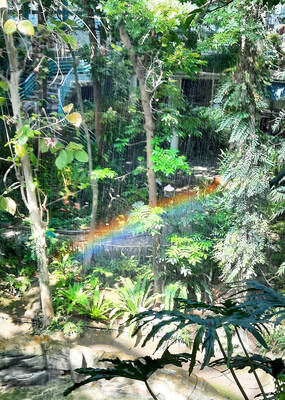
It’s only half the size of its more famous counterpart in Taipei, but the Botanical Garden of the National Museum of Nature Science (NMNS, 國立自然科學博物館植物園) is surely one of urban Taiwan’s most inviting green spaces. Covering 4.5 hectares immediately northeast of the government-run museum in Taichung’s North District (北區), the garden features more than 700 plant species, many of which are labeled in Chinese but not in English. Since its establishment in 1999, the site’s managers have done their best to replicate a number of native ecosystems, dividing the site into eight areas. The name of the Coral Atoll Zone might
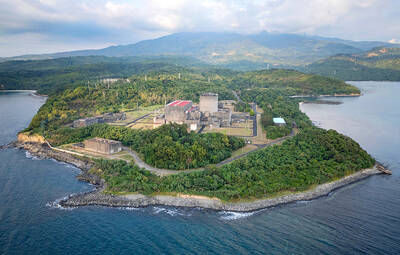
Nuclear power is getting a second look in Southeast Asia as countries prepare to meet surging energy demand as they vie for artificial intelligence-focused data centers. Several Southeast Asian nations are reviving mothballed nuclear plans and setting ambitious targets and nearly half of the region could, if they pursue those goals, have nuclear energy in the 2030s. Even countries without current plans have signaled their interest. Southeast Asia has never produced a single watt of nuclear energy, despite long-held atomic ambitions. But that may soon change as pressure mounts to reduce emissions that contribute to climate change, while meeting growing power needs. The


 RSS
RSS