


After their successful show last August, the man-power show group Thunder From Down Under has obviously fallen in love with Taiwan. Back in town within 10 months, they've already gotten accustomed to the muggy weather and are enjoying hot pot and all kinds of tropical fruit. And after having been to Room 18 and Ministry of Sound and, of course, the night markets, the seven hunky boys feel, most importantly, that they just love Taiwanese girls!
So now that they're all excited about the ladies here, we can expect some red-hot dances and a feverish atmosphere at the shows. This time the group is not only performing in Taipei (at the Taipei International Convention Center), but also will tour to Hsinchu, for a show at the Lakeshore Hotel, and to Kaohsiung, where they will perform at Chih-Teh Hall.
Most of the boys are new faces for Taiwan's audiences, except for one performer who was here last August. They are younger -- between 23 and 31 -- than the group last year, and they seem naughtier and like to joke around more. But, like the boys last year, they are definitely men who enjoy showing off their bodies and twitching their pectoral muscles for anyone willing to watch. And they also like to invite people to feel their butts.
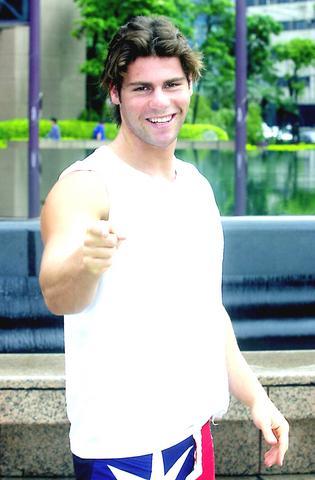
Taipei Times: Last year the Taiwanese audience was very passionate and eager to send hugs and kisses. Are you prepared this time?
Thunder From Down Under: Yes, we thought Taiwanese women were shy. But it turned out to be a very exciting atmosphere. For us it's good. Our show needs a lot of feedback and it heats up the vibe more. But it was true that last year I could feel that some women were trying to pull my G-string.
TT: What's the show going to be like this time?
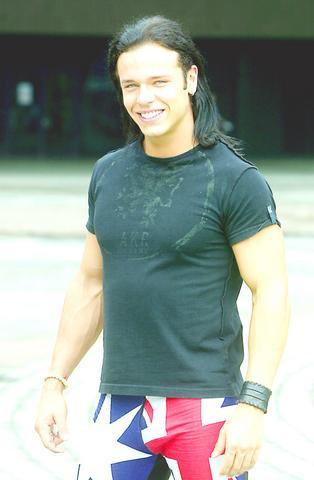
TFDU: It will still be a mixture of the 70s-style disco songs such as Saturday Night Fever, Living in America and Tom Jones and modern songs such as street dances and hip hop. But it will be entirely different choreography. And all of us will be doing a bit of acrobatics. As for the show in the Hsinchu Hotel, it will be a more intimate show with the audience.
TT: You have been to 15 countries to perform. Have there been any embarrassing moments during your shows?
Michael Cooper: There was once I played a vampire in the show and my costume was tangled and I tripped on stage. I could only quickly stand up and smile at the audience.

TFDU: There were a couple of times I got my G-string pulled off and it was embarrassing. But we got used to it. You can only laugh at it. It doesn't happen too often, about once a month.
TT: What is the secret to maintaining your figures?
TFDU: Going to the gym five days a week, two hours each time. No French fries, no pork chops, no bacon, no beer and no dessert and ice cream. But one day of the week you let yourself have a day off and have some chocolates.
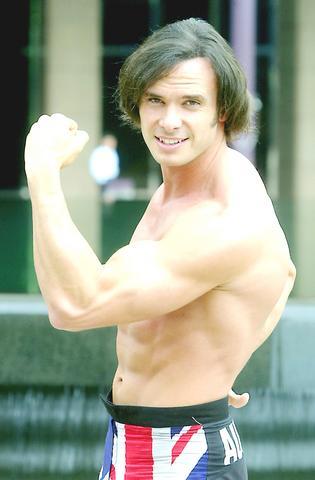
TT: Have you ever gone on a date with someone from the audience?
TFDU: Yes, after the show we receive invitations and we might go have a drink or to the nightclub. But we don't do that often. Perhaps because in our show we're showing the physical part of ourselves, we tend to prefer a platonic relationship off stage. Besides, it's actually difficult for us to keep a long-term relationship. We travel a lot and our suitcase is home.
TT: What's your impression so far of Taiwanese girls?

TFDU: Taiwanese women are very sexy. They may be shy, but they're very lady-like. They are slim and classy. More importantly, they show us respect. They aren't rough and they don't forget that we're human beings too. We really like it here.
For your information :
What: Thunder From Down Under
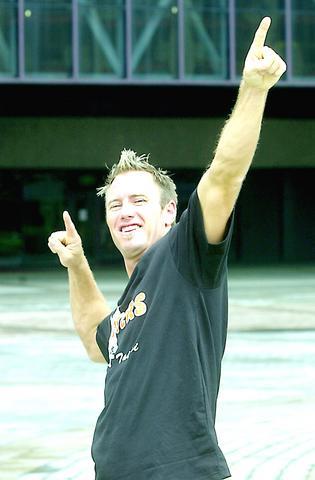
When and where: 7:45pm, tonight and tomorrow, Taipei International Convention Center; 7:30pm, July 16 Lakeshore Hotel, Hsinchu (reservations only), July 17, Chih-Teh Hall, Kaohsiung Cultural Center.
Tickets: NT$700 to NT$3000, available at Era Ticketing outlets
More info: (07) 537-0000
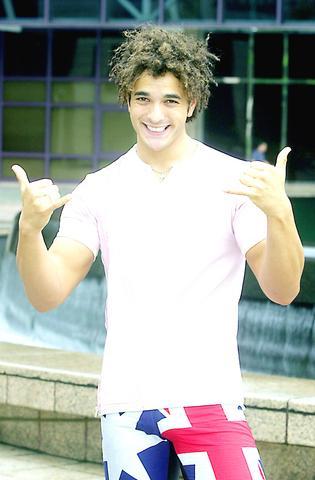
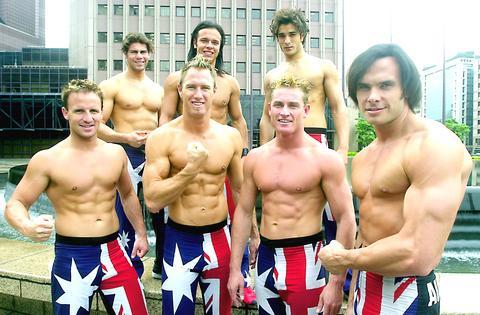
PHOTO: SEAN CHAO, TAIPEI TIMES
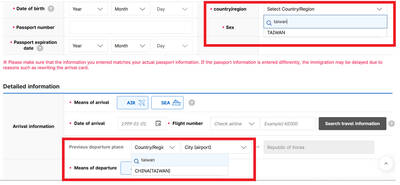
Jason Han says that the e-arrival card spat between South Korea and Taiwan shows that Seoul is signaling adherence to its “one-China” policy, while Taiwan’s response reflects a reciprocal approach. “Attempts to alter the diplomatic status quo often lead to tit-for-tat responses,” the analyst on international affairs tells the Taipei Times, adding that Taiwan may become more cautious in its dealings with South Korea going forward. Taipei has called on Seoul to correct its electronic entry system, which currently lists Taiwan as “China (Taiwan),” warning that reciprocal measures may follow if the wording is not changed before March 31. As of yesterday,
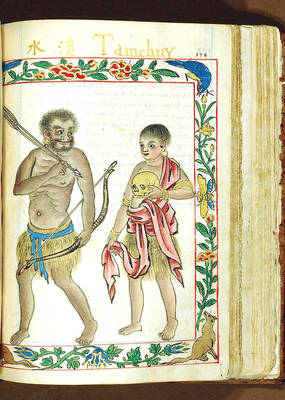
The Portuguese never established a presence on Taiwan, but they must have traded with the indigenous people because later traders reported that the locals referred to parts of deer using Portuguese words. What goods might the Portuguese have offered their indigenous trade partners? Among them must have been slaves, for the Portuguese dealt slaves across Asia. Though we often speak of “Portuguese” ships, imagining them as picturesque vessels manned by pointy-bearded Iberians, in Asia Portuguese shipping between local destinations was crewed by Asian seamen, with a handful of white or Eurasian officers. “Even the great carracks of 1,000-2,000 tons which plied
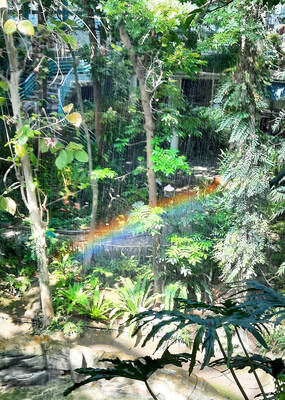
It’s only half the size of its more famous counterpart in Taipei, but the Botanical Garden of the National Museum of Nature Science (NMNS, 國立自然科學博物館植物園) is surely one of urban Taiwan’s most inviting green spaces. Covering 4.5 hectares immediately northeast of the government-run museum in Taichung’s North District (北區), the garden features more than 700 plant species, many of which are labeled in Chinese but not in English. Since its establishment in 1999, the site’s managers have done their best to replicate a number of native ecosystems, dividing the site into eight areas. The name of the Coral Atoll Zone might
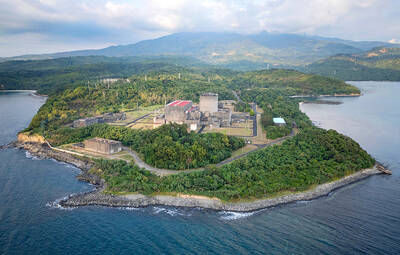
Nuclear power is getting a second look in Southeast Asia as countries prepare to meet surging energy demand as they vie for artificial intelligence-focused data centers. Several Southeast Asian nations are reviving mothballed nuclear plans and setting ambitious targets and nearly half of the region could, if they pursue those goals, have nuclear energy in the 2030s. Even countries without current plans have signaled their interest. Southeast Asia has never produced a single watt of nuclear energy, despite long-held atomic ambitions. But that may soon change as pressure mounts to reduce emissions that contribute to climate change, while meeting growing power needs. The


 RSS
RSS