


In the canon of local-boy-does-good stories, Liu Hsing-chin (劉興欽) did the best. He is the godfather of comic books in a nation that can't get enough of comics, and his hometown of Neiwan, Hsinchu County, couldn't do more to honor their local hero short of renaming the town Liuland.
The town has the feel of Disneyland except that, instead of Mickey Mouse and Snow White, Neiwan is plastered with images of Liu's most famous inventions, Big Auntie (大嬸婆) and Ah-San (阿三哥), the country-bumpkin comic strip characters that became Taiwan's favorite and placed Liu, the son of a tea farmer who went to school on the back of a water buffalo, among the nation' s most respected and highest-paid artists.
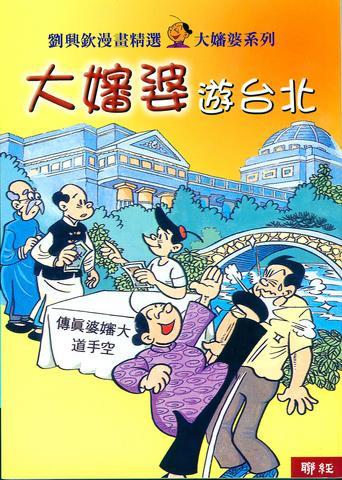
PHOTO COURTESY OF LINKING PUBLISHING
Now the township has opened a permanent exhibition hall housing Liu's works and, with it, opened a new drive to turn Neiwan into a major tourist destination. This drive began in 2001, when Liu agreed to let his cartoon characters be used to promote the town. Life-sized fiberglass statues of Ah-San, who Liu modeled after himself; and Big Auntie, who was modeled after Liu's mother, were placed on street corners, at the train depot, and sit atop billboards throughout the town. Another character popular with children, Robot, can be seen climbing the town's telephone poles.
One of these statues of Big Auntie developed its own urban myth. Each time a baby was born, the child was placed in the statue's arms and had its picture taken. The belief was that Big Auntie would give the child the hard-working Hakka ethic for which she was famous. This happened enough that Big Auntie's arm eventually broke off. Now the township is saving to buy a new one made of bronze.
For the many statues and billboards throughout the town -- and all the restaurants named after his characters -- Liu asked for a jar of dried turnips as compensation, adding immensely to his local-boy likeability despite the fact that he's now local to San Francisco.
It's hard to overestimate the importance Liu's characters -- and indeed Liu's own character -- has in the hearts of Taiwanese. A measure of their popularity was seen when the strip first appeared in the Taiwan Daily News. Subscriptions to the newspaper spiked in the weeks after it began and Liu's comic books didn't make it to the shelves before going out of stock.
Around 1969 he was asked to create a character for children and came up with Robot. When a child confronted him in disbelief that such a thing as Robot could be real, Liu went to work inventing the real thing rather than disappoint the child. Within weeks he created a study aid that clapped when given a correct answer and shook its head when given an incorrect one. The device caught the attention of an American company who licensed the rights to the device, paying Liu tens of thousands of NT dollars every month at a time when he was earning just NT$2,000 a month. Two years later, he was NT$6 million richer. Not surprisingly, the urge to invent overtook Liu and within eight years he had 138 patents to his name, all the while drawing a daily strip and putting out comic books espousing the simplicity of Taiwanese country life.
The irony is that, in the hands of Taiwan's tourism bureau, the pastoral simplicity that drew thousands of visitors to Neiwan on the weekends has been paved over to become something more like a theme park. Natural wetlands banking the Yulo River have become parking lots, barbeque pits and redundant concrete walking trails. Now, if you want to see the countryside that inspired Taiwan's favorite cartoonist, you'll have to read the cartoons.
The new exhibition hall housing Liu's work sits behind the Neiwan train depot and is open seven days week until 5pm.
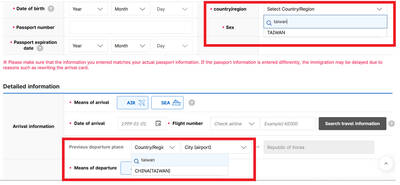
Jason Han says that the e-arrival card spat between South Korea and Taiwan shows that Seoul is signaling adherence to its “one-China” policy, while Taiwan’s response reflects a reciprocal approach. “Attempts to alter the diplomatic status quo often lead to tit-for-tat responses,” the analyst on international affairs tells the Taipei Times, adding that Taiwan may become more cautious in its dealings with South Korea going forward. Taipei has called on Seoul to correct its electronic entry system, which currently lists Taiwan as “China (Taiwan),” warning that reciprocal measures may follow if the wording is not changed before March 31. As of yesterday,
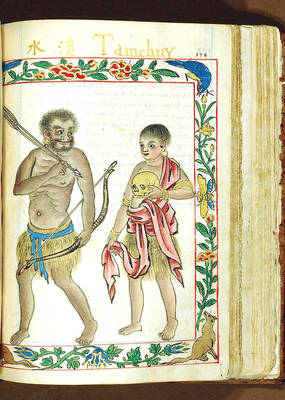
The Portuguese never established a presence on Taiwan, but they must have traded with the indigenous people because later traders reported that the locals referred to parts of deer using Portuguese words. What goods might the Portuguese have offered their indigenous trade partners? Among them must have been slaves, for the Portuguese dealt slaves across Asia. Though we often speak of “Portuguese” ships, imagining them as picturesque vessels manned by pointy-bearded Iberians, in Asia Portuguese shipping between local destinations was crewed by Asian seamen, with a handful of white or Eurasian officers. “Even the great carracks of 1,000-2,000 tons which plied
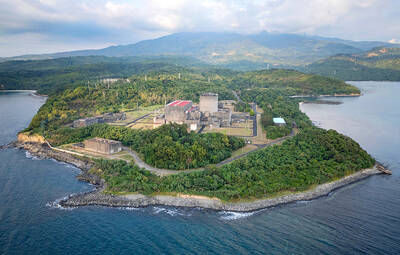
Nuclear power is getting a second look in Southeast Asia as countries prepare to meet surging energy demand as they vie for artificial intelligence-focused data centers. Several Southeast Asian nations are reviving mothballed nuclear plans and setting ambitious targets and nearly half of the region could, if they pursue those goals, have nuclear energy in the 2030s. Even countries without current plans have signaled their interest. Southeast Asia has never produced a single watt of nuclear energy, despite long-held atomic ambitions. But that may soon change as pressure mounts to reduce emissions that contribute to climate change, while meeting growing power needs. The
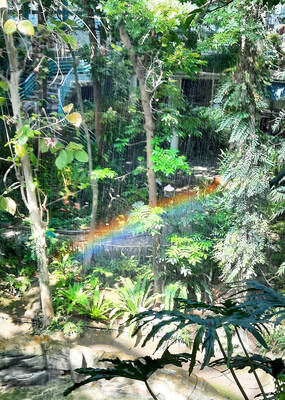
It’s only half the size of its more famous counterpart in Taipei, but the Botanical Garden of the National Museum of Nature Science (NMNS, 國立自然科學博物館植物園) is surely one of urban Taiwan’s most inviting green spaces. Covering 4.5 hectares immediately northeast of the government-run museum in Taichung’s North District (北區), the garden features more than 700 plant species, many of which are labeled in Chinese but not in English. Since its establishment in 1999, the site’s managers have done their best to replicate a number of native ecosystems, dividing the site into eight areas. The name of the Coral Atoll Zone might


 RSS
RSS