


Music lovers, sports fans, linguists, ethnologist and those who simply love to try out-of-the-ordinary cuisine are in for a treat in the coming months as the 2004 Taipei City Aboriginal Cultural Festival (2004
The annual event, which kicked off last week with a series of performances by native Aboriginal dance groups and a troupe from Fiji, is organized by the Taipei City Government's Indigenous People's Commission, (IPC,
Bringing together Aboriginal peoples from Taiwan, Austronesia and -- for what many feel are political reasons rather then ethnologically related ones -- China, the festival lasts for seven-months and is designed to be both educational and celebratory.
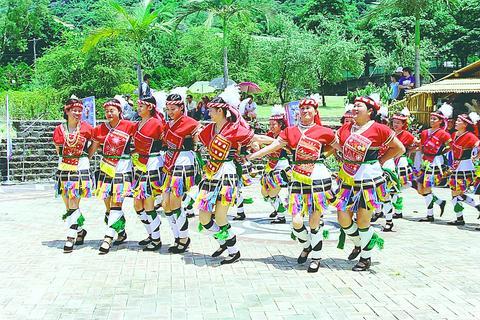
PHOTO COURTESY OF IPC
"The aim of the festival is to educate city people about Aboriginal culture and to help the tribes themselves express their identities," said Pan Jae-yang (
Over the coming months concert halls, museums, conference centers and sports stadiums throughout Taipei will play host to a series of events which will include music, exhibitions and seminars focusing on the cultures, languages and the international status of Taiwan's Aboriginal peoples.
The popular Aboriginal sports meet, which spotlights traditional Aboriginal games, will also take place again this year, as will the hugely popular food fare, at which patrons can sample a wide range of Aboriginal delicacies.
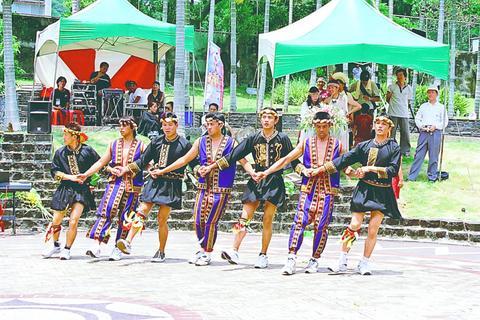
PHOTO COURTESY OF IPC
"Last year was obviously a huge disappointment, but we hope that is all forgotten about now and that this year the festival will once again attract the crowds," said the IPC's Li Chu-mei (李菊妹) of the SARS epidemic last year which led to the cancelation of the event. "The festival has traditionally been a time when both Aborigines and Taipei residents from all walks of life can share the same experiences. People who like sports can participate, as can those who like music and even scholars can take part. It brings everyone together."
This weekend the festival takes a musical turn with a special outdoor concert at Da-An Forest Park (
"Music is a key component of Aboriginal culture and plays an important part during holidays such as the harvest festival. It's an oral tradition that has enabled Aboriginal languages, as well as much of its culture, to stay alive," said Pan "It is also a big part of self identity and a way in which, regardless of tribe, Aborigines can celebrate life and return to their roots."
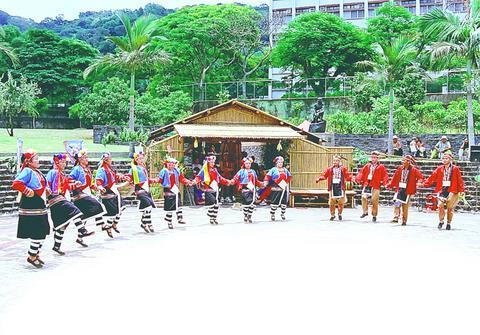
PHOTO COURTESY OF IPC
This weekend's concert, which is the largest musical event in this years festival schedule, will include popular acts such as the Am Band (Am
Sharing the stage with the big names will be a selection of some of Taiwan's lesser known Aboriginal musical acts. These include Seven Wolves (
"It's important to include a good cross section of artists and to be as diverse as possible in order to be able appeal to everybody," said Pan. "Fans of traditional Aboriginal music will find it entertaining, as will younger audiences who have grown up with contemporary Aboriginal artists and their very different takes on a style of music that was once used to communicate with our ancestor's spirits."
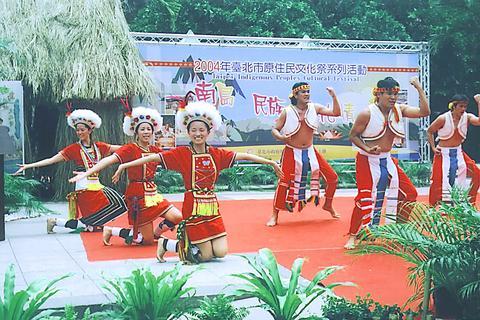
PHOTO COURTESY OF IPC
In contrast to this weekend's outdoor event, the festival moves inside next Saturday, when the Ketagalan Culture Center (
The museum's mini-concert will feature a selection of song and dance routines from several of Taiwan's Aboriginal tribes and begins at 9am. The focus of this year's special exhibition is the culture of the Amis tribe. Featuring both photographs and artifacts, the special display will give visitors an interesting and colorful insight into the history and cultural heritage of the Amis tribe.
While the Taipei City Aboriginal Cultural Festival remains one of the nation's largest and most eclectic festivals, it hasn't been without it critics. The varied and spread out festival schedule has been criticized, as has the Chinese Nationalist Party (KMT) run Taipei City Government, which has been accused by central government in recent years for politicizing the event by inviting groups from China to participate.
Regardless of these past differences, organizers hope that this year's festival will avoid past problems and prove to be a festive occasion for all concerned, as well as helping to promote and preserve Aboriginal culture.
"The very varied festival schedule allows us to counter claims that Taipei has really only embraced Chinese and Taiwanese cultures," said Pan. "Like other parts of Taiwan more commonly associated with Aboriginal cultures, Taipei, too can offer unique glimpses of cultures that are far removed from mainstream metropolitan society."
For your information :
Come Listen to the Tribal Sound will take place on the Da-An Forest Park stage from 6pm until 9:30pm tomorrow evening. Admission is free.
The Ketagalan Culture Center is located at 3-1, Zhongshan Rd, Beitou district, Taipei (
For a full list of up-coming events at the 2004 Taipei City Aboriginal Cultural Festival either visit the IPC Web site at www.native.taipei.gov.tw, or pick up a program at City Hall.
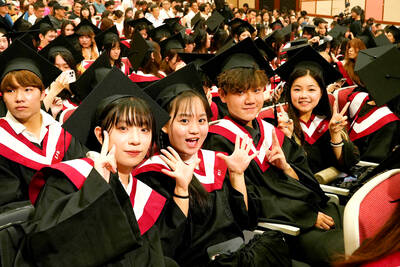
Taiwan’s English education system is being pulled apart by three opposing forces. Bilingual Nation 2030 pulls students toward English and global communication. Artificial Intelligence (AI) readiness pulls them toward digital judgment, verification and AI-mediated work. But Taiwan’s old exam culture pulls them back toward memorization, grammar drills, timed reading and correct answers. If the education system keeps using old exams to define success, it risks producing graduates who are neither genuinely bilingual nor genuinely AI-ready, but trained for tasks machines can already perform. The first force is Bilingual Nation 2030. Launched in 2018, the policy aimed to “help Taiwan’s workforce connect

“Taiwan’s Opposition Leader Comes to US With a Message Straight Out of Beijing” read a May 31 headline in the Wall Street Journal. Top US administration officials and members of Congress almost certainly read the WSJ, and if there was a bullet point takeaway that people in Washington should absorb ahead of Chinese Nationalist Party (KMT) Chair Cheng Li-wun’s (鄭麗文) arrival in DC on June 9, that headline is it. The last few columns have discussed this very topic, and the timing is not coincidental. While those top officials likely do not read the Taipei Times, judging by the number
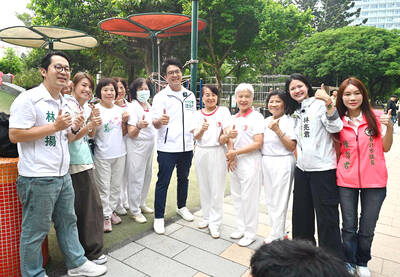
With weighty, anxiety-inducing geopolitical topics dominating the headlines, checking in on the wild and weird state of local politics can take some of the edge off. This November’s elections will determine who will be in charge of fixing potholes in your neighborhood, not the potholes in Taiwan’s complicated geopolitical space. Recently, after an online interview with a Taipei-based journalist, I commented that Taipei journalists never go further than the MRT can take them. He laughed and agreed. Naturally, the Taipei mayoral race is eating up much of the press attention. TAIPEI CITY Democratic Progressive Party (DPP) candidate Puma Shen (沈伯洋) has
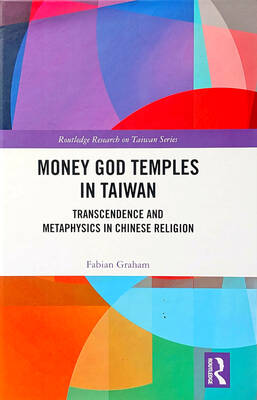
As someone who normally steers clear of books with “transcendence” or “metaphysics” in their subtitles, this reviewer — a casual observer of local belief systems since the 1990s — found Fabian Graham’s Money God Temples in Taiwan a challenging read. Those who’ve only dipped their toes into temple culture will likely need to parse several sections with special care if they’re to keep up with the author, a British ethnographic researcher whose previous books have investigated religious practices among ethnic Chinese in Southeast Asia. This scholarly volume examines a facet of Taiwan’s religious landscape that didn’t exist a century ago, and


 RSS
RSS