


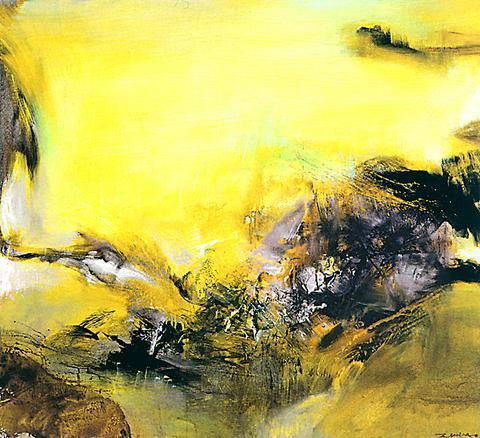
One day in February, 1972, Zao Wou-ki (趙無極) entered his studio in Paris, smeared his palette with a variety of the bronze and brown inks he'd started favoring of late and whiled away the afternoon painting an abstract landscape -- a forest clearing with a stream running through it, perhaps, maybe the brittle scrub brush found at the top of a beach. Last week in Taipei, after adorning the walls of several different rooms in several different cities and countries for 32 years, 2.9.72, as Zao titled it, sold on the auction block for NT$8.3 million. Not bad for a day's work.
Chinese art is largely thought to be scrolls of ancient calligraphy and watercolors of carp or horses. Western-style Chinese oil painting is a relatively new thing. Newer still is an investment market for this art.
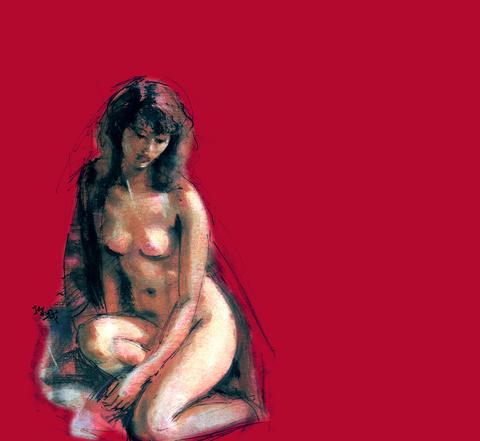
SOURCE AND PHOTO: RAVENEL ART AUCTIONEERS
During Taiwan's "economic miracle" of the 1980s, new wealth afforded greater interest in art. It wasn't until the 1990s, however, that a system was established among local collectors. This spring, even as blossoms come to branch and painters fill fresh canvases, Taiwan's collectors are filling auction halls in search of art that inspires and, with any luck, will eventually earn them a high return.
The auction at which Zao's painting was sold saw 44 lots purchased and NT$67.5 million change hands. Next Sunday, another local auctioneer, Leader, will put 62 works by Chinese and Taiwanese painters on the block in transactions certain to total millions more.
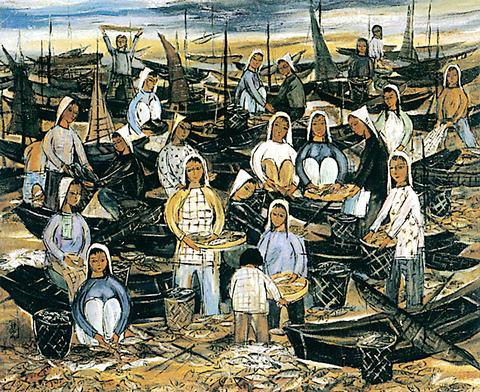
Though the numbers are significant, they represent a decline from the 1990s, the salad days of Taiwan's art market, when collectors seemed as much in love with the auctions themselves as with the art up for grabs. At the first art sale held in Taiwan in December 1990 by Heritage Arts International, spectators fidgeted as the price rose on a single work by Hung Jui-lin (洪瑞 麟) titled Mineworkers. Though bidding started at NT$800,000, a breathless bout of one-upmanship quickly took it to NT$1.8 million, more than twice its estimated value.
"We've entered a leveling-off period in Taiwan's art market," said Odile Chen (陳惠黛), art specialist at Ravenel auction house and contributor to its Art and Investment periodic investor's guide. "It peaked in the 1990s, but dropped during the recent economic recession. Now that the stock market is recovering, the art market is too. ? Culture is a long-term business."
Relating the art and stock markets is not coincidental. Savvy investors have long found opportunities in art and even banks have involved themselves in the trade.
"Works of art are assets in just the same way that securities are," explains Petra Arends, executive director of art banking at Switzerland's UBS, in Art and Investment "They have a traceable price history and of course their own market."
The local art market mimics the stock market in another way. Artists' works are priced per unit, the hao (
Even with this mathematical approach, the market for contemporary art is volatile, compared with more traditional tradable properties, given its subjective nature. Nowhere is this more true than in Taiwan and China, where non-artistic factors such as national pride hold sway over the value of art.
China's Ministry of Culture disallows many of the works of some 385 painters and calligraphers to leave the country; a product both of nationalist pride and perhaps a backlash from the near annihilation of "bourgeois" art that took place during the Cultural Revolution.
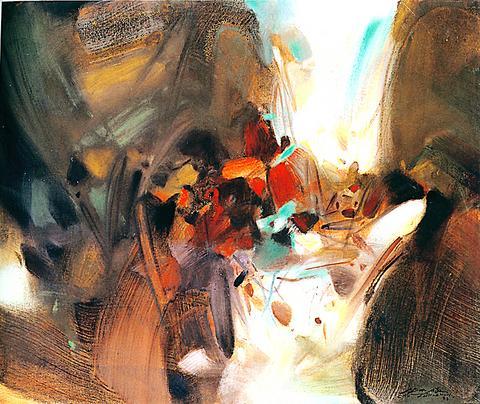
In Taiwan, where bourgeois Chinese art found sanctuary, early collectors bought all they could of works by mainland artists such as Zao, his teacher, Lin Fengmian (
"Taiwanese artists ? were learners of Western-style painting, thus Taiwanese collectors have a special fondness for oil paintings," Chen explains in the most recent edition of Art and Investment. "Perhaps this has something to do with the leading role played by Lee Teng-hui (
A president's patronage is certain to boost sales of any artist's work, but other factors can aid appreciation as well.
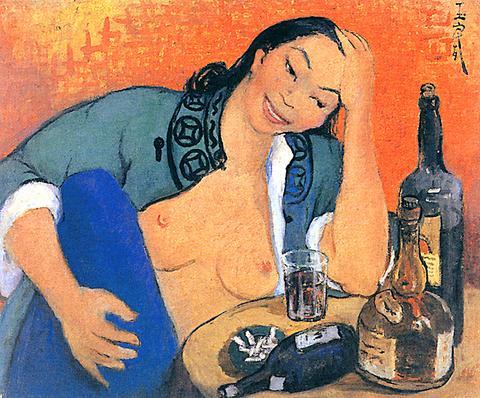
Pan Yuliang benefited from her status as a cultural icon in the early days of the republic. A television series of her life, Soul of a Painter (
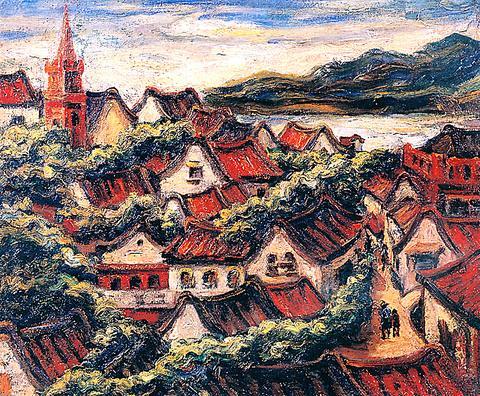
Throughout the 1980s, Lee Tse-fan's (
For some artists, though, dollar appreciation of their work is simply a reflection of widespread aesthetic appreciation. In this category, Zao Wou-ki reigns supreme.
Zao's works appreciated 31 percent in the period between 1997 and 2002. In the past five years, his works had the highest cumulative value of any Chinese painter of Western-styled art, totaling some NT$570 million. He also holds the record for the most expensive 20th century Chinese oil painting ever sold at auction: A large canvass titled 1.4.66 was awarded to a private Taiwanese collector in 2002 for his bid of NT$33.7 million, over US$1 million by current exchange rates.
Given the success of Ravenel's recent auction, there is already a buzz surrounding next Sunday's sale to be held by Leader Art. The company's chief executive officer, Owen Chen (陳裕豐), expects scores of participants and perhaps 200 observers.
Still, despite the high expectation, Chen, says that the future of Chinese art investment, like so many other forms of investment, is in China.
"We have an office in Shanghai, though it's currently illegal for outside companies to hold auctions there," he said. "The Chinese are becoming much wealthier and their artists are being influenced by Western styles, just as Taiwanese artists have long been. As appreciation of art increases, so too will the amounts being spent on it."
Chen's office is about the size of a bank vault, and if it weren't for its glass door entrance you might confuse it for one. Propped against the wall and hanging from it are a dozen paintings and watercolors -- several million dollars of the best contemporary Chinese art on the market, including two Zao Wou-ki pieces.
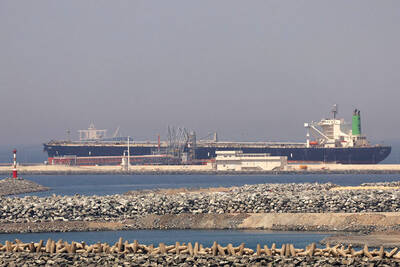
The breakwater stretches out to sea from the sprawling Kaohsiung port in southern Taiwan. Normally, it’s crowded with massive tankers ferrying liquefied natural gas from Qatar to be stored in the bulbous white tanks that dot the shoreline. These are not normal times, though, and not a single shipment from Qatar has docked at the Yongan terminal since early March after the Strait of Hormuz was shuttered. The suspension has provided a realistic preview of a potential Chinese blockade, a move that would throttle an economy anchored by the world’s most advanced and power-hungry semiconductor industry. It is a stark reminder of
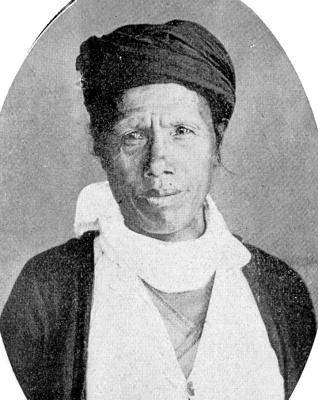
May 11 to May 17 Traversing the southern slopes of the Yushan Range in 1931, Japanese naturalist Tadao Kano knew he was approaching the last swath of Taiwan still beyond colonial control. The “vast, unknown territory,” protected by the “fierce” Bunun headman Dahu Ali, was “filled with an utterly endless jungle that choked the mountains and valleys,” Kano wrote. He noted how the group had “refused to submit to the measures of our authorities and entrenched themselves deep in these mountains … living a free existence spent chasing deer in the morning and seeking serow in the evening,” even describing them as
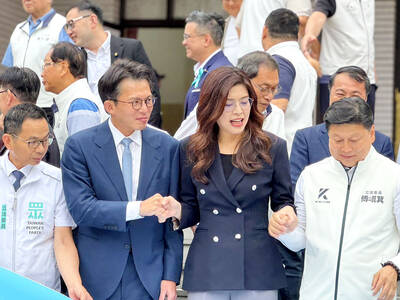
As a different column was being written, the big news dropped that Chinese Nationalist Party (KMT) caucus whip Fu Kun-chi (傅?萁) announced that negotiations within his caucus, with legislative speaker Han Kuo-yu (韓國瑜) of the KMT, party Chair Cheng Li-wun (鄭麗文), Taichung Mayor Lu Shiow-yen (盧秀燕) and Taiwan People’s Party (TPP) Chair Huang Kuo-chang (黃國昌) had produced a compromise special military budget proposal. On Thursday morning, prior to meeting with Cheng over a lunch of beef noodles, Lu reiterated her support for a budget of NT$800 or NT$900 billion — but refused to comment after the meeting. Right after Fu’s
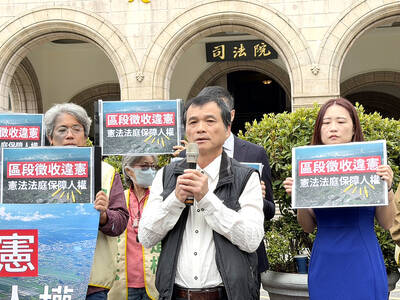
What government project has expropriated the most land in Taiwan? According to local media reports, it is the Taoyuan Aerotropolis, eating 2,500 hectares of land in its first phase, with more to come. Forty thousand people are expected to be displaced by the project. Naturally that enormous land grab is generating powerful pushback. Last week Chen Chien-ho (陳健和), a local resident of Jhuwei Borough (竹圍) in Taoyuan City’s Dayuan District (大園) filed a petition for constitutional review of the project after losing his case at the Taipei Administrative Court. The Administrative Court found in favor of nine other local landowners, but


 RSS
RSS