


With their garish colours, chrome mudguards and lavish decorations, jeepneys are the unique Philippine solution to the problem of mass transport.
The open-air converted jeeps, with names such as "Zig Zag Queen," "Brutista" and "In God We Trust" painted on their sun screens, give a festive flair to local roads and set Manila apart from any other Asian megacity.
But for passengers, the charm can be less obvious. Packed knee-to-knee on twin benches, they bake in the tropical heat, exposed to diesel fumes and the din of traffic.
While still king of the road, the national icon faces stiff competition from airconditoned buses and Japanese vehicles known as "FXs," for the Toyota Tamaraw FX, a minivan that is ubiquitous in the Philippines.
"There's no way you can step out of a jeepney and not be smelly. It's not the best way to go the office," said Ricus de Castro, a computer science student.
With fares at four pesos (US 7 cents) for the first 4km, jeepneys remain the cheapest ride in a city where the minimum wage is less than 300 pesos per day.
Fares on air-conditioned FXs start at 10 pesos but many passengers prefer to pay more for comfort.
"The FXs are cool inside, they run more frequently and there are less bag snatchers," said Eve, a commuter on Ayala Avenue, in Manila's Makati business district.
Buses are also stealing passengers from jeepneys. "Airconditioned Be Happy," reads a large sign on a Makati bus.
The Land Transportation Office counted 180,000 jeepneys among 794,306 public utility vehicles in 2001, the most recent year for which figures are available. The latter category also includes buses, taxis and FX vans.
The overall number has grown at about nine to 10 percent each year since 1998, but jeepney fleets have been steady, as the government has put a cap on licences.
"The number of jeepneys is decreasing because the government has a plan to eradicate them," said Mario Garvida, president of PISTON, the largest of several jeepney owners' associations.
Philippine transport authorities have repeatedly said they want to phase out old and polluting jeepneys. Most jeepneys run on second-hand engines and many are poorly maintained.
"We want to produce less smoke. But how can a simple operator buy these gadgets? If the government were sincere, it would force the oil companies to sell cleaner fuels," Garvida said, adding that the average jeepney driver earns less than 200 pesos a day.
So how about installing aircon in jeepneys?
"That would not be practical and too expensive," said Ed Sarao, director of Sarao Motors Inc, the country's largest maker of jeepneys.
Because of the cost, it would be equally difficult to put new, less polluting engines in jeepneys, he said.
A standard 18-passenger jeepney costs about 330,000 pesos (US$5,900) and the more luxurious version 400,000 pesos.
A new engine would add about 200,000 pesos, making a jeepney nearly as dear as a new Japanese mini-van, which costs between 600,000 and one million pesos.
Sarao has been building jeepneys since the 1950s but its glory days are long gone. It now produces just 300 per year, less than a quarter of its output in the 1960s and 1970s. Employment has fallen to just 50 workers, from 350 five years ago.
Despite its troubles, Sarao is still a fully fledged car factory, where jeepneys are made from scratch.
The original jeepneys were built on the extended chassis of American army jeeps, but now Sarao welds its own chassis and fashions the body from galvanised steel and chrome sheets.
The only imported parts are the second-hand Japanese Isuzu diesel engines bought from Chinese traders.
Last but not least comes the decoration. Most Sarao jeepneys come with one or more zinc-alloy horses on the hood, a throwback to the Sarao family's origins as calesa, or horse cart, drivers.
The best Sarao jeepneys also feature a small forest of antennae (not connected to any radio), a few ship-sized horns (in good working order) and many, many lights.
Some FX operators have tried to jazz up their vehicles, but the boxy vans don't lend themselves well to personalization and aircon remains their main attraction.
"If the standard of living in the Philippines improves, maybe one day we can make an air-conditioned jeepney," Sarao said.
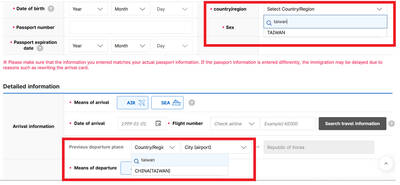
Jason Han says that the e-arrival card spat between South Korea and Taiwan shows that Seoul is signaling adherence to its “one-China” policy, while Taiwan’s response reflects a reciprocal approach. “Attempts to alter the diplomatic status quo often lead to tit-for-tat responses,” the analyst on international affairs tells the Taipei Times, adding that Taiwan may become more cautious in its dealings with South Korea going forward. Taipei has called on Seoul to correct its electronic entry system, which currently lists Taiwan as “China (Taiwan),” warning that reciprocal measures may follow if the wording is not changed before March 31. As of yesterday,

The Portuguese never established a presence on Taiwan, but they must have traded with the indigenous people because later traders reported that the locals referred to parts of deer using Portuguese words. What goods might the Portuguese have offered their indigenous trade partners? Among them must have been slaves, for the Portuguese dealt slaves across Asia. Though we often speak of “Portuguese” ships, imagining them as picturesque vessels manned by pointy-bearded Iberians, in Asia Portuguese shipping between local destinations was crewed by Asian seamen, with a handful of white or Eurasian officers. “Even the great carracks of 1,000-2,000 tons which plied
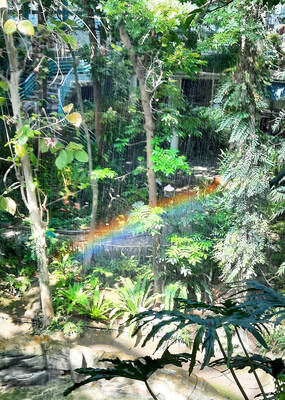
It’s only half the size of its more famous counterpart in Taipei, but the Botanical Garden of the National Museum of Nature Science (NMNS, 國立自然科學博物館植物園) is surely one of urban Taiwan’s most inviting green spaces. Covering 4.5 hectares immediately northeast of the government-run museum in Taichung’s North District (北區), the garden features more than 700 plant species, many of which are labeled in Chinese but not in English. Since its establishment in 1999, the site’s managers have done their best to replicate a number of native ecosystems, dividing the site into eight areas. The name of the Coral Atoll Zone might
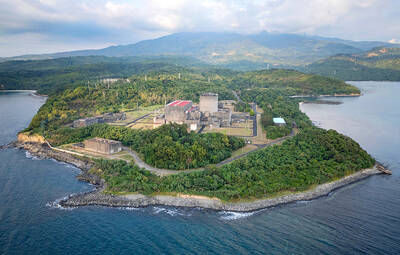
Nuclear power is getting a second look in Southeast Asia as countries prepare to meet surging energy demand as they vie for artificial intelligence-focused data centers. Several Southeast Asian nations are reviving mothballed nuclear plans and setting ambitious targets and nearly half of the region could, if they pursue those goals, have nuclear energy in the 2030s. Even countries without current plans have signaled their interest. Southeast Asia has never produced a single watt of nuclear energy, despite long-held atomic ambitions. But that may soon change as pressure mounts to reduce emissions that contribute to climate change, while meeting growing power needs. The


 RSS
RSS