


Some 5,000 people lined up outside the Taipei Fine Arts Museum
The series, the first two parts of which were issued in 2002 and 2003, consists of stamps showing 12 representative works by some of the best-known Taiwanese painters, such as Lee Tze-feng (李澤藩) and Liao Chi-chun (廖繼春). Although there are more than 12 significant paintings in the history of modern Taiwanese painting, Chunghwa Post Co (中華郵政), the state-run postal service company, limited the series to make it rare, said Su Dai-hsiung (蘇達雄), chief of the philatelic section of Chunghwa Post.
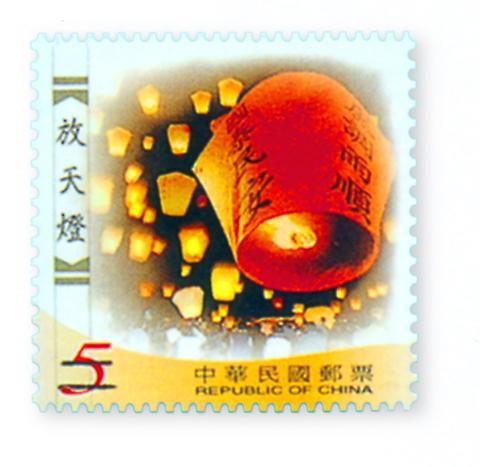
PHOTO COURTESY OF CHUNGHWA POST CO
"Rare" is not the word usually applied to Taiwan's stamps these days. Even supposedly rare commemorative stamps are issued in between 5 million and 6 million sets, many of which, some veteran stamp collectors said, end up on bulk mailings and are then thrown away by non-collectors.
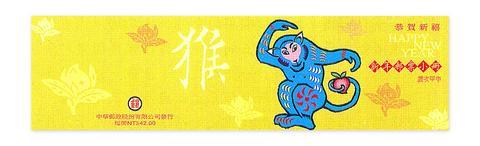
PHOTO COURTESY OF CHUNGHWA POST CO
"The past practice of issuing 5 million or 6 million commemorative sets is no longer realistic. We plan to lower the number to around 1.2 million in the future," Su said. The number of stamps for this Modern Taiwanese Painting Postage Stamps set is 6.4 million, slightly fewer than the 7.5 million and 6.8 million of its first and second sets.
Chunghwa Post puts the number of stamp collectors in Taiwan at between 20,000 and 30,000. The population of serious collectors, however, may be much lower.
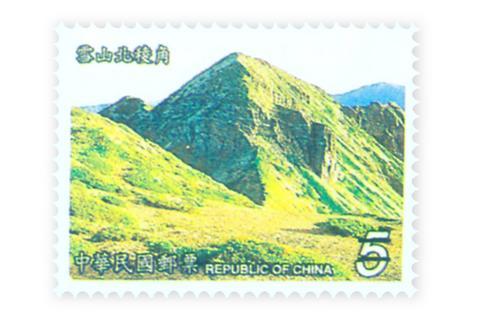
PHOTO COURTESY OF CHUNGHWA POST CO
"Fewer and fewer people have the hobby these days, maybe around 100,000, but Chunghwa Post keeps issuing a large number of stamps. As a result, prices are now at rock-bottom and people have lost interest in stamps because they are too commonplace," said Chen Tze-ching
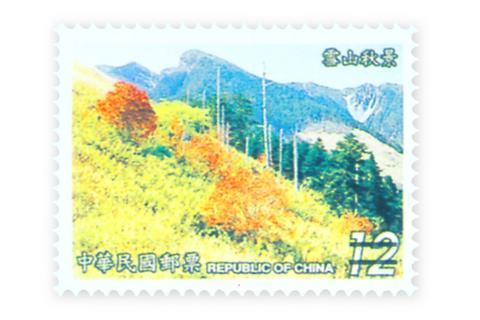
PHOTO COURTESY OF CHUNGHWA POST CO
Chen started collecting stamps in 1990, when investing in the stamp market was as popular as investing in stocks is today. Due to frenzied transactions, many stamps appreciated up to five times their face value in a year. With the profiteers leaving the stamps market and few new collectors joining, the market went into a downward spiral. Chen has stopped selling his collection because his stamps are now valued at 60 percent to 75 percent less than their face values.
"Stamps are now so oversupplied that some collectors have turned to more challenging collectables like telephone cards," Chen said.
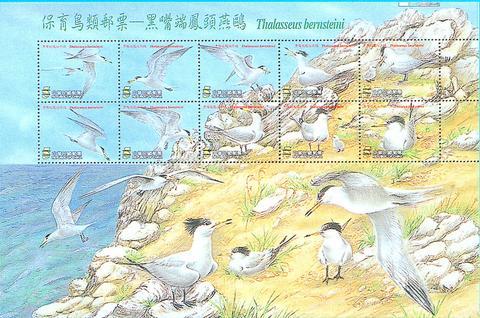
PHOTO COURTESY OF CHUNGHWA POST CO
Su promised that in the future some commemorative stamps would be issued in lower numbers. Each of the two versions of Harry Potter stamps, whose date of issue will coincide with the premiere of the third installment of the blockbuster movie series in May, will come in 600,000 sets. Stamps featuring the popular Japanese cartoon character Hello Kitty, scheduled to be issued in December, will have 1 million sets.
PHOTO COURTESY OF CHUNGHWA POST CO
The choice of subjects for these two commemorative stamp sets aims to attract teenagers and children back into hobby.
"The stamp collecting population is aging. Common subjects like the national flag or the Red Cross logo do not work anymore. Hello Kitty will hopefully attract children and the children may then introduce their parents to stamp collecting," Su said.
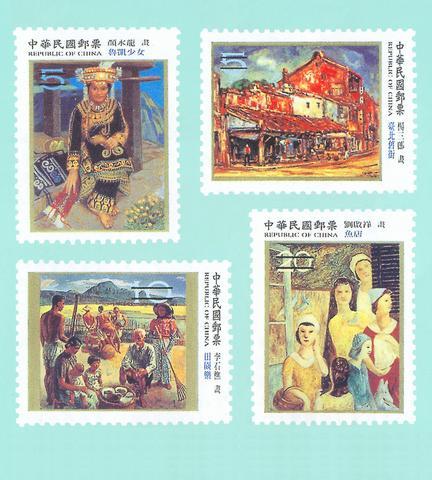
PHOTO COURTESY OF CHUNGHWA POST CO
Movie-related stamps have proved a commercial success. Last December Chunghwa Post issued 30,000 sets of Lord of the Rings personalized stamps. Hello Kitty personalized stamps were issued in the same week. As personalized stamps were not viewed as "real stamps", these were snatched up by corporate buyers, not individual collectors.
The Modern Taiwanese Paintings series has been well-received among collectors, due to its subject.
"Collectors have been telling me the series is pretty good. A lot of ancient Chinese paintings appeared on stamps in the past, but this is the first time modern Taiwanese paintings have been made into stamps. These works are certainly very good. It's also a welcome change that they're dealing with more localized subjects," said Tsai Wen-long (蔡文隆), owner of Pan Lung Philatelic (蟠龍通訊拍賣), one of the country's biggest collectible stamps traders.
The four stamps in the third part of the Modern Taiwanese Painting series include works by late masters Yan Shui-long
"The subjects for Taiwanese stamps have often seem quite hackneyed. Every year we see stamps of flowers or butterflies. Collectors have lost interest in them. Now the modern Taiwanese paintings are refreshing," Chen said.
However, the series is still an exception to the norm. In Chunghwa Post's 18 issues of stamps last year, half are regular subjects such as wildlife and landscape.
"I hope the subjects can keep up with the times. Why not design baseball stamps? Or computer game stamps? These are what's really happening," Chen said.
In the run-up to next year's Asian International Stamp Exhibition in Taipei, Chunghwa Post, Su said, plans to issue the country's first "gold" stamps and stamps with tourism themes. Stamp endorsements by pop stars or baseball stars are also in the works.
Su admitted, however, that changes will happen slowly. "We do not make decisions on our own, but through discussions with government agencies, who may not always see eye to eye with us on choosing subjects, so the changes are gradual," Su said. Although his Pan Lung Philatelic is located near several high schools and colleges, Tsai said less than 5 percent of his estimated 20,000 customers "carry school bags."
The government's Chinese Postal Service, Chunghwa Post's predecessor, started select stamp designs through open competitions over 10 years ago, but the pool of designers has stayed small. "From our collecting experience, we have become so familiar with these designers' styles that they don't excite us anymore, and these designs are just not pretty enough. If we compare Taiwan's, China's and other Asian countries' designs on the subjects of Romance of the Three Kingdoms and Journey to the West [two Chinese literary classics], the differences become quite pronounced," Tsai said.
All stamps in Taiwan are made using the offset printing technique, the most basic, which further undercuts their appeal. "The printing technology often dissatisfies collectors, but this will change if the law allows us to choose a printing contractor offering not only the lowest bid but adequate techniques," Su said.
While the issues ailing stamp collecting still remain to be solved, Chen and his philatelic mates were making plans to add value to the Modern Taiwanese Painting stamps they've just acquired. "Now we're going to send mail with the stamps from the exact locations where these four paintings were done. We managed to uncover these locations after extensive research and contact with the painters' children and grandchildren well before the day of issue. We have solved some great mysteries in history. Isn't stamp-collecting a lot of fun?"
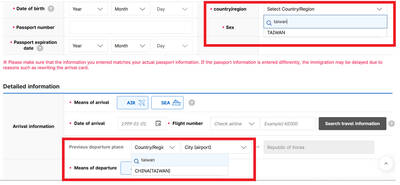
Jason Han says that the e-arrival card spat between South Korea and Taiwan shows that Seoul is signaling adherence to its “one-China” policy, while Taiwan’s response reflects a reciprocal approach. “Attempts to alter the diplomatic status quo often lead to tit-for-tat responses,” the analyst on international affairs tells the Taipei Times, adding that Taiwan may become more cautious in its dealings with South Korea going forward. Taipei has called on Seoul to correct its electronic entry system, which currently lists Taiwan as “China (Taiwan),” warning that reciprocal measures may follow if the wording is not changed before March 31. As of yesterday,

The Portuguese never established a presence on Taiwan, but they must have traded with the indigenous people because later traders reported that the locals referred to parts of deer using Portuguese words. What goods might the Portuguese have offered their indigenous trade partners? Among them must have been slaves, for the Portuguese dealt slaves across Asia. Though we often speak of “Portuguese” ships, imagining them as picturesque vessels manned by pointy-bearded Iberians, in Asia Portuguese shipping between local destinations was crewed by Asian seamen, with a handful of white or Eurasian officers. “Even the great carracks of 1,000-2,000 tons which plied
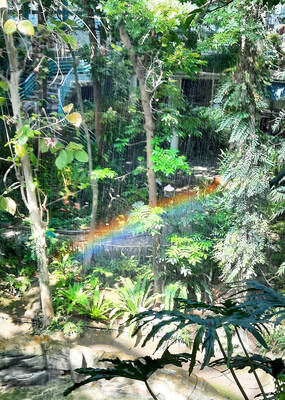
It’s only half the size of its more famous counterpart in Taipei, but the Botanical Garden of the National Museum of Nature Science (NMNS, 國立自然科學博物館植物園) is surely one of urban Taiwan’s most inviting green spaces. Covering 4.5 hectares immediately northeast of the government-run museum in Taichung’s North District (北區), the garden features more than 700 plant species, many of which are labeled in Chinese but not in English. Since its establishment in 1999, the site’s managers have done their best to replicate a number of native ecosystems, dividing the site into eight areas. The name of the Coral Atoll Zone might
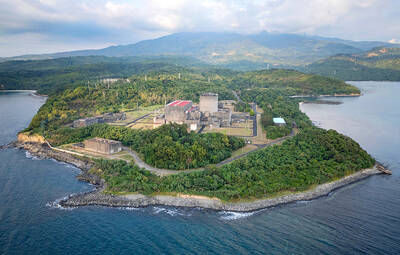
Nuclear power is getting a second look in Southeast Asia as countries prepare to meet surging energy demand as they vie for artificial intelligence-focused data centers. Several Southeast Asian nations are reviving mothballed nuclear plans and setting ambitious targets and nearly half of the region could, if they pursue those goals, have nuclear energy in the 2030s. Even countries without current plans have signaled their interest. Southeast Asia has never produced a single watt of nuclear energy, despite long-held atomic ambitions. But that may soon change as pressure mounts to reduce emissions that contribute to climate change, while meeting growing power needs. The


 RSS
RSS