


When it comes to Zhejiang traditional dishes or dim sum, Taipei's gourmands will tell you not to miss Ningpo Tsai Wan Shing, as this 50 year-old restaurant serves the best zongzi (glutinous rice wrapped with leaves,(
The restaurant is located just a few meters west of the former discotheque 2nd Floor. It's a low house with a big signboard, on which are written three giant words: "Tsai Wan Shing."
The inside is a little dark, and the decor is not much different from the time when the Tsao family followed the Chinese Nationalist Party to Taipei from the mainland. The decor may not be modern, but there are many celebrity autographs and photos on the wall -- including former defense minister Tang Fe (
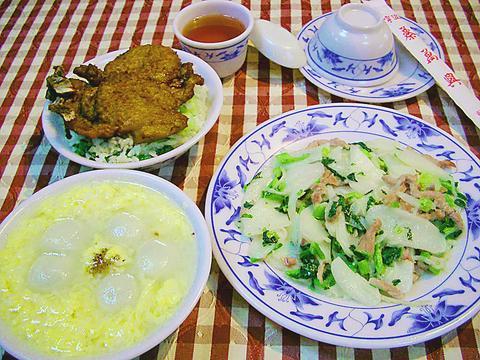
PHOTO: YU SEN-LUN, TAIPEI TIMES
Arriving in Taipei in 1949, the Tsao family transformed the house into a restaurant, selling zongzi, glutinous rice dumplings, Won-tons and dim sum items based on glutinous rice. Later, as the restaurant became popular, it started to present some traditional Ningpo dishes to satisfy the nostalgia of mainlanders. They include baked crucian carp with green onions (
For diners on a budget, the most exciting items are the spare-ribs Tsai Fan (排骨菜飯), stir-fried rice cakes with pork shreds and vegetables (雪菜肉絲炒年糕) and a bowl of sticky-rice dumpling soup for dessert.
Tsai Fan is a traditional Zhejiang and Shanghai rice dish, which is rice cooked with green vegetables and a little oil to add flavor. Spare-ribs Tsai Fan is the most popular item among the house's seven Tsai Fan variations.

For many people, Bilingual Nation 2030 begins and ends in the classroom. Since the policy was launched in 2018, the debate has centered on students, teachers and the pressure placed on schools. Yet the policy was never solely about English education. The government’s official plan also calls for bilingualization in Taiwan’s government services, laws and regulations, and living environment. The goal is to make Taiwan more inclusive and accessible to international enterprises and talent and better prepared for global economic and trade conditions. After eight years, that grand vision is due for a pulse check. RULES THAT CAN BE READ For Harper Chen (陳虹宇), an adviser

Traditionally, indigenous people in Taiwan’s mountains practice swidden cultivation, or “slash and burn” agriculture, a practice common in human history. According to a 2016 research article in the International Journal of Environmental Sustainability, among the Atayal people, this began with a search for suitable forested slopeland. The trees are burnt for fertilizer and the land cleared of stones. The stones and wood are then piled up to make fences, while both dead and standing trees are retained on the plot. The fences are used to grow climbing crops like squash and beans. The plot itself supports farming for three years.

The breakwater stretches out to sea from the sprawling Kaohsiung port in southern Taiwan. Normally, it’s crowded with massive tankers ferrying liquefied natural gas from Qatar to be stored in the bulbous white tanks that dot the shoreline. These are not normal times, though, and not a single shipment from Qatar has docked at the Yongan terminal since early March after the Strait of Hormuz was shuttered. The suspension has provided a realistic preview of a potential Chinese blockade, a move that would throttle an economy anchored by the world’s most advanced and power-hungry semiconductor industry. It is a stark reminder of

May 4 to May 10 It was once said that if you hadn’t performed at the Sapphire Grand Cabaret (藍寶石大歌廳), you couldn’t truly be considered a star. Taking the stage at the legendary Kaohsiung club was more than just a concert. Performers were expected to entertain in every sense, wearing outlandish or revealing costumes and staying quick on their feet as sharp-tongued, over-the-top hosts asked questions and delivered jokes that would be seen as vulgar, even offensive, by today’s standards. Opening in May 1967 during a period of strict political and social control, Sapphire offered a rare outlet for audiences in


 RSS
RSS