


One early morning on Oct. 27, 1930, at a mountain resort in central Taiwan
famous for its cherry blossoms, the Japanese colonial administrators were about to kick off an annual sports game. As the guests and police chiefs gathered in the field, a band of Seediq Aborigines, with white hoods around their heads and broadswords in their hands, rushed in from all directions shouting, "Spare no Japanese!" And one by one, the Japanese were laid low by the Aborigines' swords and arrows.
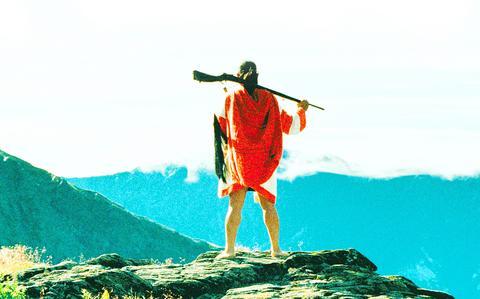
PHOTO COURTESY OF WEI-SHENG
The scene is from the famed Wushe incident (
For many Taiwanese, the incident is a well-known story which is taught in school history text books. Seventy-three years after the incident, the story will finally be brought to the silver screen.
Young and ambitious filmmaker Wei Te-sheng (
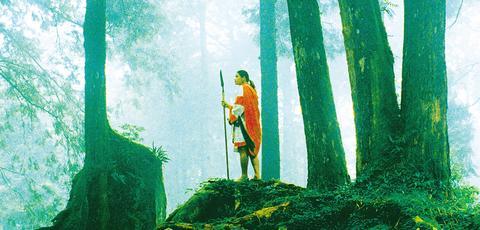
"This [project] is the biggest gamble of my life," said the 35-year-old filmmaker, who had just spent NT$2 million -- all of his savings -- to make a five-minute demo film, illustrating the grand killing scenes, the flying swords, the bombs dropping from Japanese war planes and the peculiar Seediq culture.
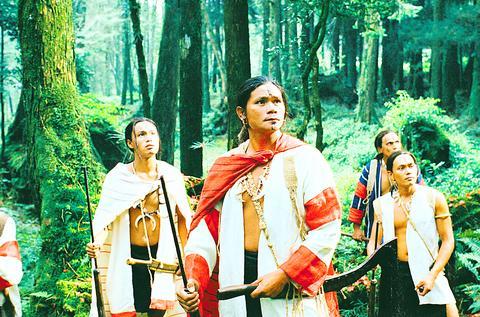
"I know I'm not famous director and I probably won't get much investment simply by pitching the story idea or presenting my script," Wei said. "I needed to produce some presentable work, to show my ability and resolution. Then I might have more of a chance to raise enough money," Wei said.
Wei's directorial debut was About July (
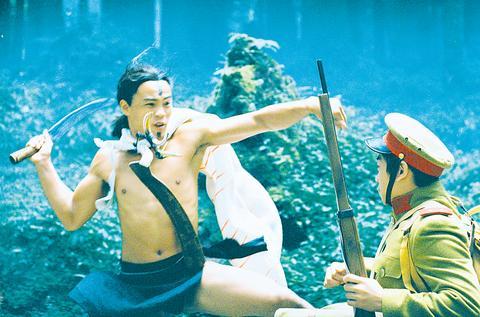
So far, responses to Wei's ambitious demo have been positive. Last month Wei invited filmmakers, producers, investors and the press for an open screening of his demo. Officials from the Government Information Office and film companies such as Pandasia and CMC group attended and applauded the short film.
"If the project can really be made, this will be the first Taiwanese epic movie, entirely originated in Taiwan," said Peggy Chou (
Indeed, this project may excite Taiwan's film circles, as there is finally a filmmaker who wants to make "big" movies, instead of heavy, art-house flicks with limited box office appeal.
In the past five years, the only two big-budget action films from Taiwan have been Crouching Tiger, Hidden Dragon (
Seediq Bale means "true human" in the Seediq language. Wei wrote the script in 2000 won the Excellent Script, an annual prize given by the GIO to encourage screenplay writers.
The story centers on Seediq hero Mona Rudao, the leader of the Wushe incident. He led 300 men in the action in Nantou County. After killing 130 policemen, the Japanese sent more than 2,000 troops into the mountains, but could not quell the revolt. It was not until the Japanese dropped a poisonous gas bomb in the valley and all the Seediq women and fighters committed suicide together that the 50-days revolt was ended.
"Taiwan needs a real on-screen hero," Wei said "Mona Rudao can be seen as a pure Taiwanese hero," he said, explaining his reason for writing the script.
Ten years ago when Wei saw an Aboriginal protest on TV, he said he was stunned by the keen, sparkling eyes and the determination on the protesters' faces. "I naturally thought of the story of Mona Rudao and began researching his story," he said.
"I want to show that a difference of religions and the clash between modern and traditional culture are the main reasons for the revolt," Wei said.
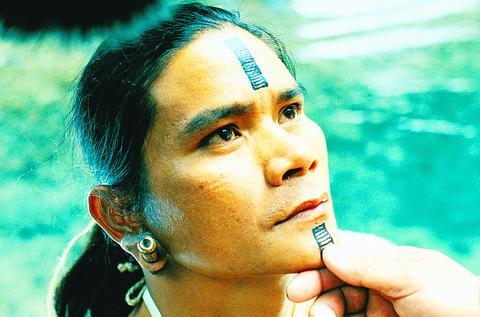
The Seediq are officially seen as a division of the Atayal people, although its language and customs are very different from those of Atayal. Head hunting and tattoos on the face are a central part of its culture. But these traditions were banned by the Japanese. "For the Seediq, without these rituals, they cannot connect with their ancestors and when they die, they will not enter heaven to see their ancestors," Wei said.
So the revolt was the pursuit of freedom for their souls, because they knew they would later die in action, Wei said.
Another reason the story fascinates Wei are the costumes and style of the Seediq people. Seediq men are always bare-footed, wearing eye-catching red and white linen and a mantle, with carved bamboo earrings in the ear lobes. They have tattoos on the foreheads and chins and their long hair is always neatly tied up.
"We have done quite a lot of research to find out what Seediq costumes looked like 73 years ago. Even younger Seediq now are surprised how simple but bright their old costumes were. Nowadays Aboriginal costumes have become too complex, for the purpose of tourism," Wei said.
Already, Chen Kuo-fu, the director of Double Vision has promised to put up US$7 million and other film companies have shown interest. After Wei's five-minute demo was put out on the Internet, small individual donations started coming in.
"Like I said, this is a big gamble and it's either win or lose. If I cannot raise enough money I will admit defeat and give up the project. But I'm glad that we have done the demo and gone so far. It may just be a long process," Wei said.
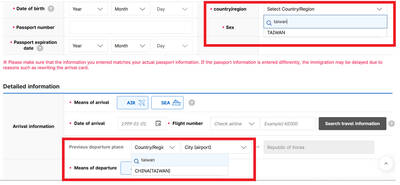
Jason Han says that the e-arrival card spat between South Korea and Taiwan shows that Seoul is signaling adherence to its “one-China” policy, while Taiwan’s response reflects a reciprocal approach. “Attempts to alter the diplomatic status quo often lead to tit-for-tat responses,” the analyst on international affairs tells the Taipei Times, adding that Taiwan may become more cautious in its dealings with South Korea going forward. Taipei has called on Seoul to correct its electronic entry system, which currently lists Taiwan as “China (Taiwan),” warning that reciprocal measures may follow if the wording is not changed before March 31. As of yesterday,
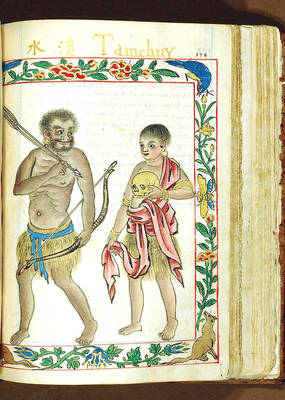
The Portuguese never established a presence on Taiwan, but they must have traded with the indigenous people because later traders reported that the locals referred to parts of deer using Portuguese words. What goods might the Portuguese have offered their indigenous trade partners? Among them must have been slaves, for the Portuguese dealt slaves across Asia. Though we often speak of “Portuguese” ships, imagining them as picturesque vessels manned by pointy-bearded Iberians, in Asia Portuguese shipping between local destinations was crewed by Asian seamen, with a handful of white or Eurasian officers. “Even the great carracks of 1,000-2,000 tons which plied

On Thursday, former Taipei mayor and founder of the Taiwan People’s Party (TPP) Ko Wen-je (柯文哲) was sentenced to 17 years in prison and had his civil rights suspended for six years over corruption, embezzlement and other charges. Seven others related to the case were also handed prison sentences, while two were found not guilty. It has been a bad week for the TPP. On Tuesday, prosecutors charged Chinese immigrant Xu Chunying (徐春鶯) with suspicion of taking part in Beijing-directed election interference. Xu has strong links to the TPP, which once offered her a party list legislator nomination. Tuesday also
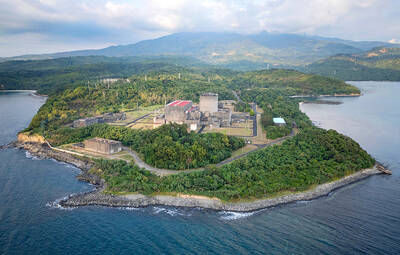
Nuclear power is getting a second look in Southeast Asia as countries prepare to meet surging energy demand as they vie for artificial intelligence-focused data centers. Several Southeast Asian nations are reviving mothballed nuclear plans and setting ambitious targets and nearly half of the region could, if they pursue those goals, have nuclear energy in the 2030s. Even countries without current plans have signaled their interest. Southeast Asia has never produced a single watt of nuclear energy, despite long-held atomic ambitions. But that may soon change as pressure mounts to reduce emissions that contribute to climate change, while meeting growing power needs. The


 RSS
RSS