


It's plot may be dated, but Lady Mouse Got Married (
With the Lunar New Year approaching, the timing of Shiny Shoes' reprisal isn't surprising. Parents traditionally recount the classic tale for their children on the third night of the new year, tucking them into bed early so as not to disturb the nighttime fun.
As the story goes, Daddy Mouse is concerned about finding a suitor for his beautiful young daughter, Lady Mouse. His fear is that, if he doesn't find the strongest, manliest mouse in the land, his daughter might well become the prey of Fat Cat, the ferocious predator feared by all mice. Accompanied by the outspoken Matchmaker Wang, Daddy Mouse interviews four candidates before discovering that the son-in-law he's looking for has been right under his nose all along. So what if it's about arranged marriages and a life spent in fear, the moral lessons of the cute coming-of-age story still ring true.
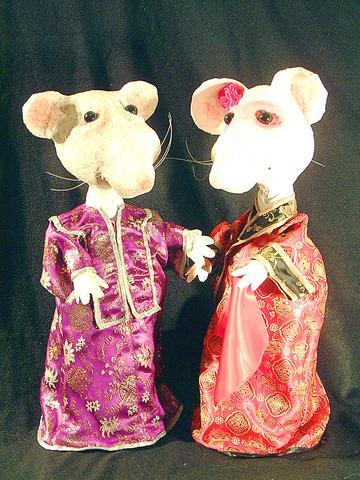
PHOTO COURTESY OF SHINY SHOES CHILDREN'S THEATER
Leave it to Shiny Shoes Children's Theater to turn an ages-old story into a timely tale. The troupe got their start 20 years ago at Growth Day Care Center with weekly performances that quickly became popular with parents throughout Taipei. By 1987 they had their own permanent theater in the nation's capital, before making their new home in Taichung. They have toured Germany, Austria and the Netherlands, traveled to Singapore and the US and produced two award-winning television programs.
The secret to their success lies in their formula for updating the classics. While all the troupe's actors honor the traditions of Chinese opera, they also incorporate modern acting techniques, make ample use of modern stagecraft and add melodic tunes to their productions in order to mesmerize their young audience.
Lady Mouse Got Married will be performed in Chinese, with an English-speaking narrator, tonight at 7:30 in the Experimental Theater of the National Theater (
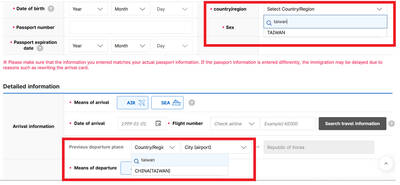
Jason Han says that the e-arrival card spat between South Korea and Taiwan shows that Seoul is signaling adherence to its “one-China” policy, while Taiwan’s response reflects a reciprocal approach. “Attempts to alter the diplomatic status quo often lead to tit-for-tat responses,” the analyst on international affairs tells the Taipei Times, adding that Taiwan may become more cautious in its dealings with South Korea going forward. Taipei has called on Seoul to correct its electronic entry system, which currently lists Taiwan as “China (Taiwan),” warning that reciprocal measures may follow if the wording is not changed before March 31. As of yesterday,

The Portuguese never established a presence on Taiwan, but they must have traded with the indigenous people because later traders reported that the locals referred to parts of deer using Portuguese words. What goods might the Portuguese have offered their indigenous trade partners? Among them must have been slaves, for the Portuguese dealt slaves across Asia. Though we often speak of “Portuguese” ships, imagining them as picturesque vessels manned by pointy-bearded Iberians, in Asia Portuguese shipping between local destinations was crewed by Asian seamen, with a handful of white or Eurasian officers. “Even the great carracks of 1,000-2,000 tons which plied

It’s only half the size of its more famous counterpart in Taipei, but the Botanical Garden of the National Museum of Nature Science (NMNS, 國立自然科學博物館植物園) is surely one of urban Taiwan’s most inviting green spaces. Covering 4.5 hectares immediately northeast of the government-run museum in Taichung’s North District (北區), the garden features more than 700 plant species, many of which are labeled in Chinese but not in English. Since its establishment in 1999, the site’s managers have done their best to replicate a number of native ecosystems, dividing the site into eight areas. The name of the Coral Atoll Zone might
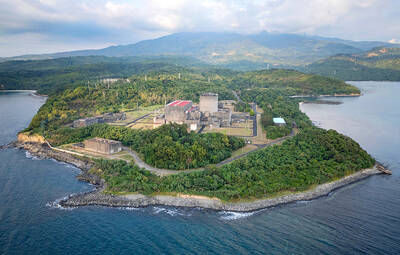
Nuclear power is getting a second look in Southeast Asia as countries prepare to meet surging energy demand as they vie for artificial intelligence-focused data centers. Several Southeast Asian nations are reviving mothballed nuclear plans and setting ambitious targets and nearly half of the region could, if they pursue those goals, have nuclear energy in the 2030s. Even countries without current plans have signaled their interest. Southeast Asia has never produced a single watt of nuclear energy, despite long-held atomic ambitions. But that may soon change as pressure mounts to reduce emissions that contribute to climate change, while meeting growing power needs. The


 RSS
RSS