


Forget the stereotype image of Muslim women draped from head to toe in all-enveloping robes, or girls shrouded in modest white veils.
In Indonesia, the world's most populous Muslim nation, the Islamic hijab is hip, particularly among the rich and upwardly mobile.
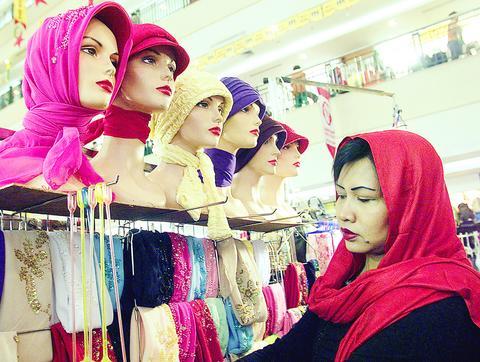
PHOTO: REUTERS
A walk through upscale shopping malls like Plaza Senayan in the capital Jakarta is a real eye-opener.

PHOTO: REUTERS
Women are covering up, but with a dazzling array of chic, colorful and often body-hugging Islamic clothes, often complemented by the latest accessories.
Many smart department stores have opened separate sections for Islamic clothes and stores offer an assortment of magazines and books dedicated to design and Islamic dress for the modern woman.
"Islamic dress has gone upper class," says fashion designer Mira Aviva Zaki on the sidelines of her show at Jakarta's Hilton Hotel.
Although most Indonesians have long opted for a relatively liberal interpretation of the Muslim dress code, the basic rule of covering the body from head to toe still applies.
"But we have added more colors and styles," says Zaki.
And the latest styles are proving a real hit.
"For active Muslim women like me, I don't feel out of fashion any more because there are so many styles and colors to choose from," says banker Ani Mudiarti, her head swathed in bright orange.
Under former leader Suharto, who lost power in 1998 after 32 years of iron-fisted rule, Islamic dress was deemed unfashionable and carried a stigma of backwardness and militancy.
This largely stemmed from Suharto's fear of creating an alternative focus of power. A Muslim himself, he discouraged strong public displays of Islamic values, fearing a rise in fundamentalism.
Long regarded as a staunch defender of Javanese mysticism, for most of his tenure Suharto promoted pluralism, derived from the state ideology of
Pancasila.
As such, hijab was only incorporated in official uniform at public schools and government services in the early 1990s, at a time when Suharto -- in the twilight of his career -- was garnering all the support he could.
Prior to that, religious dress could result in expulsion from school, or losing your jobs at a government office.
"Like any other discrimination there was no specific rule banning the use of Islamic dress but social and political pressure was so high," recalled Tuti Herawati, managing editor of Alia magazine, a monthly publication specializing in Muslim fashion for women.
In 1990, when Suharto gave his blessing to the creation of an elite Muslim group openly dedicated to the Islamization of Indonesia, public perceptions of the hijab started to change.
Ironically it was Siti Hardiyanti Rukmana, a business mogul and Suharto's eldest daughter, who helped to erode the negative public image after she decided to cover her head with loose scarves.
But the boom in the business of Muslim fashion came only after Suharto was forced to step down in the face of the country's worst economic crisis in decades.
"In the past two or three years, new designers have come up, especially at the middle to upper class boutiques. Every month there is always a new one," said Herawati, whose magazine has tripled its circulation since it was first launched last July.
Even glamor models are embracing Muslim clothes.
Inneke Koesherawati, a former pin-up girl who once posed for racy photographs for a glossy men's magazine, recalled the day she decided to cover up.
"I just came back from the Haj [visit to Mecca] and my body just didn't feel comfortable any more without being covered," said Koesherawati whose past movies such as Metropolitan Girls, Naughty Desires and The Stained Bed left little to the imagination.
Now Koesherawati insists those days are long gone.
"I don't feel old-fashioned, in fact I feel more cosmopolitan," she says. "Society has now grown more tolerant of Islamic dress."
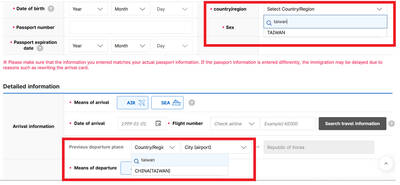
Jason Han says that the e-arrival card spat between South Korea and Taiwan shows that Seoul is signaling adherence to its “one-China” policy, while Taiwan’s response reflects a reciprocal approach. “Attempts to alter the diplomatic status quo often lead to tit-for-tat responses,” the analyst on international affairs tells the Taipei Times, adding that Taiwan may become more cautious in its dealings with South Korea going forward. Taipei has called on Seoul to correct its electronic entry system, which currently lists Taiwan as “China (Taiwan),” warning that reciprocal measures may follow if the wording is not changed before March 31. As of yesterday,
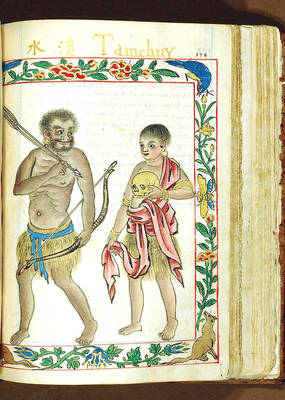
The Portuguese never established a presence on Taiwan, but they must have traded with the indigenous people because later traders reported that the locals referred to parts of deer using Portuguese words. What goods might the Portuguese have offered their indigenous trade partners? Among them must have been slaves, for the Portuguese dealt slaves across Asia. Though we often speak of “Portuguese” ships, imagining them as picturesque vessels manned by pointy-bearded Iberians, in Asia Portuguese shipping between local destinations was crewed by Asian seamen, with a handful of white or Eurasian officers. “Even the great carracks of 1,000-2,000 tons which plied
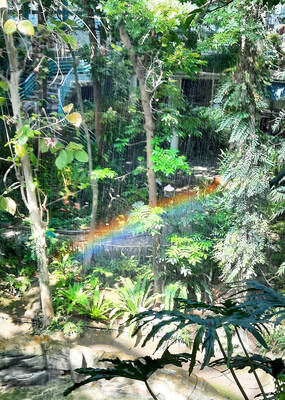
It’s only half the size of its more famous counterpart in Taipei, but the Botanical Garden of the National Museum of Nature Science (NMNS, 國立自然科學博物館植物園) is surely one of urban Taiwan’s most inviting green spaces. Covering 4.5 hectares immediately northeast of the government-run museum in Taichung’s North District (北區), the garden features more than 700 plant species, many of which are labeled in Chinese but not in English. Since its establishment in 1999, the site’s managers have done their best to replicate a number of native ecosystems, dividing the site into eight areas. The name of the Coral Atoll Zone might
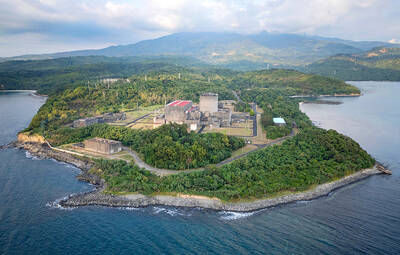
Nuclear power is getting a second look in Southeast Asia as countries prepare to meet surging energy demand as they vie for artificial intelligence-focused data centers. Several Southeast Asian nations are reviving mothballed nuclear plans and setting ambitious targets and nearly half of the region could, if they pursue those goals, have nuclear energy in the 2030s. Even countries without current plans have signaled their interest. Southeast Asia has never produced a single watt of nuclear energy, despite long-held atomic ambitions. But that may soon change as pressure mounts to reduce emissions that contribute to climate change, while meeting growing power needs. The


 RSS
RSS