


Now on exhibit at the National Museum of History (
That the national history museum would want to put up an exhibition of Mongolia is not surprising. Mongolia's modern history is closely tied to the Republic of China and, in many ways, offers insight into Taiwan's own political situation.
Mongolia gained formal independence from China in 1921 with the help of Soviet backing. The communist Mongolian People's Revolutionary Party (MPRP) was installed in 1924 and, like the Chinese Nationalist Party (KMT), ruled with an iron fist for many decades. Starting in the early 1990s and due to growing opposition to the MPRP, the government yielded its power to the Democratic Union Coalition (DUC), which defeated the MPRP in a 1996 national election. The DUC implemented a number of key reforms to modernize the economy and to democratize the political system, but the former ex-communist MPRP was a strong opposition and stalled additional restructuring efforts. In 2000, the same year the KMT lost its 50-year grip on Taiwan, the MPRP won an overwhelming victory in the legislature, earning 72 of the 76 seats. With its victory, it completely reshuffled the government and, while it continues to slowly implement some reforms, the MPRP has chosen to primarily focus on social welfare and public order in the nation of herders.
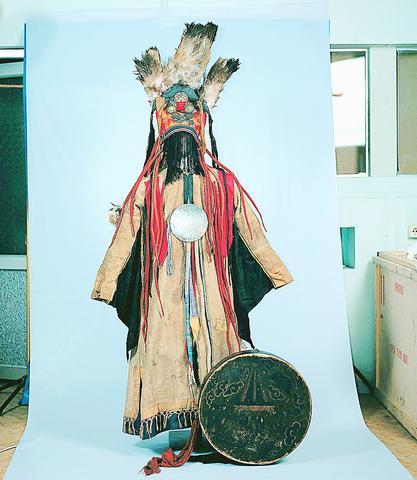
Sound like a premonition of things to come for Taiwan? The curators of the national history museum's Mongolia exhibit would seem to think so. A significant portion of the exhibit has been given over to arcane telegraphs between Republic of China officials and their Mongolian counterparts. A 1996 fax from the chief of Hualien County to a member of the DUC offering congratulations on their election victory doesn't tell us much about the culture, people or even politics of Mongolia. Also absent is any real explanation of the curious relationship between Mongolia and the Republic of China, whose constitution still claims Mongolia as its own. But perhaps there is no real explanation for that.
Where we are given a look at the culture and people, the exhibit often creates more questions than it answers. A life-sized ger, or round Mongolian tent, set up in the exhibit's main area is a temptation which busloads of school are forbidden from entering, but is also a source of frustration for those wanting to know the hows and whys of the gur's design and the use of the various implements lying inside it.
Too little information is given on the many placards stuck here and there (most of which, in fairness, do offer a sentence of English-language information), but what is missing is a narrative that leads visitors through the exhibit, filling the gaps between the placards, and introducing Mongolia in a way that would provide a more in-depth understanding of it.
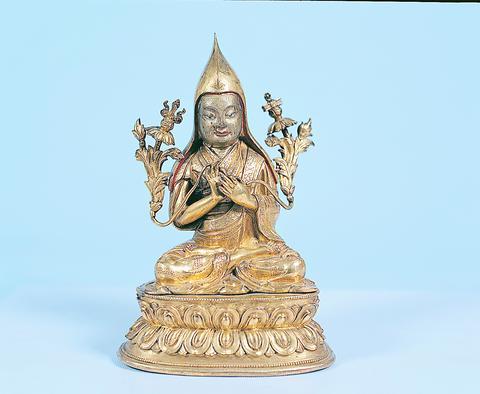
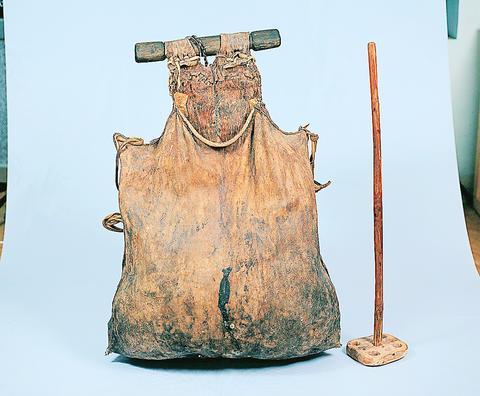
PHOTOS COURTESY OF THE NATIONAL MUSEUM OF HISTORY
Country of the Boundless Pasture -- Mongolia in the 20th Century is open to the public now through Nov. 19. The Museum of National History is located at 49 Nanhai Rd in Taipei (
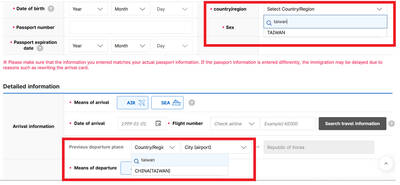
Jason Han says that the e-arrival card spat between South Korea and Taiwan shows that Seoul is signaling adherence to its “one-China” policy, while Taiwan’s response reflects a reciprocal approach. “Attempts to alter the diplomatic status quo often lead to tit-for-tat responses,” the analyst on international affairs tells the Taipei Times, adding that Taiwan may become more cautious in its dealings with South Korea going forward. Taipei has called on Seoul to correct its electronic entry system, which currently lists Taiwan as “China (Taiwan),” warning that reciprocal measures may follow if the wording is not changed before March 31. As of yesterday,
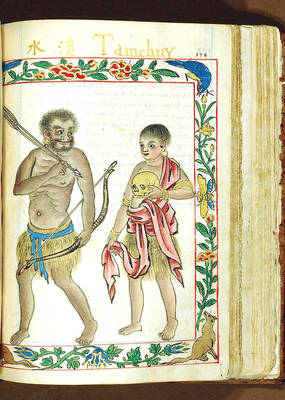
The Portuguese never established a presence on Taiwan, but they must have traded with the indigenous people because later traders reported that the locals referred to parts of deer using Portuguese words. What goods might the Portuguese have offered their indigenous trade partners? Among them must have been slaves, for the Portuguese dealt slaves across Asia. Though we often speak of “Portuguese” ships, imagining them as picturesque vessels manned by pointy-bearded Iberians, in Asia Portuguese shipping between local destinations was crewed by Asian seamen, with a handful of white or Eurasian officers. “Even the great carracks of 1,000-2,000 tons which plied
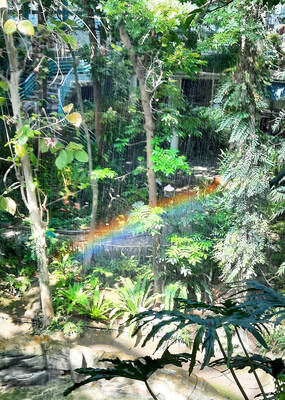
It’s only half the size of its more famous counterpart in Taipei, but the Botanical Garden of the National Museum of Nature Science (NMNS, 國立自然科學博物館植物園) is surely one of urban Taiwan’s most inviting green spaces. Covering 4.5 hectares immediately northeast of the government-run museum in Taichung’s North District (北區), the garden features more than 700 plant species, many of which are labeled in Chinese but not in English. Since its establishment in 1999, the site’s managers have done their best to replicate a number of native ecosystems, dividing the site into eight areas. The name of the Coral Atoll Zone might
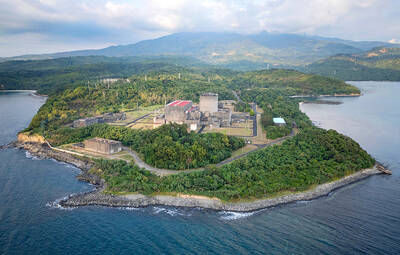
Nuclear power is getting a second look in Southeast Asia as countries prepare to meet surging energy demand as they vie for artificial intelligence-focused data centers. Several Southeast Asian nations are reviving mothballed nuclear plans and setting ambitious targets and nearly half of the region could, if they pursue those goals, have nuclear energy in the 2030s. Even countries without current plans have signaled their interest. Southeast Asia has never produced a single watt of nuclear energy, despite long-held atomic ambitions. But that may soon change as pressure mounts to reduce emissions that contribute to climate change, while meeting growing power needs. The


 RSS
RSS